
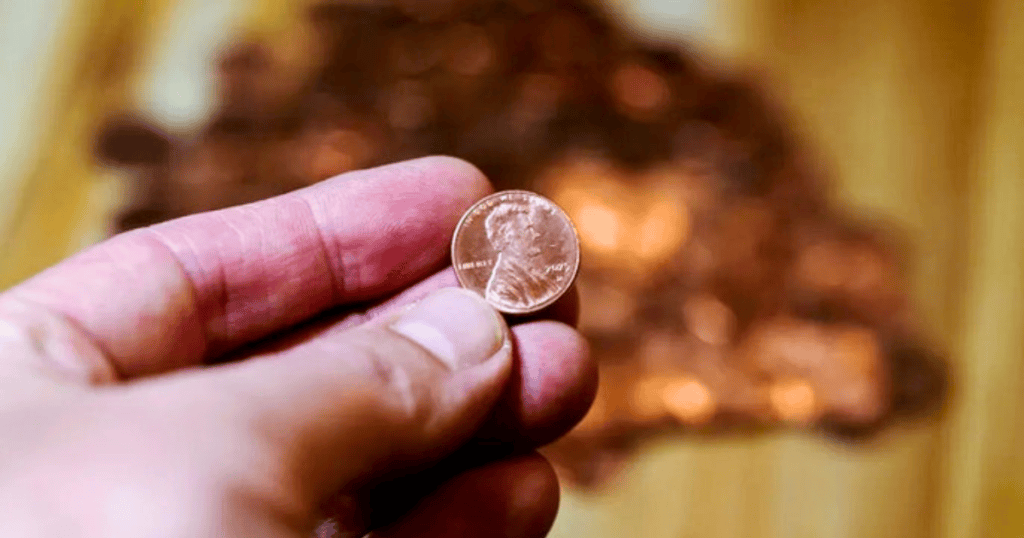
House lawmakers passed a bill to end penny production and round cash transactions, potentially changing how millions of Americans pay.
The penny could soon become a thing of the past for everyday transactions after the U.S. House of Representatives unanimously passed legislation aimed at permanently ending production of the one-cent coin.
The bipartisan Common Cents Act would prevent the U.S. Mint from producing pennies for general circulation, while establishing new rules for rounding cash purchases to the nearest five cents.
The measure represents a potentially significant change for Americans who still use cash, although existing pennies would remain legal tender.
House votes unanimously to end penny production
The House approved the legislation Monday in a unanimous vote. The bill is designed to make permanent the Treasury Department’s move away from producing pennies for circulation.
Under the proposal, cash transactions would generally be rounded to the nearest five-cent increment. That means purchases ending in amounts that cannot be settled exactly with available coins could result in either a small increase or decrease at checkout.
Cash wages would receive special treatment under the legislation, with amounts that are not divisible by five cents required to be rounded upward.
The legislation also includes an exception allowing the Mint to continue producing pennies for collectors.
What happens to pennies already in circulation?
Americans would not suddenly have to throw away their existing pennies.
The coins would continue to be recognized as legal tender even if the government stops producing new pennies for everyday use. Consumers could continue using pennies until they gradually disappear from circulation.
The U.S. Mint already stopped producing pennies for circulation in November 2025 after more than two centuries of production. The proposed law would make that policy harder for a future administration to reverse.
Why lawmakers want to eliminate the penny
The biggest argument behind the legislation is cost.
According to the Treasury, producing pennies had become substantially more expensive than their face value. The government estimated that ending production could generate about $56 million in immediate annual savings.
Supporters argue that a coin worth one cent no longer makes economic sense when manufacturing costs significantly exceed its value.
The Common Cents Act is led by House Republican Conference Chair Lisa McClain of Michigan and Democratic Rep. Robert Garcia of California, highlighting the bipartisan nature of the effort.
Cash users could notice the biggest change
The most visible effect for consumers would likely be at cash registers.
Digital payments made with credit cards, debit cards and other electronic methods would not need the same rounding system because transactions can still be settled to the exact cent.
Cash purchases, however, could increasingly be rounded to the nearest nickel.
For example, a transaction ending in one or two cents could generally be rounded downward, while amounts ending in three or four cents could be rounded upward. The same pattern would apply around the five-cent mark.
That could make some cash purchases slightly cheaper and others slightly more expensive, although supporters argue that the rounding system would balance out over time.
Nickels could also change
The bill goes beyond eliminating the penny.
It would give the U.S. Mint authority to produce nickels using less expensive materials, potentially reducing the cost of manufacturing the five-cent coin as well.
Congress would also require the Treasury to study the effects of the changes, including their impact on low-income Americans, older consumers and people who rely heavily on cash.
The penny’s long decline
The debate over the penny has continued for years, with supporters arguing that the coin has become inefficient and costly to manufacture.
The federal government has already taken steps toward ending new penny production. But permanently changing the nation’s coinage system requires congressional action.
If the legislation ultimately becomes law, the change could mark the end of the penny’s role in everyday U.S. commerce—even though the coins themselves would remain legal tender.
For millions of Americans who still pay with cash, that could mean a small but noticeable change every time they reach the checkout counter.
Also read: Ex-Dem Insider Reveals What Harris Told Donors Days Before Biden Dropped Out