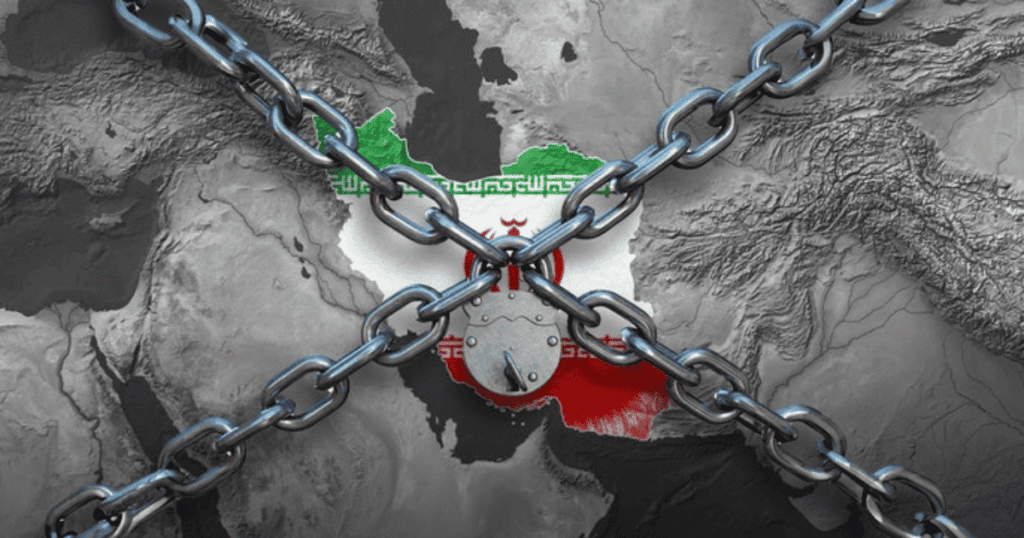
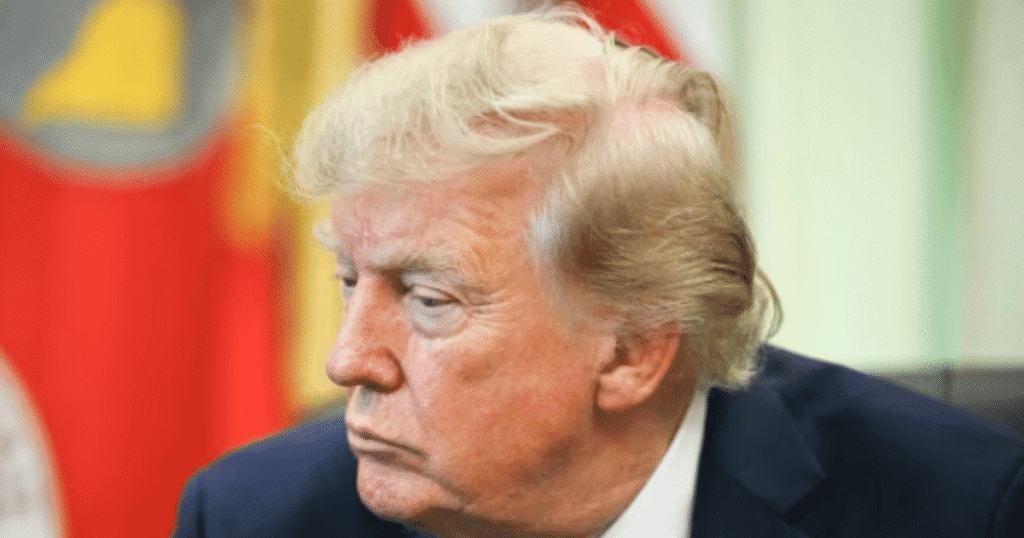
Trump is reshaping US capitalism through tariffs, industrial policy and government intervention, challenging decades of Republican free-market ideas.
Trump’s Economic Revolution Is Bigger Than His Anti-Communism
President Donald Trump frequently presents himself as the defender of American capitalism against socialism and communism.
But his economic agenda is simultaneously moving the Republican Party away from some of the free-market principles that traditionally defined modern conservatism.
The change is happening through tariffs, industrial policy, government pressure on corporations, restrictions on foreign investment and a much more active role for Washington in deciding which industries should expand inside the United States.
Rather than simply shrinking government and allowing markets to determine economic outcomes, Trump’s approach increasingly puts national power and economic security at the center of capitalism.
That represents a significant ideological shift.
And it could reshape American economic policy long after Trump’s presidency ends.
Trump’s Version of Capitalism Is More Nationalist
For decades, Republican economic policy was closely associated with lower taxes, limited government intervention, free trade and deregulation.
Trump has challenged that formula.
His economic philosophy is better described as economic nationalism: the idea that the government should use its power to protect domestic industries, discourage imports and encourage companies to manufacture strategically important goods in the United States.
Tariffs are one of the clearest examples.
Instead of treating international trade primarily as a mechanism for maximizing efficiency, Trump views trade policy as a tool of national power.
That means the government can impose tariffs when it believes foreign competition threatens American manufacturing or national security.
The approach is already affecting industries ranging from semiconductors to solar manufacturing. In August, the administration announced a 15% tariff and minimum import prices for polysilicon products, arguing that domestic production is important to America’s semiconductor and solar supply chains.
Tariffs Are Becoming a Core Part of Trump’s Economic Strategy
Trump has long argued that tariffs can protect American workers and force companies to manufacture more goods domestically.
His critics counter that tariffs can increase costs for American businesses and consumers because importers frequently pass some of those costs through the supply chain.
The bigger question, however, is ideological.
Traditional free-market economics generally assumes that businesses and consumers should decide what gets produced and where it is produced.
Trump’s economic nationalism starts from a different premise:
The United States should be willing to sacrifice some market efficiency to achieve greater national economic independence.
That is a major change in how Republicans traditionally talked about capitalism.
From Free Markets to Strategic Industries
Trump’s administration increasingly treats certain industries as matters of national security.
Semiconductors are a prime example.
America’s dependence on foreign supply chains has become a strategic concern, particularly because China dominates important portions of global manufacturing.
Trump’s policies therefore seek to encourage domestic production even when producing goods inside the United States may cost more than importing them.
The same logic applies to energy, critical minerals, defense manufacturing and other strategically important sectors.
This is not traditional laissez-faire capitalism.
It is a system in which government identifies strategic priorities and uses taxes, tariffs, subsidies and regulation to influence private investment.
Trump Is Not Simply Shrinking Government
Trump campaigned on reducing government waste and bureaucracy.
His administration also created the Department of Government Efficiency initiative, which was tasked with cutting federal spending and shrinking the government workforce.
But reducing some parts of government does not necessarily mean reducing government’s influence over the economy.
That distinction is becoming increasingly important.
The Trump administration can simultaneously cut federal jobs while expanding the government’s role in determining which industries receive protection, which companies gain access to strategic opportunities and which foreign competitors face restrictions.
Recent fiscal developments illustrate the contradiction.
Despite promises of fiscal restraint, U.S. national debt has now surpassed $40 trillion, according to Reuters, while federal spending and debt-servicing costs have continued to rise.
The result is an administration that is smaller in some areas but more interventionist in others.
The Republican Party Is Changing With Trump
Perhaps the most important consequence is inside the Republican Party itself.
For much of the late 20th century, Republicans championed globalization.
They supported free-trade agreements, lower corporate taxes and international investment.
Trump’s political movement has challenged that consensus.
The new Republican economic message places greater emphasis on:
- American manufacturing
- Domestic supply chains
- Tariffs
- Energy independence
- Restrictions on Chinese investment
- Industrial policy
- Economic security
- Higher barriers to foreign competition
The shift has created tension between traditional business conservatives and Trump’s nationalist coalition.
Some corporate leaders continue to favor predictable trade rules and open markets, while others have adapted to the new political environment.
Why Corporate America Is Paying Attention
Businesses have learned that Trump’s economic policy can directly affect their access to markets.
A company can face tariffs, regulatory changes or political pressure depending on its industry and relationship with government priorities.
That creates a new form of political risk.
Corporate executives increasingly have to consider not only consumers, shareholders and competitors, but also the preferences of the White House.
Reuters has reported that some American business leaders have pushed back against Trump’s interventionist policies, although opposition from corporate executives has generally remained cautious.
That caution is revealing.
Businesses may disagree with individual policies while simultaneously recognizing that openly confronting the president can carry political or commercial consequences.
Trump’s Relationship With the Federal Reserve Shows the Tension
The conflict between Trump’s economic vision and traditional institutional independence is particularly visible in his relationship with the Federal Reserve.
Trump has repeatedly demanded lower interest rates and criticized Federal Reserve policy when rates remain higher than he wants.
On September 4, Trump again threatened to stop trading with countries running trade surpluses with the United States unless the Federal Reserve lowers interest rates.
That position reflects Trump’s broader belief that government economic policy should actively produce outcomes favorable to American growth.
But monetary policy is traditionally designed to operate independently of presidential political demands.
The clash therefore raises a larger question:
How much control should a president have over America’s economic institutions?
The New Capitalism Is About Power, Not Just Markets
Trump’s economic approach can be understood as an attempt to redefine what capitalism is supposed to accomplish.
Traditional free-market theory emphasizes efficiency, competition and voluntary exchange.
Trump’s economic nationalism emphasizes strength, independence and national power.
Those objectives can sometimes overlap.
For example, encouraging domestic semiconductor production can strengthen America’s industrial base while creating new private-sector investment.
But they can also conflict.
Domestic production may be more expensive.
Tariffs can reduce competition.
Government favoritism can distort markets.
And political intervention can create opportunities for companies with strong relationships with Washington.
That is where critics see the danger of Trump’s model.
Could America Be Moving Toward a More Government-Directed Economy?
That does not mean the United States is becoming a socialist economy.
Private companies still dominate American commerce, and financial markets continue to allocate enormous amounts of capital.
But the boundary between government and business is becoming less clear.
The Trump administration is increasingly willing to use government power to influence private-sector decisions.
That could represent the emergence of a distinctly American form of state-influenced capitalism—a system in which private ownership remains dominant but government plays a much stronger strategic role.
The trend has parallels in other countries, where governments use industrial policy to protect domestic champions and strategic industries.
China Is Helping Drive the Shift
China is one of the biggest reasons the traditional American economic model is being reconsidered.
The United States spent decades embracing globalization partly because cheaper production overseas benefited consumers and American companies.
But the geopolitical relationship between Washington and Beijing has changed.
China is now viewed not simply as an economic competitor but as a strategic rival.
That has transformed the economic calculation.
A supply chain that is cheaper may no longer be considered preferable if it creates dependence on a geopolitical competitor.
This is why national security has become increasingly intertwined with economic policy.
The Cost of Trump’s Economic Model
Trump’s strategy could produce significant benefits if it successfully rebuilds domestic manufacturing and reduces dependence on vulnerable foreign supply chains.
But there are substantial risks.
Higher tariffs can increase prices.
Industrial subsidies can become expensive.
Companies may delay investment because of policy uncertainty.
Trading partners can retaliate against American exports.
And government intervention can favor politically connected companies rather than the most efficient businesses.
The fiscal side is another concern.
Reuters reports that America’s national debt has climbed beyond $40 trillion during Trump’s second term, with higher borrowing costs adding pressure to the federal budget.
That makes the question of how much government should spend—and where—more urgent.
Trump Is Changing What “America First” Means
The phrase “America First” has traditionally been associated with Trump’s foreign policy.
But it increasingly describes his economic philosophy as well.
Under this model, economic decisions are evaluated through a national-interest lens.
The question is no longer simply:
What policy produces the cheapest goods?
It becomes:
What policy makes America stronger?
That is a fundamentally different question.
And it explains why Trump can simultaneously attack communism and embrace economic policies that involve substantially more government intervention than previous Republican administrations.
The Biggest Change May Be Permanent
Trump’s most important economic legacy may not be any individual tariff or tax policy.
It may be the political transformation of the Republican Party.
The idea that government should largely stay out of private markets has lost some of its dominance among Republican voters.
In its place is a growing belief that Washington should actively defend American workers and industries from foreign competition.
Whether that philosophy survives Trump will depend partly on economic results.
If manufacturing expands, wages rise and domestic investment accelerates, Republicans may embrace economic nationalism for years.
If inflation, higher costs and government inefficiency become the dominant results, the party could eventually return toward traditional free-market economics.
The Bottom Line
Donald Trump’s economic agenda is doing something more complicated than simply attacking communism.
It is challenging the traditional Republican definition of capitalism.
His administration is using tariffs, industrial policy, national-security rules and political pressure to reshape the relationship between government and American business.
At the same time, the United States faces rising debt and growing pressure over government spending, making the costs of this new economic strategy increasingly important.
Trump’s vision is not socialism and it is not classic laissez-faire capitalism.
It is a more nationalist version of capitalism—one in which markets remain powerful, but national interests increasingly determine the rules of the market.
And that may be the economic transformation that ultimately outlasts Trump’s political battles over communism.
Also rread: AfD Nears Historic Power Breakthrough in Germany