
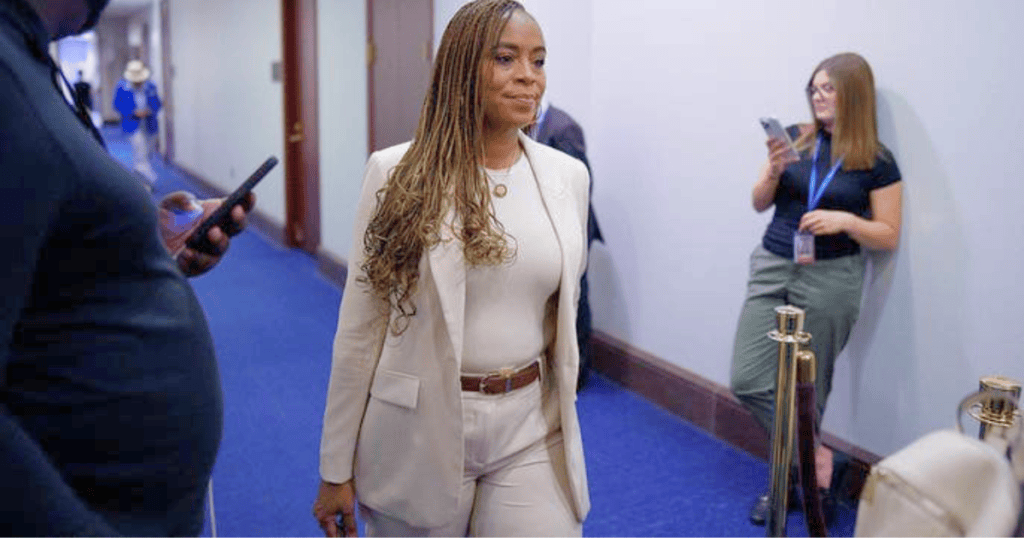
Ohio Democrat Shontel Brown faces fierce online backlash after echoing disputed lynching claims tied to Black hanging deaths mostly ruled suicides.
Rep. Shontel Brown, D-Ohio, is facing intense online backlash after echoing claims about alleged modern-day lynchings that critics say ignore findings from authorities in several of the cases.
Brown joined a growing group of Democratic lawmakers raising concerns about recent hanging deaths involving Black Americans. But the claims have drawn sharp scrutiny because most of the cases referenced by lawmakers were ruled suicides by local authorities or medical examiners.
Brown’s post sparks backlash
Brown’s comments quickly became a target for critics online, who accused the Ohio Democrat of promoting a narrative that had not been supported by the available evidence.
Fox News reported that Brown’s post was met with comparisons to the Jussie Smollett case, with critics arguing that lawmakers were prematurely labeling deaths as racially motivated crimes.
The controversy comes as Democratic lawmakers have pushed the Justice Department and FBI to examine a series of hanging deaths involving Black victims.
Most cited deaths ruled suicides
The central issue in the controversy is the distinction between allegations and official findings.
A letter led by Rep. Ayanna Pressley, D-Mass., and supported by dozens of Democratic lawmakers called for federal scrutiny of several deaths described as possible “modern-day lynchings.”
However, Fox News reported that most of the cases cited in the lawmakers’ request had already been determined to be suicides by law enforcement or medical examiners.
Two cases remained subjects of greater concern, according to reporting, but the broader list did not establish a pattern of confirmed lynchings.
Democrats demand federal investigation
The controversy began with a push from Democratic lawmakers for the Justice Department and FBI to investigate the deaths more closely.
The lawmakers argued that the circumstances surrounding the deaths warranted additional federal attention and invoked the federal anti-lynching law enacted in 2022.
Their request reflects concerns that racial violence could be overlooked or improperly classified without a comprehensive investigation.
Critics, however, contend that calling the deaths lynchings before investigations establish evidence of foul play risks misleading the public.
Critics say evidence matters
The backlash against Brown and other Democrats has focused heavily on the difference between investigating suspicious circumstances and declaring a crime occurred.
Authorities’ findings do not automatically eliminate the possibility that an individual case could later warrant additional investigation. But critics say those conclusions should be acknowledged before politicians characterize deaths as racially motivated killings.
That distinction has become central to the political fight surrounding the issue.
A politically charged debate
The dispute comes at a time when racial issues remain deeply polarizing in American politics.
Democrats supporting the federal review argue that the history of lynching in the United States warrants particular vigilance when Black Americans die under suspicious circumstances.
Republican critics and other opponents say the lawmakers are inflaming racial tensions by describing deaths as lynchings despite the lack of evidence in most of the cited cases.
The disagreement has now moved beyond Capitol Hill and into the broader online political debate.
Brown faces growing scrutiny
For Brown, the backlash adds another controversy to an already heated national conversation over race, policing and political rhetoric.
Her critics argue that lawmakers have a responsibility to distinguish confirmed facts from allegations, particularly when discussing highly emotional subjects such as racial violence.
Supporters of the congressional effort maintain that federal authorities should not dismiss potentially suspicious deaths without conducting a thorough review.
For now, the controversy surrounding Brown centers on a basic question: Should politicians describe these deaths as possible lynchings before investigators have found evidence that they were crimes?
That question is likely to remain at the center of the debate as lawmakers continue pressing for federal scrutiny and critics demand that official findings receive greater weight.
Also read: Congress Probes ‘Trojan Horse’ Influence Networks


