
Congress is investigating alleged foreign influence networks tied to China, Iran and Cuba, focusing on nonprofits, activists and social media.
Congress is turning its attention to what lawmakers describe as potential “Trojan horse” networks operating inside the United States, with a House hearing examining allegations that foreign adversaries use American activists, nonprofits, media groups and social media personalities to influence public opinion.
The congressional inquiry is focused on alleged influence operations linked to countries including China, Cuba and Iran, as lawmakers examine whether foreign interests are using domestic organizations as intermediaries to advance their political objectives.
Congress examines alleged foreign influence
The House Foreign Affairs Subcommittee on South and Central Asia is holding a hearing titled “Trojan Horses: Covert Foreign Malign Influence Operations in America.”
The term refers to the ancient Greek strategy of hiding soldiers inside a wooden horse to enter Troy. Lawmakers are using the phrase to describe what they say could be a modern strategy in which foreign powers rely on American-based organizations and individuals to spread messages favorable to their interests.
The hearing comes as lawmakers face growing concerns about the ability of social media and online platforms to rapidly amplify political narratives originating overseas.
Rep. Bill Huizenga, R-Mich., who chairs the subcommittee, said adversarial countries can use social media influencers as proxies to promote their narratives inside the United States.
CodePink becomes a focus of scrutiny
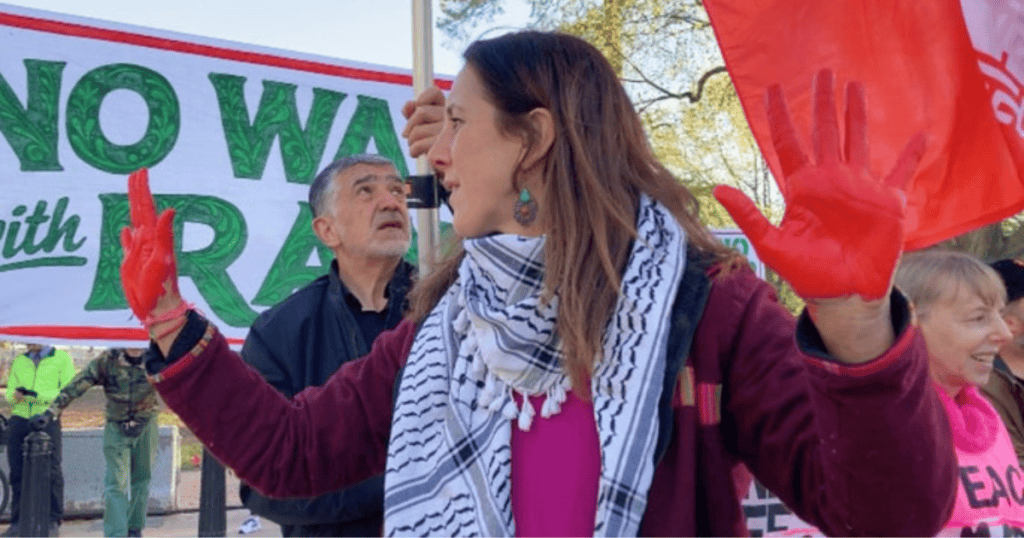
One organization drawing attention is CodePink, a progressive activist group that has publicly opposed U.S. military policies and supported causes involving Cuba, China and Iran.
The congressional scrutiny intensified after a CodePink activist interrupted a recent Washington event focused on the national security threat posed by Cuba.
Christine Balling, a former adviser to U.S. Special Operations Command South, described organizations such as CodePink as potential “Trojan horses,” arguing that they can use domestic political activism to promote ideas aligned with foreign governments.
CodePink and its supporters reject accusations that the organization operates as a foreign influence vehicle and characterize such criticism as politically motivated.
Social media influencers under the microscope
Congressional investigators are also examining the role of social media personalities in spreading political narratives.
One name mentioned in the investigation is Twitch streamer Hasan Piker, who joined a CodePink delegation to Cuba earlier this year. Lawmakers are questioning whether influencers with large online audiences can inadvertently—or intentionally—serve as amplifiers for narratives favorable to foreign adversaries.
The issue is particularly significant because social media allows political messages to reach millions of Americans without traditional media organizations acting as intermediaries.
Sam Lyman, a planned witness at the hearing, has argued that social media can dramatically increase the reach of narratives that originate outside the United States.
The money trail involving Neville Singham
Another major part of the congressional investigation involves Neville Roy Singham, an American-born technology entrepreneur who now lives in Shanghai and has publicly expressed support for the Chinese Communist Party and Chinese President Xi Jinping.
Fox News Digital previously reported that financial records showed hundreds of millions of dollars moving through a network of organizations associated with Singham.
A five-part investigation identified 223 transactions totaling about $591 million between 2017 and 2025, tracing money through multiple organizations and countries.
According to the report, approximately $278 million flowed from Singham into six core nonprofit organizations associated with causes described by investigators as pro-China or anti-American.
The organizations involved have denied wrongdoing and accused critics of conducting politically motivated investigations. Singham has not responded to repeated requests for comment, according to Fox News.
How the alleged network operates
The congressional inquiry is not limited to direct payments from foreign governments.
Instead, lawmakers are examining whether foreign influence can move through several layers of organizations, donors, activists and media operations, making it difficult to identify the ultimate source of a political message or campaign.
Fox News reported that six nonprofits receiving money associated with Singham subsequently distributed approximately $163 million to 52 organizations and five geographic regions.
Investigators are particularly interested in whether financial relationships can create an indirect pipeline through which foreign-aligned messages reach American audiences while the foreign source remains several steps removed.
China, Cuba and Iran among concerns
The hearing is examining alleged influence involving several U.S. adversaries.
China is a major focus because of its extensive global political and economic reach, while Cuba remains a concern because of its longstanding communist government and history of confrontation with Washington.
Iran is also part of the broader investigation, particularly as lawmakers examine connections between activist networks, pro-Palestinian organizations and political campaigns that criticize U.S. and Israeli policies.
The congressional inquiry does not mean that every organization or activist involved has been proven to be working for a foreign government. Rather, lawmakers are investigating whether certain relationships, funding arrangements and advocacy campaigns warrant greater scrutiny.
The larger national security debate
The investigation reflects a broader debate over how the United States should respond to foreign influence in an era when political messaging can move instantly across borders.
Traditional espionage often involves intelligence agents, classified information or covert government operations. Modern influence campaigns can be considerably more difficult to identify because they may rely on legitimate-looking nonprofits, political activists, online creators and media platforms.
Lawmakers argue that adversaries can exploit America’s open society and free-speech environment to push narratives that divide Americans or weaken confidence in U.S. institutions.
Critics of aggressive foreign-influence investigations, however, warn that national security concerns should not be used to suppress lawful political activism or legitimate criticism of U.S. policy.
Congress seeks answers
The House hearing represents an effort by lawmakers to better understand how foreign influence networks allegedly operate and how money, political activism and social media can intersect.
The central question is whether foreign adversaries are successfully using American voices and organizations to advance their interests without directly exposing their involvement.
As Congress investigates the networks, the debate is likely to extend beyond China, Cuba and Iran to a much broader question: How can the United States protect itself from covert foreign influence while preserving the openness and free expression that define American society?
Also read: Mamdani Escalates Fight With Trump Over Immigration


