
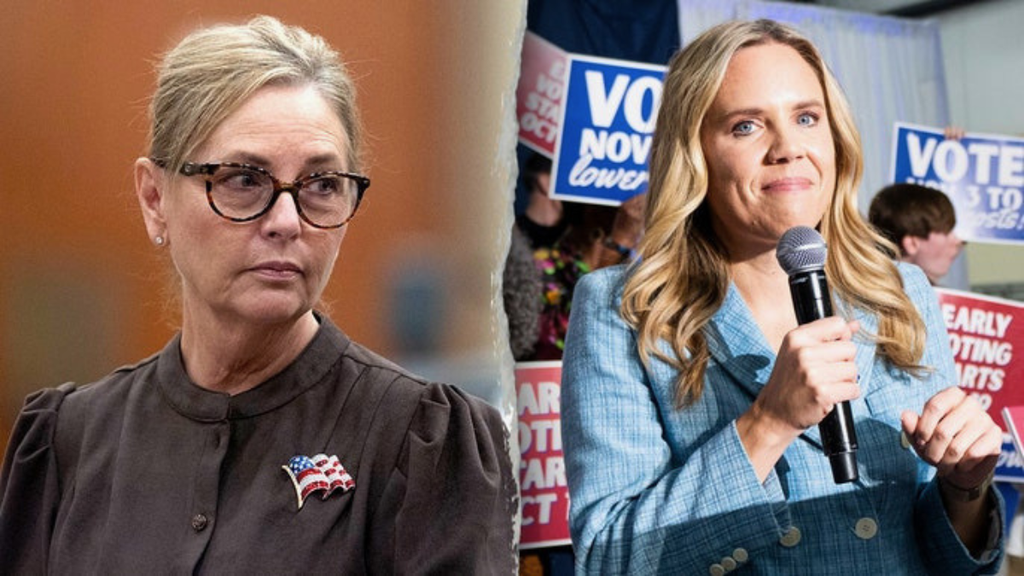
South Carolina’s Senate race shifts toward a toss-up as new polling puts Annie Andrews and Darline Graham at 48%, threatening Republican hopes ahead of midterms.
South Carolina Senate Race Faces Stunning Forecast Shift
South Carolina’s Senate race has become a major political battleground after new polling showed Democrat Annie Andrews tied with Republican Senator Darline Graham.
The latest developments have forced Republicans to reconsider their strategy in a state that President Donald Trump won comfortably during the 2024 presidential election.
A New York Times and Siena University poll released October 28 found both candidates tied at 48% among likely voters.
The result has intensified concerns about Republican Senate prospects as Democrats seek additional seats before the November 3 midterm elections.
Why South Carolina Suddenly Looks Competitive
South Carolina has long favored Republicans in statewide elections, making the latest polling results particularly significant for both parties.
Trump carried the state by approximately 18 percentage points in 2024, reinforcing its reputation as a dependable Republican stronghold.
However, Graham now faces an unexpectedly competitive challenge from Andrews, a pediatrician campaigning on healthcare access and affordability.
The latest numbers suggest that national political conditions and candidate-specific concerns could reshape the race before voters head to the polls.
What the Latest Poll Reveals
The Siena University survey placed Andrews and Graham at 48% each, with approximately 3% undecided.
The poll surveyed 707 likely voters and reported a margin of error of approximately 4.3 percentage points.
That margin means the candidates remain statistically tied, rather than establishing a clear advantage for either campaign.
Other recent surveys have also shown a close contest, although some continue to give Graham a narrow lead.
Who Are Darline Graham and Annie Andrews?
Graham entered the race after receiving an appointment to the Senate following the death of her brother, longtime Senator Lindsey Graham.
She now seeks a full six-year term while defending the Republican advantage in a traditionally conservative state.
Andrews, meanwhile, has used her medical background to emphasize healthcare affordability, prescription costs and access to essential services.
Her campaign hopes to attract independent voters and residents concerned about household expenses and healthcare policy.
Graham Faces Pressure to Protect Republican Support
Graham has received support from Trump, who plans to campaign in South Carolina as Republicans attempt to protect the Senate majority.
Nevertheless, questions about her political experience and campaign performance have created challenges for the Republican nominee.
Some Republican figures have withheld support, while disagreements within the party have complicated efforts to present a unified campaign.
These divisions could matter in a close election where even small changes in turnout may influence the final result.
Can Democrats Flip a Traditionally Republican Senate Seat?
Democrats see South Carolina as an opportunity to expand their Senate prospects during a difficult election cycle for the party controlling Washington.
A victory for Andrews would represent a significant breakthrough in a state that has not elected a Democratic senator since 1998.
However, the latest poll does not guarantee a Democratic victory, particularly given South Carolina’s established Republican voting patterns.
Graham retains substantial political support, and Republican groups can still invest additional resources to strengthen her campaign.
Why the Senate Majority Is at Stake
Republicans currently face several competitive Senate races as Democrats attempt to regain control of the chamber.
A Democratic victory in South Carolina could make that effort easier, especially if other closely contested races also move toward Democratic candidates.
Republicans, however, need to defend vulnerable seats and maintain support among voters concerned about inflation, immigration and national leadership.
Consequently, South Carolina has become an important test of whether Democratic momentum can overcome the state’s conservative political history.
What Happens Before Election Day?
Both campaigns must now focus on persuading undecided voters, energizing supporters and improving turnout before November 3.
Graham will likely emphasize Republican priorities and her backing from Trump, while Andrews continues highlighting healthcare and household affordability.
Additional polling could reveal whether the current dead heat reflects a lasting shift or a temporary snapshot of voter sentiment.
For now, the South Carolina Senate race stands among the most surprising contests of the 2026 midterm elections, with control of Congress potentially hanging in the balance.
Also read: Alaska Election Probe: Governor Orders Urgent Investigation