White House defends Trump after Archbishop Jeffrey Grob apologizes over a controversial Oval Office prayer video, sparking fresh political tensions before midterms.
The White House defended President Donald Trump after a Catholic archbishop apologized for participating in a controversial Oval Office prayer. The dispute has intensified political tensions ahead of the November midterm elections, raising questions about religious imagery and political messaging.
White House Defends Trump After Archbishop’s Apology
White House spokeswoman Taylor Rogers defended Trump’s record on religious liberty and Catholic priorities following Archbishop Jeffrey Grob’s public apology. Her response came after the Milwaukee archbishop accused the administration of using a sacred religious moment for political purposes.
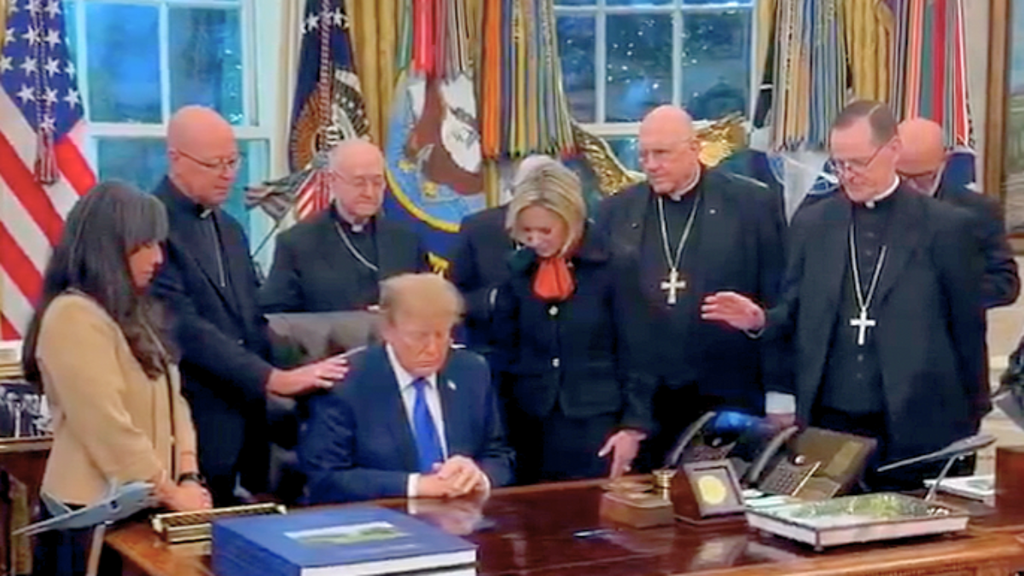
Grob said he regretted participating in the prayer gathering after officials publicly shared photographs and video. He maintained that the bishops never intended to endorse Trump, his administration, or any political party.
The controversy erupted after Trump met with 12 Catholic bishops at the White House on October 22. The gathering initially focused on issues affecting Catholic communities, including immigration enforcement, religious worker visas, and human dignity.
What the White House Said About Trump
Rogers praised Trump’s record on religious freedom and policies affecting Catholic Americans. She cited protections for religious rights, pardons for anti-abortion activists, and measures supporting parental rights.
Her statement did not directly address Grob’s central complaint about publishing the prayer footage without participants’ permission. Instead, the administration emphasized its broader relationship with Catholic communities and its religious liberty agenda.
The response has intensified debate about whether political leaders can use religious events without creating perceptions of partisan endorsement. Critics argue that publicizing the footage so close to election day risks turning a private spiritual gathering into political messaging.
Archbishop Jeffrey Grob Says Prayer Was Manipulated
Grob issued a public apology after receiving messages from Catholics concerned about his appearance alongside Trump. He said many people interpreted the images as support for the president’s political agenda.
According to Grob, organizers presented the meeting as an opportunity to discuss important policy concerns affecting the Catholic Church. He said participants expected a private discussion and did not authorize the public distribution of photographs or video.
The archbishop expressed sadness that the prayer appeared to serve partisan interests rather than its intended spiritual purpose. He also apologized to people who felt hurt by his participation in the gathering.
Why the Prayer Video Sparked Backlash
The controversy centers on the difference between praying for a president and publicly endorsing his political platform. Catholic clergy routinely pray for elected officials, regardless of their political affiliation or policy decisions.
However, the timing of the White House gathering has intensified concerns about its political implications. The November 3 midterm elections are approaching, making images of religious leaders praying with Trump especially sensitive.
Grob said the bishops attended in good faith to discuss issues affecting their communities. He argued that the public release of the footage created an impression they never intended to communicate.
Another Catholic Bishop Criticizes the Political Optics
Des Moines Bishop William Joensen also expressed regret about the gathering’s public presentation. He said the bishops never intended to endorse any candidate, political party, or administration.
Joensen acknowledged that the approaching election should have prompted greater caution. He criticized what he viewed as the use of the meeting for partisan political purposes while reaffirming his willingness to engage with elected officials.
His comments reinforced Grob’s concerns about the distinction between religious engagement and political promotion. Together, their statements highlighted growing unease among some Catholic leaders over how public officials use religious symbolism.
Not Every Bishop Viewed the Prayer the Same Way
Denver Archbishop James Golka, who led the prayer, offered a different perspective on his participation. He acknowledged concerns about the video’s political implications but defended praying for elected leaders as a normal Catholic practice.
Golka explained that Catholics pray for people regardless of whether they agree with their decisions. He also recognized that political actors could use religious moments to advance their own interests.
These differing responses show that Catholic leaders do not share one uniform interpretation of the incident. Some emphasize the importance of prayer and engagement, while others stress the risks of appearing politically aligned.
Immigration Disputes Add Pressure to Church and White House Relations
The controversy comes amid continuing disagreements between Catholic leaders and the Trump administration over immigration enforcement. Church representatives have raised concerns about policies affecting migrants, families, and vulnerable communities.
The bishops’ White House discussions reportedly covered immigration enforcement and religious worker visas alongside other Catholic priorities. Those subjects carry particular significance as religious organizations navigate federal policy and their responsibilities toward affected communities.
Catholic leaders have also debated how best to engage with political officials while maintaining their independence. The latest dispute highlights the challenges religious institutions face when meetings become public political events.
What Happens Next Before the Midterm Elections?
The dispute could continue shaping public discussion about Trump’s relationship with religious communities before voters head to the polls. The controversy also raises broader questions about political communication, consent, and the public use of religious imagery.
The White House has defended Trump’s record but has not directly resolved the archbishop’s complaint about the footage. Meanwhile, Grob and Joensen have clarified that their participation did not constitute a political endorsement.
As the November 3 elections approach, the incident may draw further attention from voters and religious leaders. Its lasting impact will depend partly on how the administration addresses concerns about the gathering and how Catholic communities interpret the controversy.
For now, the dispute underscores a difficult boundary between faith and politics in American public life. The episode also demonstrates how a brief religious moment can trigger a much larger national debate when election season approaches.
Also read: Kyle Kennedy Siblings: Emotional Family Story Revealed