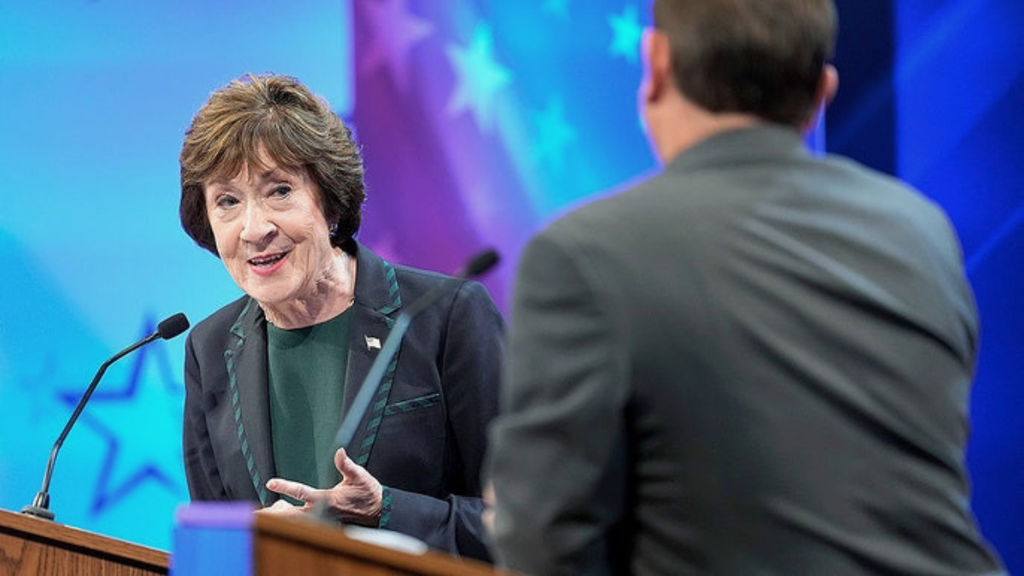
Maine Debate Erupts as Jackson Tells Collins to Shut Up as protester disrupts final debate, intensifying the high-stakes 2026 Senate race in Maine in 2026
Maine Senate Debate Turns Heated After Protester Interrupts Candidates
Maine Debate Erupts as Jackson Tells Collins to Shut Up after a protester interrupted the final debate between Democratic challenger Troy Jackson and Republican Senator Susan Collins. The tense exchange unfolded in Bangor on October 15, 2026, during a closely watched contest ahead of November’s midterm elections. The confrontation quickly became a defining moment in a debate covering economic pressures, climate concerns, immigration, and political independence.
The interruption began when a protester shouted concerns about artificial intelligence data centers and their environmental impact. Collins suggested the demonstrator supported Jackson, prompting an immediate and angry response from the Democratic candidate.
Jackson rejected the accusation, telling Collins to stop speaking and insisting he did not know the protester. The exchange interrupted the candidates’ discussion and highlighted the increasingly confrontational atmosphere surrounding their Senate contest.
Protester Sparks Dramatic Clash Between Jackson and Collins
The disruption occurred as Collins addressed the audience during the final debate of her reelection campaign. A protester interrupted her remarks with warnings about the environmental consequences of expanding AI infrastructure.
The demonstrator shouted that AI data centers were harming the climate and contaminating water supplies. Security personnel then escorted the individual from the debate venue while moderators worked to restore order.
Collins Accuses Jackson of Supporting the Protester
As security removed the protester, Collins suggested the individual belonged to Jackson’s campaign supporters. Her remark introduced a fresh dispute into an already tense political event.
Collins said the demonstrator was obviously one of Jackson’s supporters. The comment appeared to anger Jackson, who immediately challenged her assumption.
Jackson Fires Back With Sharp Remark
Jackson responded with the phrase, “Oh, shut up,” before insisting he did not know the individual. His reaction became one of the debate’s most memorable moments.
The exchange drew attention away from the candidates’ policy arguments and toward their personal confrontation. It also underscored how quickly campaign events can shift when candidates respond emotionally to unexpected disruptions.
The incident did not establish any connection between the protester and Jackson’s campaign. Collins’s statement represented her interpretation of the interruption, while Jackson directly denied knowing the demonstrator.
Troy Jackson and Susan Collins Clash Over Political Independence
The heated exchange reflected deeper disagreements between the candidates over leadership, party loyalty, and their records in public office. Jackson has sought to portray Collins as a reliable supporter of President Donald Trump’s agenda despite her reputation for occasional bipartisan votes.
Collins, meanwhile, has emphasized her experience and willingness to break with Republican colleagues. She argues that her independent approach benefits Maine by allowing her to negotiate across party lines.
Jackson Questions Collins’ Relationship With Trump
Jackson repeatedly challenged Collins over her voting record and relationship with the Republican president. He argued that her decisions ultimately support Trump whenever his administration needs crucial Senate votes.
Jackson claimed Collins consistently backs Trump when important votes arise. His argument aims to undermine her efforts to distinguish herself from the president in a state that supported his opponent during the 2024 election.
Collins rejected Jackson’s characterization and emphasized her record of bipartisan cooperation. She also warned voters against electing another senator who would consistently follow party leadership.
Collins Highlights Her Record of Bipartisanship
Collins defended her independence by pointing to past disagreements with Republican leadership. She cited her opposition to Pete Hegseth’s nomination for defense secretary as an example of her willingness to challenge her own party.
Her position centers on experience, legislative relationships, and the ability to secure federal resources for Maine. She has also highlighted her seniority as an advantage when negotiating funding and policy priorities.
Jackson disputes the effectiveness of Collins’ approach, arguing that her disagreements with Trump often occur when the outcome already appears settled. The candidates therefore offer voters competing interpretations of what political independence means in Washington.
AI Data Centers Become a Major Political Flashpoint
Although the protest interrupted the debate, its message highlighted an increasingly important issue in American politics. AI data centers require substantial electricity, cooling systems, water resources, and supporting infrastructure.
As companies expand artificial intelligence services, communities increasingly debate how these facilities affect local utilities and the environment. Residents may question whether large technology projects increase electricity costs or place additional pressure on water supplies.
Environmental Concerns Extend Beyond Climate Change
Data center construction can create local concerns involving land use, energy demand, water consumption, and infrastructure investment. The scale of these effects depends on facility design, cooling technology, electricity sources, and local environmental conditions.
Critics argue that communities should receive clear information about resource consumption before approving major developments. They also want companies to demonstrate how their projects will protect residents from unnecessary costs and environmental damage.
Supporters of data center investment point to potential economic benefits, including construction jobs, tax revenue, and technology development. They argue that careful planning and improved efficiency can help communities accommodate expanding digital infrastructure.
Why Data Centers Matter in the Maine Senate Race
The protest brought these competing concerns into a closely watched political contest. Candidates must consider how federal policy can influence technology investment, energy production, environmental protections, and local economic development.
Jackson has expressed concerns about the environmental and financial consequences of large data center projects. Collins has supported federal guidelines that would require technology companies to provide essential resources for their operations.
Their positions reflect different approaches to balancing innovation with public accountability. The issue could become increasingly important as artificial intelligence companies seek new locations for energy-intensive facilities.
Economic Pressures and Energy Costs Dominate Debate
Beyond the protest, Collins and Jackson debated issues affecting household budgets and Maine’s economic outlook. Rising fuel prices, electricity bills, and broader living expenses remain important concerns for voters.
Jackson connected these pressures to national policy decisions and criticized Collins’ support for the Trump administration. He argued that voters need a senator prepared to challenge policies that increase costs for working families.
Collins countered by emphasizing her legislative experience and record of securing federal funding for Maine. She argued that her seniority gives her influence over decisions that affect the state’s communities and economy.
The candidates also discussed immigration, the federal budget deficit, the Iran war, and possible Supreme Court reforms. Their disagreements illustrated how national policy disputes shape a Senate contest with significant implications for party control.
Campaign Finance Dispute Adds Another Layer of Tension
Campaign financing also emerged as a contentious issue during the final debate. Collins challenged Jackson over his pledge to reject contributions from billionaires and corporate political action committees.
She questioned his campaign’s involvement in joint advertising with Democratic political organizations. Jackson initially appeared to confuse those arrangements with independent political spending, which operates under different legal rules.
The discussion raised questions about campaign transparency and the influence of wealthy donors. Both candidates face pressure to explain how their fundraising practices align with their public promises.
Jackson’s campaign reported raising $20.4 million during the third quarter of 2026. Collins reported raising $5.2 million during the same period, although she entered the race with a substantial fundraising advantage.
The figures show that Jackson has rapidly built financial support since securing the Democratic nomination. However, fundraising totals alone cannot determine how voters will respond or which candidate will win the election.
Why the Maine Senate Race Matters Nationally
Maine’s Senate contest has attracted national attention because Republicans and Democrats are competing for control of the chamber. The seat represents an important opportunity for Democrats seeking to regain a Senate majority during the 2026 midterm elections.
Collins has won previous reelection campaigns despite strong Democratic challenges. Her experience and statewide political network give her established advantages, while Jackson is attempting to build support among working-class voters and people dissatisfied with the current administration.
The race also presents a challenge for Collins because she represents a state that voted against Trump in 2024. Jackson hopes to connect her Senate voting record directly to the president’s policies and their economic consequences.
Both campaigns must persuade undecided voters that their candidate offers the stronger approach to representing Maine. Debates provide an opportunity to compare policy positions, leadership styles, and responses to difficult questions.
Final Debate Could Influence Voters Before Election Day
The October 15 confrontation added a dramatic episode to the final debate between Collins and Jackson. However, voters must assess the candidates’ broader records and policy proposals beyond one heated exchange.
Jackson’s sharp response may reinforce his image as a combative challenger willing to confront an established senator. At the same time, critics could interpret his language as unnecessarily aggressive during an important public debate.
Collins may appeal to voters who prioritize experience, legislative relationships, and bipartisan negotiation. Nevertheless, her remarks about the protester could invite scrutiny over how readily she assigns political responsibility during contentious moments.
Neither exchange independently establishes which candidate would serve voters more effectively. The election outcome will depend on a broader combination of policy preferences, campaign organization, voter turnout, and public perceptions.
Conclusion: Heated Maine Debate Raises Stakes for Senate Showdown
The final debate between Troy Jackson and Susan Collins exposed sharp divisions over political independence, economic policy, environmental concerns, and leadership. A protester’s interruption triggered the headline-making confrontation, with Jackson telling Collins to shut up after she suggested the demonstrator supported him.
The incident also brought renewed attention to the growing debate over AI data centers and their potential effects on electricity costs, water resources, and climate policy. Meanwhile, disagreements over Trump, campaign finance, and federal spending kept the Senate race focused on major national issues.
With Election Day approaching on November 3, 2026, both candidates face the challenge of convincing voters that their approach best serves Maine. The final outcome will reveal whether voters favor Collins’ established experience or Jackson’s challenge to the incumbent’s political record.
Also read: Trump Blocks Pentagon’s Shocking Execution Livestream Plan
Also read: White House Reveals $49 Trillion Price Tag for Socialist Plans