Trump’s Triumphal Arch reaches a major milestone as final plans advance, raising emotional debate over America’s history, security, and Washington’s future.
Trump’s Triumphal Arch reaches a major milestone as final plans advance, raising emotional debate over America’s history, security, and Washington’s future. The Interior Department has submitted its final design plans for President Donald Trump’s proposed monumental arch to the National Capital Planning Commission for review.
The proposed structure would stand near Arlington National Cemetery and the Arlington Memorial Bridge in Washington, D.C. Officials have scheduled a November 5, 2026, meeting to consider the final site and building plans. <Cite refs={[“turn493528search0″,”turn493528search1”]}/>
The project has attracted national attention because of its enormous scale, historical setting, and potential impact on the capital’s iconic landscape. Supporters describe the arch as a patriotic landmark, while critics question its design, location, and long-term consequences.
Trump’s Triumphal Arch Advances Toward Final Approval
The U.S. Department of the Interior has submitted updated documents covering the proposed arch’s design, lighting, traffic circulation, and environmental considerations. These revisions address several issues raised during earlier planning reviews.
The National Capital Planning Commission previously approved preliminary plans in July 2026, while requesting additional information before considering final approval. The upcoming review represents another significant step toward determining whether the administration can advance construction. <Cite refs={[“turn493528search1″,”turn493528search2”]}/>
A Monumental Design for America’s 250th Anniversary
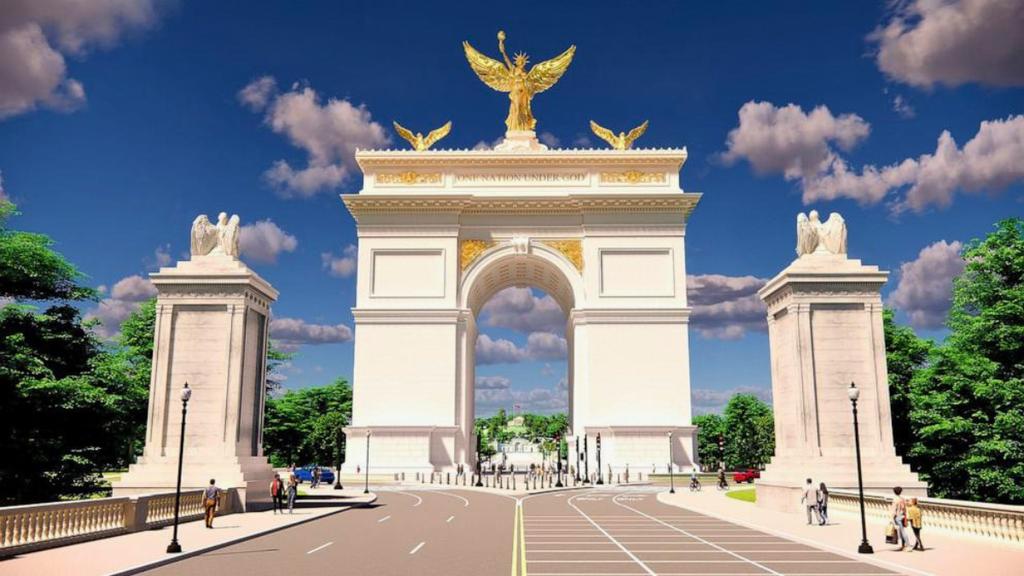
The proposed Triumphal Arch, also called the Monumental Arch in planning documents, would reach approximately 250 feet in total height. Its design features a large arch topped by a golden, winged statue resembling the Statue of Liberty.
The statue would hold a torch featuring an eternal flame, creating a prominent visual landmark near the Potomac River. According to planning documents, the design aims to celebrate American achievements and commemorate the nation’s 250th anniversary. <Cite refs={[“turn493528search0″,”turn493528search1”]}/>
At more than twice the height of the 99-foot Lincoln Memorial, the proposed monument would dramatically alter the surrounding skyline. Its scale has intensified discussions about historic preservation, architectural balance, and the symbolic character of the nation’s capital.
Updated Plans Address Lighting and Traffic Concerns
The final submission includes several changes intended to address transportation and visibility concerns surrounding the proposed monument. Officials have revised traffic circulation routes and removed 15 traffic signal posts included in earlier proposals.
The updated lighting design also incorporates the eternal flame, which must remain visible from different angles, including nighttime viewing conditions. Federal aviation authorities previously determined that the proposed structure would not pose a hazard to aircraft. <Cite refs={[“turn493528search0″,”turn493528search1”]}/>
Why the Eternal Flame Matters
The eternal flame represents a central feature of the updated monument design and could become a defining visual element. Its placement also reflects aviation visibility requirements identified during the project’s review process.
Officials must balance the monument’s dramatic appearance with practical considerations involving nearby roads, air traffic, pedestrians, and the surrounding environment. These requirements make the final planning review particularly important for the project’s future.
Trump’s Security Claims Raise Fresh Questions
Trump previously described the proposed arch as a potential national security facility, claiming it could accommodate drones, snipers, and ammunition. Those statements generated additional questions about the monument’s intended functions and its relationship with nearby transportation infrastructure.
However, the latest publicly released planning documents focus on ceremonial and tourism-related purposes rather than detailing specific military installations. Interior Department officials have maintained that the design can accommodate the national security functions Trump previously highlighted. <Cite refs={[“turn493528news3″,”turn493528news4”]}/>
What the Latest Documents Reveal
The absence of explicit military features from the published plans has prompted further scrutiny of the administration’s intentions. Officials have indicated that certain security-related details may not appear in publicly released documents.
This distinction leaves important questions unanswered about how the structure might ultimately operate. The planning commission must evaluate the submitted proposal, while separate legal and safety considerations could affect the project’s development.
Historic Preservation Concerns Intensify
The proposed arch would occupy a prominent location near Arlington National Cemetery, across the Potomac River from Washington. Critics argue that its enormous size could disrupt historic views connecting Arlington, the Lincoln Memorial, and the surrounding national landscape.
The administration has acknowledged that the monument would cause adverse effects on the area’s historic setting and river views. Officials argue that the selected location remains central to the project’s intended purpose. <Cite refs={[“turn493528search0″,”turn493528news4”]}/>
Legal Challenges Could Affect Construction
The project has faced legal opposition from parties concerned about its location, design, and potential effects on public spaces. Those disputes add uncertainty as the administration pursues approval for the proposed national monument.
The final planning review will address the submitted design, but it does not eliminate every potential legal obstacle. Preservation advocates and other opponents may continue challenging the project as it moves through the approval process.
What Happens Next for Trump’s Monument?
The National Capital Planning Commission is scheduled to consider the final site and building plans on November 5, 2026. Commissioners will assess the proposal against relevant planning requirements and the concerns raised during previous reviews. <Cite refs={[“turn493528search1″,”turn493528search2”]}/>
If the commission approves the plans, the project could move closer to subsequent implementation steps, although other requirements may remain. Any outstanding legal disputes or additional regulatory issues could still affect the construction timeline.
The proposed monument has also become part of Trump’s broader effort to reshape Washington through high-profile architectural projects. Its eventual outcome could influence wider discussions about presidential legacies, public monuments, and the preservation of historic federal spaces.
Conclusion
The submission of final plans marks an important milestone for Trump’s proposed Triumphal Arch, but approval remains a crucial outstanding step. The November review will help determine whether the ambitious monument can progress toward construction.
Supporters see an opportunity to create a lasting patriotic landmark for America’s 250th anniversary. Critics remain concerned about its scale, historical setting, security questions, and potential legal complications.
The project’s future will depend on the planning commission’s decision and any remaining regulatory or legal hurdles. Until officials resolve those issues, Trump’s monumental arch will remain one of Washington’s most closely watched and controversial proposed developments.
Also read: JD Vance Eyes 2028: Trump Endorsement Could Boost His Presidential Bid