
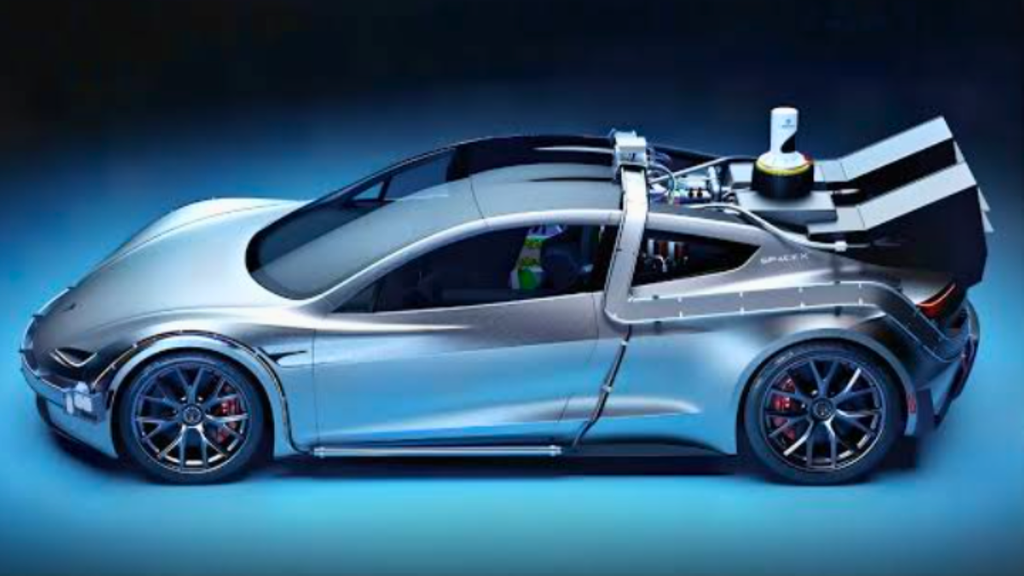
Tesla Roadster Stuns Texas With a Jaw-Dropping Flying Debut as its EV flips, flies, and targets production in 2028 after years of waiting amid major buzz.
Tesla Roadster Stuns Texas With a Jaw-Dropping Flying Debut
Tesla Roadster Stuns Texas With a Jaw-Dropping Flying Debut as the electric supercar demonstrates extraordinary aerial stunts, rapid acceleration, and futuristic automotive technology. The highly anticipated unveiling took place on October 15, 2026, at a SpaceX test site in Texas. The demonstration captured attention with a vehicle that appeared to drive upside down, launch into the air, and perform dramatic flips.
The next-generation Tesla Roadster combines electric performance with experimental technology designed to push conventional automotive engineering beyond its familiar limits. Its unveiling also revived interest in a sports car that Tesla first introduced as a prototype nearly nine years ago.
Tesla Roadster Takes Flight During Dramatic Texas Demonstration
Tesla transformed its latest Roadster unveiling into an unusual showcase of speed, engineering, and aerial movement. The vehicle accelerated up a massive curved ramp before traveling upside down and launching into a controlled aerial maneuver.
Cold-gas thrusters helped the Roadster rotate in midair before returning to the ground. The demonstration also showed the vehicle jumping over other Tesla vehicles, including the company’s electric Semi truck.
These stunts distinguished the Roadster from conventional electric sports cars. Rather than focusing exclusively on acceleration, handling, and driving range, Tesla highlighted experimental capabilities designed to create a more dramatic driving experience.
However, the demonstration does not establish that the vehicle can fly like an aircraft or operate safely in everyday traffic. Its aerial movements rely on specialized equipment and controlled testing conditions.
Tesla Roadster Acceleration Claims Raise Expectations
Beyond its flying demonstration, the new Tesla Roadster attracted attention for its extraordinary acceleration claims. Tesla presented performance figures suggesting that certain versions could reach 60 miles per hour in less than one second.
That target would place the Roadster among the most ambitious electric performance vehicles ever announced. Traditional high-performance cars rely on tire grip to transfer engine power to the road, creating physical limits on acceleration.
Tesla’s experimental approach combines electric propulsion with additional systems designed to generate thrust and increase traction. The company has also discussed a powerful underbody suction system intended to improve grip.
Nevertheless, performance claims require careful interpretation until independent testing verifies the figures under clearly documented conditions. Demonstrations at controlled facilities cannot automatically establish how a production vehicle will perform on public roads.
How SpaceX Technology Could Help the Flying Roadster
The new Roadster incorporates experimental technology developed through collaboration between Tesla and SpaceX. Cold-gas thrusters form a central part of the vehicle’s unusual aerial capabilities.
These systems release stored pressurized gas to generate directional thrust. Unlike conventional rocket engines, cold-gas thrusters do not rely on burning fuel to produce their primary thrust.
Carefully controlled thrust can change a vehicle’s orientation and produce brief upward or rotational movements. Integrating such equipment into a sports car, however, creates substantial engineering challenges.
The vehicle must manage pressure storage, weight distribution, stability, and precise control during every maneuver. Engineers must also consider how the system affects passenger protection and vehicle reliability.
Tesla’s demonstration illustrated the concept, but the company still faces questions about practical operation, long-term durability, and regulatory approval. Further testing will help determine which features can reach customers and which remain experimental.
What Makes the Next-Generation Tesla Roadster Different?
The original Roadster helped establish Tesla’s reputation for electric performance. Its successor aims to build on that legacy through a combination of advanced propulsion, aerodynamic design, and experimental hardware.
Electric Power Meets Extreme Performance
Electric motors can deliver substantial torque quickly, making them particularly suitable for high-performance acceleration. The Roadster builds on this advantage while exploring additional systems intended to overcome conventional traction limits.
Its proposed performance targets could appeal to enthusiasts seeking exceptional speed and advanced engineering. Yet real-world results will depend on the final production configuration, battery performance, thermal management, and testing conditions.
A Suction System Designed to Increase Grip
Tesla has demonstrated an underbody fan concept designed to create suction between the vehicle and the road. This approach could increase downward force and help the tires maintain contact with the driving surface.
Greater grip could improve acceleration, cornering, and stability under suitable conditions. However, the system introduces mechanical complexity and raises questions about efficiency, maintenance, and performance across different road surfaces.
Rocket-Inspired Technology With Practical Limitations
Cold-gas thrusters give the Roadster its most distinctive experimental feature. They also introduce challenges that conventional sports car manufacturers rarely encounter.
Engineers must control thrust precisely while maintaining predictable vehicle behavior. Public-road operation would require careful consideration of safety, equipment reliability, and applicable regulations.
The company has not established that every demonstrated feature will appear in a road-legal production model. Buyers should therefore distinguish the spectacular prototype demonstration from confirmed production specifications.
Tesla Roadster Production Timeline Remains Uncertain
Tesla first unveiled its next-generation Roadster concept in November 2017. The company initially targeted deliveries in 2020, but repeated delays pushed the project well beyond its original schedule.
The October 2026 unveiling renewed expectations that the long-awaited electric supercar could finally move toward production. Elon Musk indicated that production could begin in 2028.
However, a proposed production year does not guarantee that customer deliveries will begin on schedule. Tesla must still finalize engineering, manufacturing arrangements, vehicle specifications, and other essential production requirements.
The company has not provided a confirmed final retail price for the redesigned model. Prospective buyers will need additional information about availability, configurations, deposits, and delivery schedules before making purchasing decisions.
For customers who have followed the Roadster project since its original announcement, the latest demonstration offers a significant development. Even so, the vehicle’s eventual commercial arrival remains the most important milestone.
Could the Tesla Roadster Change the Electric Supercar Market?
The Roadster arrives in a competitive market where manufacturers increasingly pursue faster acceleration, advanced battery systems, and sophisticated vehicle controls. Tesla’s approach attempts to differentiate its sports car through experimental technology rather than conventional performance improvements alone.
If the company delivers its promised capabilities, the Roadster could attract attention from wealthy enthusiasts and technology-focused buyers. Its engineering could also encourage broader discussion about new ways to improve traction and vehicle control.
However, extraordinary demonstrations do not automatically translate into commercial success. Manufacturing costs, reliability, charging infrastructure, maintenance requirements, and regulatory restrictions could influence customer demand.
The vehicle also faces a credibility challenge because its development has taken considerably longer than originally planned. Potential buyers will likely look for independently verified performance figures and firm delivery commitments.
Consequently, the Roadster’s market impact will depend on more than its ability to perform aerial stunts. Pricing, practical usability, safety, and production readiness will ultimately shape its commercial prospects.
Safety and Road-Legal Questions Remain Important
The Roadster’s experimental flight capabilities raise important questions about how engineers could safely integrate such technology into a consumer vehicle. High-pressure gas systems and aerial maneuvers introduce risks that conventional electric cars do not typically face.
Manufacturers must demonstrate that critical systems operate reliably across expected driving conditions. They must also address emergency procedures, passenger protection, component failures, and maintenance requirements.
Public-road regulations may restrict experimental features that perform well at dedicated testing facilities. Any production version would need to meet the applicable requirements for its intended market and configuration.
Tesla has not demonstrated that its aerial capabilities are suitable for routine public-road use. Buyers should wait for clear specifications and regulatory information before assuming that every showcased feature will be available legally.
Conclusion: Tesla Roadster Brings a Bold Vision to Life
Tesla’s dramatic Texas unveiling has brought fresh attention to one of the automotive industry’s longest-awaited electric supercars. The next-generation Roadster combines ambitious acceleration targets with experimental thrusters and a suction-based grip system.
Its aerial stunts offer a glimpse of what future automotive engineering might explore. However, independent performance verification, safety assessments, final pricing, and confirmed production plans remain essential.
With production tentatively targeted for 2028, Tesla now faces the challenge of turning an extraordinary demonstration into a dependable customer vehicle. The Roadster’s true significance will emerge when the company proves that its bold engineering promises can survive the demands of real-world driving.
Also read: Tragic Oregon School Shooting








