
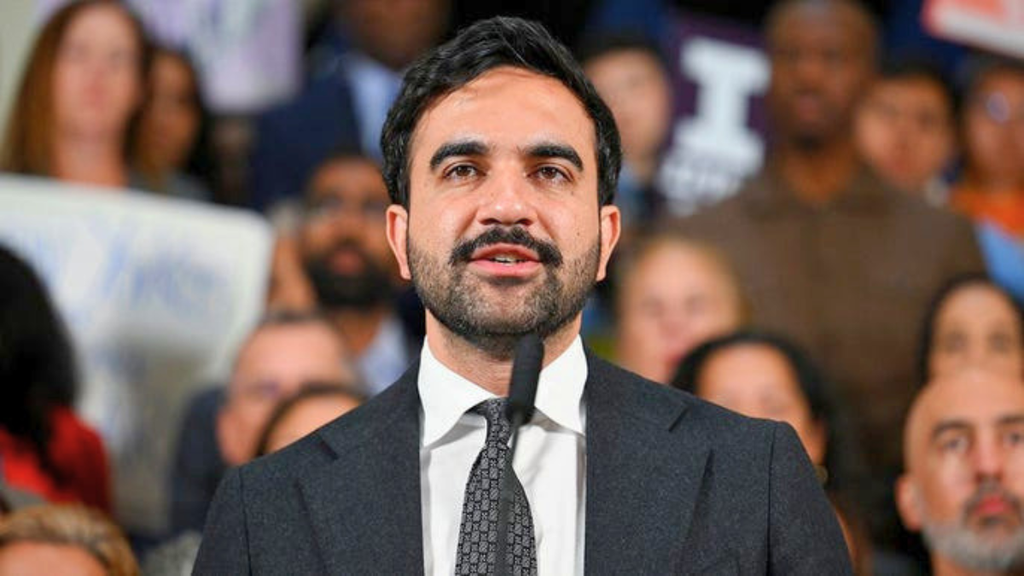
Mamdani Faces Fierce Backlash Over Italian Heritage Post as a councilwoman condemns his tribute to Vito Marcantonio and his communist ties, sparking debate now.
Mamdani Faces Fierce Backlash Over Italian Heritage Post after New York City Councilwoman Vickie Paladino criticized his tribute to Vito Marcantonio. The mayor’s Italian Heritage Month message praised Marcantonio’s vision of government serving working people. Paladino condemned the post, accusing Mamdani of promoting communist propaganda and overlooking other Italian-American contributions.
Why Mamdani’s Italian Heritage Month Post Sparked Outrage
Mamdani shared his message on social media, celebrating Italian Heritage Month while highlighting Marcantonio’s political legacy. The mayor wrote that New Yorkers should continue fighting for Marcantonio’s vision of government that serves working people.
The tribute quickly attracted criticism because Marcantonio maintained connections with the American Communist movement. His political history remains controversial, particularly among critics who view his positions as incompatible with American patriotism.
Who Was Vito Marcantonio?
Marcantonio represented East Harlem in Congress for seven terms. He initially served as a Republican before joining the left-wing American Labor Party.
He opposed American involvement in the Korean War and provided legal assistance to the Communist Party. His activities attracted federal scrutiny during the Cold War, when the FBI maintained files on him.
Supporters have viewed Marcantonio as an advocate for working-class communities and immigrant families. Critics, however, emphasize his political affiliations and opposition to American foreign policy.
Vickie Paladino Delivers a Sharp Rebuke
Queens Councilwoman Vickie Paladino responded angrily to Mamdani’s tribute. She described Marcantonio as an obscure Italian-American communist and questioned why the mayor chose him to represent Italian heritage.
Paladino argued that New York City has many Italian-American figures whose achievements deserve recognition. She accused Mamdani of using the heritage celebration to advance an ideological message.
Her criticism extended beyond Marcantonio’s political history. Paladino also challenged Mamdani’s connection to Italian-American identity and urged him to stop invoking that heritage.
Paladino Shares Her Family’s Immigration Story
Paladino contrasted the mayor’s tribute with her own family’s experiences. She said her father fought during World War II against Italian forces serving under Benito Mussolini.
She also described her mother’s efforts to raise five children while working in a button factory. Paladino presented their experiences as examples of the sacrifices Italian-American families made while building lives in the United States.
In her view, Italian-American identity represents hard work, patriotism and pride in becoming American. She argued that communist politics should not define the community’s heritage.
Mamdani’s Tribute Revives Debate Over Political Ideology
The controversy highlights a broader disagreement over how public officials recognize historical figures. Some people emphasize a politician’s record on labor rights and working-class issues, while others focus on ideological affiliations.
Marcantonio’s career offers material for both interpretations. His supporters have highlighted his advocacy for East Harlem residents, while opponents criticize his relationship with communist organizations.
Mamdani’s brief message emphasized government serving working people. However, his choice of Marcantonio prompted critics to question the symbolism behind the tribute.
Why the Historical Context Matters
Italian Heritage Month celebrates the history, culture and contributions of Italian Americans. Political leaders often mark the occasion by recognizing prominent figures and community achievements.
Choosing a controversial historical figure can shift attention away from those broader celebrations. In this case, Marcantonio’s communist connections became the central focus of the discussion.
The dispute also reflects continuing disagreements over how Americans interpret political history. Different communities may prioritize different parts of a public figure’s legacy.
Mamdani Faces Wider Scrutiny Over Italian-American Relations
The backlash followed other disagreements involving Mamdani and New York City’s Italian-American community. His decision to skip Columbus Day parades in Brooklyn and Queens also drew criticism from some organizers and community members.
Mamdani has previously criticized Christopher Columbus, whose legacy remains deeply contested. Supporters of Columbus Day celebrations often emphasize Italian-American pride, while critics highlight the historical harms associated with colonization.
These separate controversies have intensified scrutiny of the mayor’s public messaging around Italian heritage. Critics argue that his choices overlook traditions important to many Italian-American New Yorkers.
Mayor’s Office Had Not Responded
Mamdani’s office had not immediately responded to a request for comment regarding Paladino’s criticism. His social media message focused on Marcantonio’s vision of government and working-class representation.
Without further clarification, the post’s intended emphasis remains open to interpretation. The disagreement continues to center on whether Marcantonio represents an appropriate figure for an Italian Heritage Month tribute.
A Heritage Celebration Becomes a Political Flashpoint
The dispute demonstrates how historical tributes can trigger broader political arguments. A message intended to recognize a public figure can become controversial when that figure carries a disputed ideological legacy.
Paladino has framed the tribute as an example of inappropriate communist messaging. Mamdani’s post, meanwhile, emphasized Marcantonio’s vision of government serving working people.
Ultimately, the controversy raises questions about heritage, political identity and historical memory. As debate continues, New Yorkers remain divided over which figures best represent Italian-American contributions to the city.








