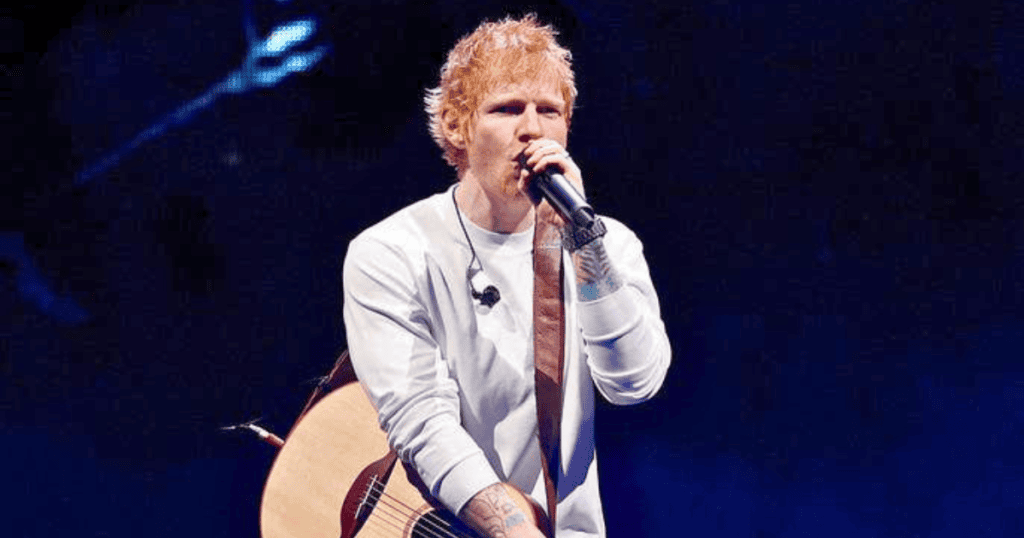
Ed Sheer-an concertgoers debate musicians speaking about politics after Macklemore’s removal from the tour sparks a wider free speech dispute.
Ed Sheer-an’s latest concerts have become part of a growing debate over whether musicians should publicly discuss divisive political issues while performing for large audiences.
The discussion intensified after rapper Macklemore was removed from Sheer-an’s U.S. tour following pro-Palestinian comments during a concert. Several other supporting acts later withdrew from the tour in solidarity.
At a recent Philadelphia concert, fans offered different views on whether artists should use the stage to express political opinions. Some said musicians have every right to speak their minds, while others argued that concerts should remain places where audiences can temporarily escape political disputes.
Fans Question Politics at Concerts
Several concertgoers said artists should understand that political statements can divide an audience that may hold widely different views.
One attendee said musicians are free to express their opinions but warned that doing so could alienate a significant portion of their fan base.
Another fan said people attend concerts primarily for entertainment and may not want political disagreements brought into the experience.
Some Fans Want Music to Stay Separate
A teacher who attended the Philadelphia concert compared a concert with a classroom, saying people can have personal political beliefs without necessarily bringing them into a shared space.
Other fans expressed a similar sentiment, saying they wanted the opportunity to enjoy music without becoming involved in political arguments.
The reactions illustrate the challenge facing artists with large and politically diverse audiences.
Other Fans Defend Artists’ Right to Speak
Not everyone agreed that musicians should remain silent.
Another concertgoer said artists have the same right as anyone else to express their opinions, while audiences have the choice to listen, disagree or simply ignore the comments.
That perspective has become central to the wider argument surrounding Macklemore and Sheer-an’s tour.
The debate involves competing views about artistic freedom, audience expectations and the role entertainers should play when major political or humanitarian issues intersect with their work.
Sheer-an Addresses the Controversy
Sheer-an spoke directly about the controversy during his Philadelphia performance.
He said he had never intended to become an activist musician and wanted his concerts to focus on unity and humanity. At the same time, he addressed the situation in Gaza and said he could no longer hide how he felt about the humanitarian crisis.
Sheer-an also told the audience that people with opposing viewpoints should still be able to attend his concerts and enjoy the music together.
Macklemore Dispute Changed the Tour
The controversy began after Macklemore made pro-Palestinian remarks during a September concert.
He was subsequently removed from the U.S. leg of Sheer-an’s tour. Sheer-an has said the decision was not his and that he attempted to navigate the dispute involving the tour’s venues and promoters.
Several other performers associated with the tour later withdrew, including Lukas Graham, Aaron Rowe, Beoga and Finneas.
The Dispute Goes Beyond One Concert
The controversy has expanded into a broader argument about free speech and political expression in entertainment.
Some critics have questioned whether artists should be able to make political statements without consequences from promoters, venues or audiences.
Others argue that entertainers are not obligated to turn concerts into political platforms and that audiences should be able to enjoy performances without being drawn into contentious issues.
Fans Remain Divided Over Sheer-an
Recent reactions show that there is no single response among Sheer-an’s audience.
Some fans have defended his decision to continue the tour and his effort to maintain concerts as spaces centered on music. Others have criticized what they see as an unwillingness to take a stronger public position.
Reports from the Philadelphia concert also showed people protesting outside the venue, while other attendees said they simply wanted to watch Sheer-an perform.
A Difficult Balance for Musicians
For major artists, the question is complicated by the size and diversity of their audiences.
A political statement may strengthen the connection with fans who share the artist’s views while frustrating others who disagree.
At the same time, staying publicly neutral can also draw criticism from people who believe entertainers should speak out on important issues.
The Debate Is Likely to Continue
The Sheer-an-Macklemore controversy has highlighted a question that extends beyond one tour: should concerts primarily be spaces for entertainment, or should artists use their platforms to address political and humanitarian issues?
Fans are ultimately making their own choices about what they want from the artists they support.
For Sheer-an, the immediate focus remains his tour and the audiences attending his shows. But the debate surrounding political speech at concerts is unlikely to disappear, particularly as musicians continue to use massive public platforms to discuss issues beyond music.
Also read: Movie Star Rushes to Support Friends After Family Loss