SS Richard Montgomery Masts Removed After 82 Years as engineers complete a major operation around the dangerous Thames Estuary wreck.
SS Richard Montgomery Masts Removed After 82 Years
SS Richard Montgomery Masts Removed After 82 Years as engineers completed operations around the Thames Estuary wreck.
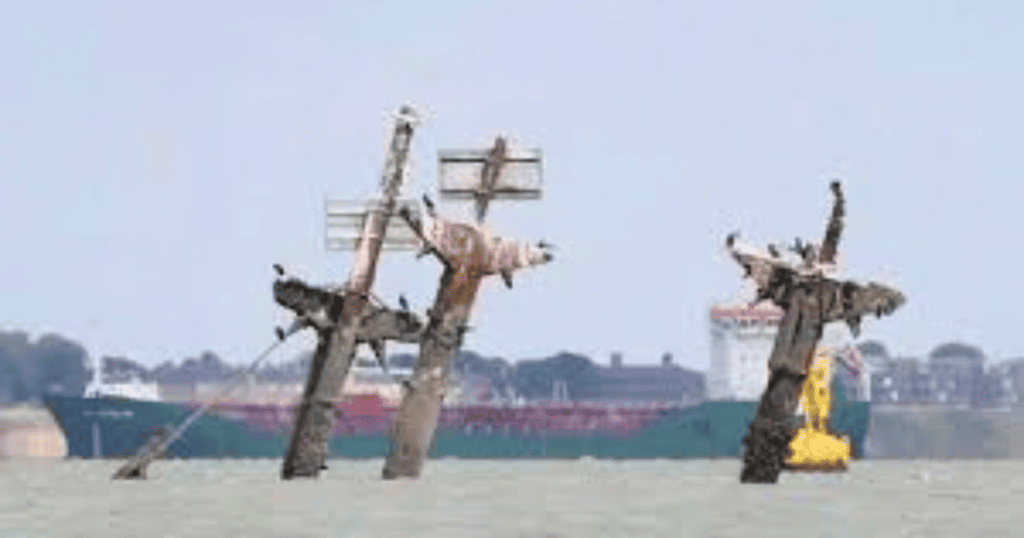
The masts remained visible above the water since the Liberty ship sank near Sheerness during August 1944.
Engineers removed the final mast Wednesday, completing work that began in September under strict marine safety controls.
The wreck contains roughly 1,400 tonnes of wartime explosives, making every stage sensitive and closely monitored.
Officials planned the removal because corrosion weakened structures and increased concerns about their eventual collapse onto munitions.
The three masts had stood above the wreck for decades, becoming a familiar landmark along nearby coastlines.
Removing their weight reduces strain on the wreck and eliminates the possibility of falling structures striking cargo.
Specialist divers worked underwater while cranes supported each mast during cutting, lifting, and controlled recovery operations safely.
The team used extensive surveys and risk assessments before beginning the carefully planned engineering work this September.
Why Were The SS Richard Montgomery Masts Removed?
The ship sank after grounding on a sandbank while carrying munitions toward Britain during World War Two.
Much of its original cargo was recovered, but substantial quantities remained inside the damaged vessel after sinking.
Government surveys later identified the deteriorating masts as a potential structural concern requiring long-term risk management measures.
Experts determined that removing the masts could reduce loading on deck structures without disturbing the remaining explosives.
What Happened During The Mast Removal?
Marine engineers positioned specialist equipment around the wreck while divers completed underwater preparation before each cutting operation.
Cranes then supported sections as workers separated the steel structures and lifted them carefully from the water.
Sonar imagery helped crews operate in dark underwater conditions while maintaining precise control around the unstable wreck.
Weather and sea conditions remained important because engineers needed safe working windows throughout the complex removal operation.
What Happens To The Removed Masts?
The recovered masts will undergo conservation at the Historic Dockyard Chatham before authorities decide their future display.
The preservation plan aims to retain an important physical link with the vessel’s wartime history for visitors.
Local communities had watched the masts for generations, giving their removal significance beyond the engineering operation itself.
Authorities will continue maintaining an exclusion zone around the wreck after mast removal operations have finished safely.
The exclusion zone remains necessary because significant wartime explosives still remain deep inside the sunken ship today.
Is The SS Richard Montgomery Wreck Safe Now?
Removing the masts addresses one structural concern, while the remaining wreck still requires careful monitoring by authorities.
Officials will continue surveys and monitoring to understand changes affecting the wreck and surrounding seabed over time.
The operation forms part of a longer strategy focused on managing the wreck and reducing risks nearby.
Despite the masts disappearing from the skyline, the shipwreck remains an important maritime and historical site today.
What Happens Next?
Further monitoring will continue while specialists assess the wreck’s condition and maintain established safety measures around it.
The removed structures will receive conservation treatment before authorities make a final decision about their display location.
After more than eight decades underwater, SS Richard Montgomery has entered another chapter in its long history.
Also read: Scott Jennings Gives Ken Paxton Blunt Trump Advice