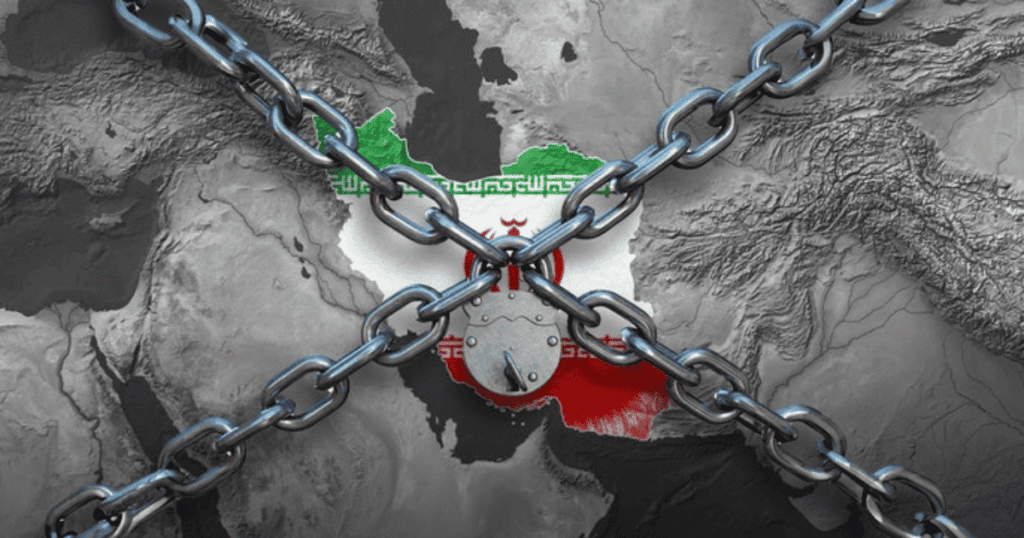
Iran’s economy is sliding deeper into crisis as U.S. pressure hits oil exports, currency and trade, leaving Tehran with three difficult options.
Iran’s economy is facing an increasingly severe crisis as intensified U.S. sanctions, disruptions to oil exports and the conflict around the Strait of Hormuz squeeze Tehran’s finances.
Miad Maleki, a former CIA operative and senior fellow at the Foundation for Defense of Democracies, has described Iran’s economic situation as being on the verge of collapse. He argues that Tehran is losing one of its most important sources of leverage as Washington tightens pressure on the country.
The worsening economic conditions leave Iran’s leadership facing difficult choices over whether to negotiate, continue resisting or escalate the confrontation.
U.S. pressure hits Iran’s oil lifeline
Oil remains central to Iran’s economy, making restrictions on exports particularly damaging.
Reuters reported Sunday that the latest U.S. campaign has sharply constrained Iran’s ability to export oil and obtain foreign currency. Iranian insiders told Reuters that the country is struggling to secure imports and maintain access to international financial channels.
Maleki previously told Fox News Digital that Iran needs roughly 1 million barrels of oil exports per day simply to sustain its economy, while significantly higher exports would be needed to prevent severe inflation and support economic development.
He also warned that Tehran cannot solve shortages simply by printing more money.
“They can keep printing money, but they can’t really print the type of commodities that they need,” Maleki said, pointing to necessities such as gasoline and wheat.
Strait of Hormuz adds to the pressure
The economic crisis is unfolding as the U.S. and Iran remain locked in a confrontation over the Strait of Hormuz, one of the world’s most important energy chokepoints.
The waterway carries a significant share of global oil and liquefied natural gas shipments, meaning prolonged disruption has consequences far beyond Iran.
Washington has intensified its economic and naval campaign, while Iran has repeatedly threatened to retaliate against U.S. military action and challenge shipping restrictions. Reuters reported that the latest pressure campaign has reduced Tehran’s ability to use Hormuz as leverage against Washington.
The result is a high-stakes economic battle in which Iran needs oil revenue while attempting to preserve its strategic influence over the waterway.
Iran faces three difficult choices
As economic pressure grows, Tehran effectively faces three broad paths.
1. Negotiate with Washington
The first option would be to return to negotiations and seek sanctions relief or other economic concessions.
Such a move could provide Iran with a route toward restoring oil exports, accessing foreign currency and stabilizing its economy.
The challenge for Tehran is political. The Islamic Republic has built much of its identity around resistance to American pressure, making major concessions potentially difficult for the regime to justify domestically.
2. Continue the current standoff
Iran could also maintain the current approach: resist U.S. demands while avoiding a full-scale escalation.
That would allow Tehran to preserve its political position while continuing to challenge Washington through military, diplomatic and economic means.
But the cost could be significant.
Reuters reported that Iran is already experiencing an unusually severe economic squeeze, with restricted oil exports and reduced access to foreign currency putting additional strain on the economy.
3. Escalate the confrontation
The third option would be further escalation, particularly around the Strait of Hormuz.
Iran has repeatedly used its ability to disrupt shipping as a strategic bargaining tool. But escalating further could invite additional American military action and inflict even more damage on Iran’s already weakened economy.
Iranian officials have nevertheless warned that future American attacks would trigger a stronger response.
Parliament Speaker Mohammad Baqer Qalibaf said Sunday that Iran’s response to future attacks would be “faster, heavier and more painful,” according to Reuters.
Economic pain could fuel unrest
The biggest concern for Tehran may not be the immediate loss of government revenue but the possibility that worsening economic conditions trigger another wave of public unrest.
Maleki previously told Fox News Digital that shortages of basic necessities could become a critical warning sign for the Iranian regime. He specifically pointed to gasoline and other essential commodities as areas to watch.
Iran has experienced repeated waves of protests over inflation, unemployment, living costs and declining purchasing power.
The current economic squeeze could therefore create a difficult dilemma for the regime: continue spending on the military and security apparatus while ordinary Iranians face worsening economic conditions.
China remains a crucial factor
Iran’s ability to withstand the pressure also depends heavily on China.
Chinese buyers have remained a major destination for Iranian oil, providing Tehran with an important economic lifeline despite U.S. sanctions.
Fox News has reported that Chinese imports of Iranian crude fell sharply in August, adding to pressure on Tehran.
How much China continues to purchase Iranian oil could therefore become a crucial factor in determining whether Washington’s economic campaign succeeds.
Can economic pressure force Tehran to change course?
The central question is whether Iran’s worsening economy will eventually force its leaders to compromise.
There are signs the pressure is working. Reuters reported that Iranian officials and insiders acknowledge severe economic strains, including difficulties obtaining foreign currency and essential imports.
But economic pain does not automatically translate into political surrender.
Iran has spent decades adapting to sanctions and developing informal trade networks designed to keep the economy functioning despite international restrictions.
That means Tehran could choose to absorb further economic damage rather than make concessions it considers politically dangerous.
For now, Iran’s leaders appear unwilling to back down, while Washington continues to increase the pressure.
With oil exports under strain, the Strait of Hormuz remaining a major flashpoint and domestic economic conditions deteriorating, Tehran’s next decision could determine whether the confrontation moves toward negotiations—or a much more dangerous escalation.
Also read: US Forces Board Ships in Strait of Hormuz
Satta Matka 16