Trump and Xi Jinping will visit the National Archives before the Chinese president leaves Washington, marking a symbolic end to the state visit.
Chinese President Xi Jinping is set to conclude his three-day state visit to Washington with a highly symbolic stop at the National Archives, where President Donald Trump will accompany him before bidding farewell.
The final event comes after an intense round of meetings, ceremonies and diplomatic engagements that placed trade, artificial intelligence, rare earth minerals and broader U.S.-China relations at the center of attention.
Trump and Xi to Visit National Archives
Trump and first lady Melania Trump are expected to welcome Xi and his wife, Peng Liyuan, back to the White House for morning tea in the Red Room.
The couples will then travel to the National Archives, where they are scheduled to view historic American records connected to the long and complicated relationship between the United States and China.
The building houses some of America’s most important founding documents, including the Declaration of Independence, the U.S. Constitution and the Bill of Rights.
The visit gives the summit a distinctly historical backdrop as the two governments continue navigating major disagreements alongside efforts to stabilize their relationship.
A Carefully Chosen Final Gesture
The National Archives stop carries significance beyond the schedule of the state visit.
Rather than ending Xi’s trip with another round of negotiations, the two leaders will spend part of the final morning viewing documents that represent the history and foundations of the United States.
The timing also comes as the U.S. marks its 250th anniversary, adding another layer of symbolism to the visit.
After the Archives visit, Trump and Melania Trump are expected to bid farewell to Xi and Peng before the Chinese delegation leaves Washington.
A Summit Filled With Diplomatic Theater
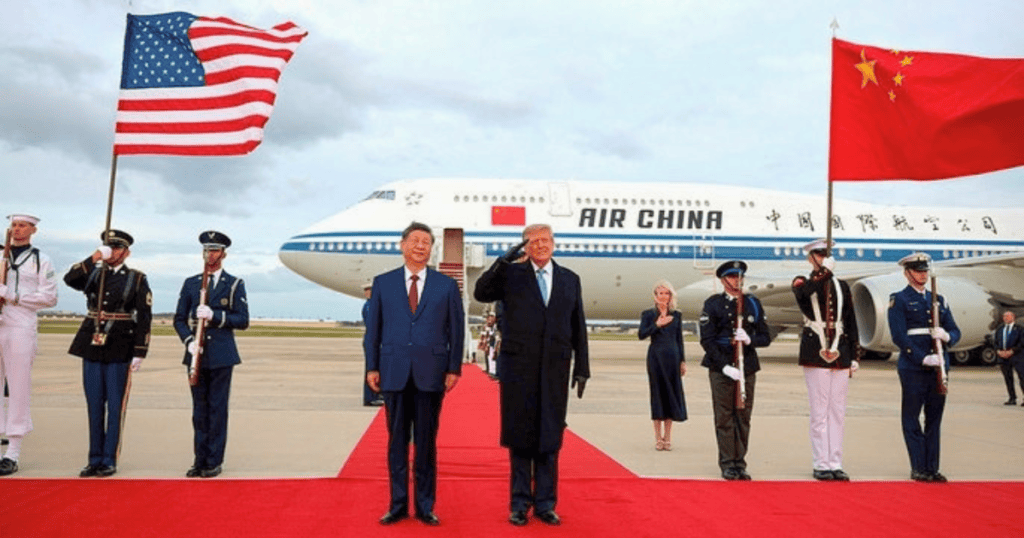
Xi’s final day follows an elaborate reception that began with Trump’s unusual decision to personally greet the Chinese president at Joint Base Andrews.
The airport welcome was notable because visiting foreign leaders are more commonly received at the White House rather than by the president at the airport.
Thursday’s schedule included a formal arrival ceremony, military honors, bilateral discussions and a state dinner attended by prominent figures from American business and technology.
The White House also highlighted several symbolic moments during Xi’s stay, including tours of parts of the presidential complex and discussions intended to showcase the broader history of U.S.-China relations.
Trade and Technology Remain at the Center
Behind the ceremonial events, the summit focused on issues with significant economic and strategic consequences.
Trump and Xi discussed tariffs, rare-earth exports, fentanyl-related concerns, export controls and artificial intelligence. AI has become an increasingly important area of competition between Washington and Beijing, making the presence of major American technology executives at the state dinner particularly notable.
The leaders’ meetings also come against the backdrop of continuing tensions involving Taiwan and other geopolitical issues.
Despite the disagreements, the public presentation of the visit has emphasized dialogue and engagement between the world’s two largest economies.
What the Final Stop Signals
The National Archives visit does not by itself resolve the difficult issues confronting Washington and Beijing. Instead, it provides a carefully staged conclusion to a summit that combined high-level negotiations with prominent displays of diplomacy.
Xi’s departure will close a visit that featured military ceremonies, private talks, a formal state dinner and several symbolic gestures between the two presidents.
The final images from the National Archives are likely to serve as the closing visual of the Washington visit: Trump accompanying Xi through America’s historic records before the Chinese leader heads home.
Also read: Collins Defies Blue-State Trends in High-Stakes Senate Race