French President Macron faces intense pushback over UN comments on Hamas as Paris blames translation errors for the growing diplomatic rift.
Diplomatic Friction at the United Nations
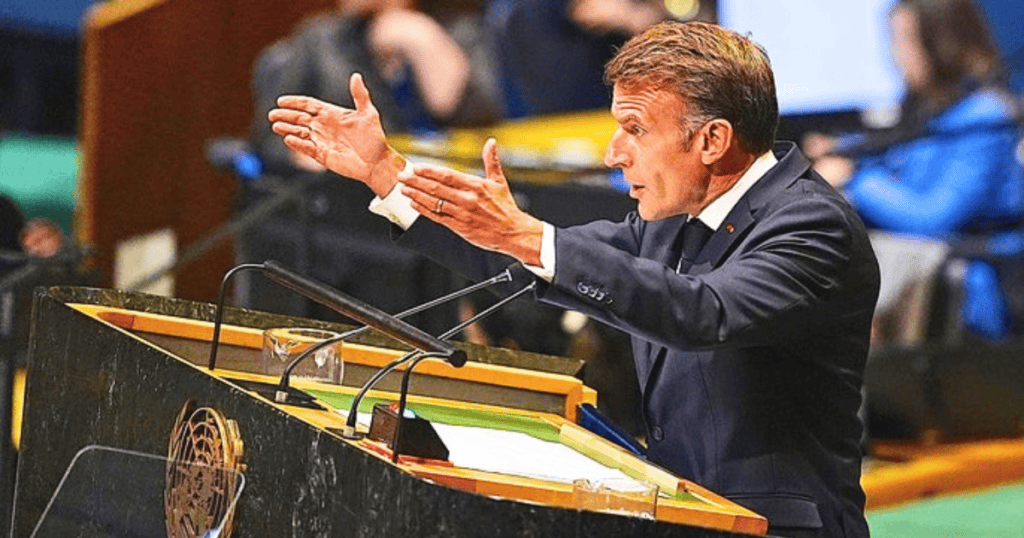
A high-stakes address at the United Nations General Assembly sparked swift international backlash after French President Emmanuel Macron questioned security justifications in the West Bank. Addressing world leaders, Macron raised eyebrows with remarks interpreted as downplaying the presence and threat of Hamas in the territory, drawing sharp criticism from top diplomats and political figures.
The controversy centers on comments addressing Israeli military activity and settlement expansion. Macron questioned the rationale behind ongoing operations in the area, pointing out that the militant organization was not the governing authority in the region. However, English simultaneous interpretation rendered his French phrasing as a claim that Hamas had never operated or caused trouble in the West Bank—a assertion directly contradicted by historical security reports and documented regional intelligence.
Outrage and Clarification from Paris
The reaction to the statement was immediate. High-ranking international officials and political commentators strongly condemned the phrasing, calling it out of touch with the reality on the ground and highlighting long-standing evidence of clandestine Hamas networks, arms manufacturing, and cell activity operating within the West Bank.
France Points to Translation Misstep
In an effort to diffuse rising tensions, French diplomatic sources moved quickly to clarify the president’s intended meaning. According to officials in Paris, the phrase was misinterpreted during live translation.
- The Translation Claim: Paris clarified that Macron’s original French phrasing (“le Hamas n’a jamais sévi en Cisjordanie”) was meant to emphasize that Hamas has never governed or held official power in the West Bank, where the Palestinian Authority maintains civil control.
- Context of the Speech: French diplomats maintained that the broader argument was focused on protecting the viability of a future two-state solution and criticizing escalating settlement activities, rather than denying the security threats posed by militant factions.
A Fractured Path for Regional Diplomacy
Despite the clarification, the rift underscores the fragile state of international communications surrounding the ongoing Middle East crisis. While France continues to push for renewed diplomatic dialogue and a two-state framework, the linguistic controversy has added another layer of friction between European leaders and key international allies navigating the complex security landscape.
Also read: Near-Death Abortion Pill Ordeal Shifts Woman’s Politics