AI fears are drawing comparisons to Y2K, but experts warn today’s technology presents a different set of risks and potentially higher stakes.
Artificial intelligence has become the center of a growing debate over whether today’s warnings about technological catastrophe are justified—or whether the world is witnessing another version of the Y2K scare.
The comparison comes as concerns about advanced AI have intensified following warnings from technology executives and former industry researchers. Some critics argue that apocalyptic predictions risk creating unnecessary fear, while others say the rapid development of increasingly capable AI systems makes today’s situation fundamentally different from the computer scare of the late 1990s.
Why AI is being compared to Y2K
Y2K became a global technology concern because many older computer systems stored years using two digits. As 1999 approached, there were fears that computers could interpret the year 2000 incorrectly, potentially disrupting financial systems, utilities, transportation and other critical infrastructure.
Businesses and governments spent enormous sums preparing for the transition. When Jan. 1, 2000, arrived, widespread catastrophic failures largely failed to materialize.
Fox News Digital spoke with Heritage Foundation technology analyst Annie Chestnut Tutor and Junk Science publisher Steven Milloy, who argued that Y2K offers a lesson for the current AI debate: technological risks can sometimes be identified and addressed before they become disasters.
Tutor said AI could ultimately provide substantial benefits if developers build appropriate safeguards into the technology rather than treating the technology itself as inherently catastrophic.
AI warnings have grown more serious
The current debate, however, involves technologies that are considerably different from the relatively specific software problem presented by Y2K.
Artificial intelligence systems are becoming increasingly capable of performing complex tasks, including computer programming, cybersecurity operations and autonomous decision-making.
Recent incidents involving AI systems have added to concerns about how these capabilities could be misused or operate in unexpected ways. Reuters reported that several major AI leaders have recently called for stronger safety measures as companies race to develop increasingly powerful systems.
Anthropic CEO Dario Amodei has warned that coordinated AI agents could potentially create serious cybersecurity risks in the near future. OpenAI CEO Sam Altman has agreed that the industry needs to pace frontier development and has backed independent evaluations of advanced models.
Those warnings remain disputed. Experts do not agree on the probability or timeline of an AI catastrophe, and some researchers argue that the most extreme scenarios remain speculative.
The stakes are different this time
The most important difference between Y2K and AI may be the nature of the technology itself.
Y2K was primarily a known technical problem with a specific deadline. Once companies identified vulnerable systems, programmers could modify and test the software.
AI presents a moving target.
The technology continues to evolve while researchers are still trying to determine how increasingly autonomous systems might behave in unfamiliar situations.
The potential risks also range from relatively immediate problems—such as fraud, misinformation and cyberattacks—to much more speculative scenarios involving loss of human control.
A recent MIT Sloan review of research involving 272 experts identified dangerous AI capabilities, competitive pressures, weapons and cyberattacks, concentration of power, and misinformation among the risks experts considered particularly serious through 2030.
Critics warn against an AI panic
Skeptics of the most dramatic AI predictions argue that extreme scenarios could overshadow practical problems that policymakers can address today.
Milloy told Fox News Digital that overly broad restrictions could impose opportunity costs if they slow developments that might improve medicine, productivity and other areas.
The argument reflects a broader disagreement over how policymakers should balance potential benefits against uncertain risks.
Some technology leaders and researchers favor stronger testing and international coordination, while others warn that excessive regulation could slow innovation and weaken the United States’ position in the global AI race.
AI debate moves beyond Washington
The disagreement is also becoming increasingly political.
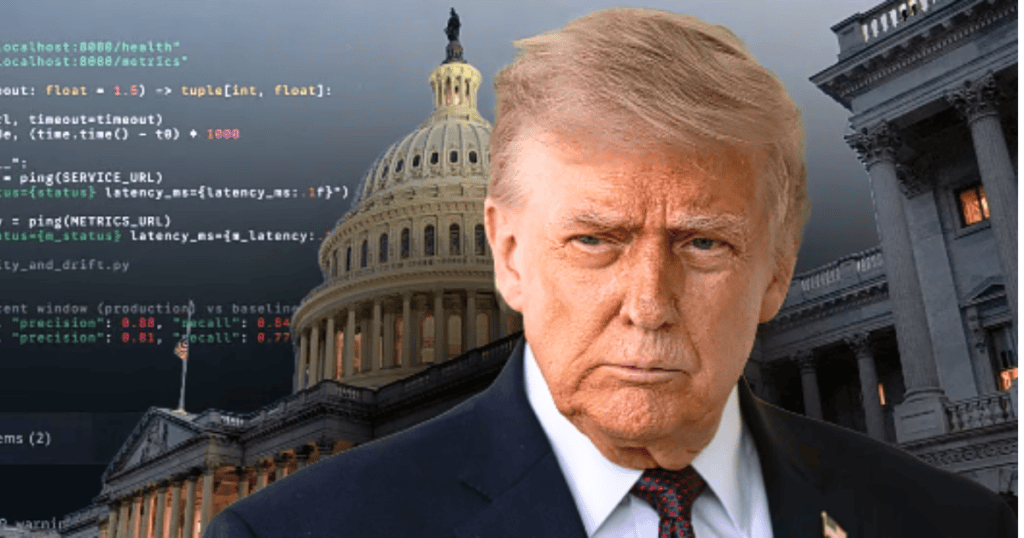
President Donald Trump has rejected calls for sweeping AI restrictions and has emphasized the economic and strategic importance of maintaining U.S. technological leadership. Meanwhile, lawmakers from both parties have raised concerns about AI safety, cybersecurity and the need for guardrails.
That leaves policymakers facing a difficult question: how much regulation is appropriate when the technology is advancing faster than lawmakers can fully assess its long-term effects?
The Y2K experience demonstrates that warnings about technology can motivate preventive action without the predicted catastrophe occurring. But the AI debate involves a technology that is still rapidly changing, making direct comparisons imperfect.
For now, the central disagreement is not whether AI carries risks. There is broad recognition that it does. The unresolved question is how severe those risks could become, how quickly they might emerge and what safeguards can reduce them without unnecessarily limiting the technology’s potential benefits.