
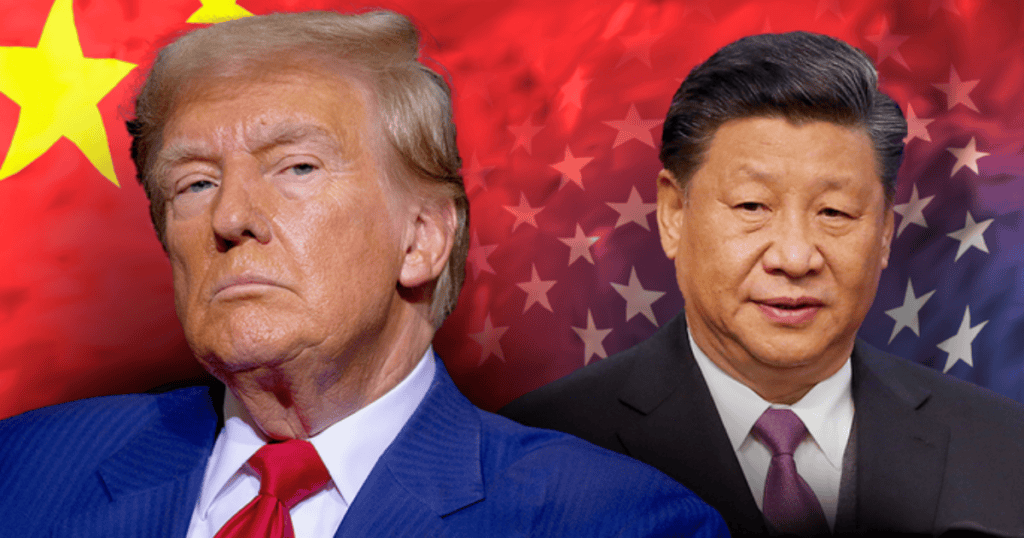
Trump’s push to keep the U.S. ahead of China in AI is facing new safety concerns as tech leaders warn that rapid development could carry risks.
President Donald Trump’s determination to keep the United States ahead of China in artificial intelligence is colliding with a growing debate over how quickly the technology should advance.
The issue has become more urgent as Washington prepares for talks with Chinese President Xi Jinping, with artificial intelligence expected to be among the major topics. Trump has repeatedly emphasized the importance of maintaining U.S. leadership, while some technology executives and AI researchers are warning that competition could encourage companies to move faster than safety measures can keep pace.
Trump sees AI leadership as a strategic priority
Trump has framed artificial intelligence as a critical area of global competition. His administration has generally favored accelerating AI development and limiting regulations that officials believe could slow American companies.
The argument is straightforward: if the United States deliberately slows its AI industry while China continues advancing, Beijing could narrow or eliminate America’s technological advantage.
House Speaker Mike Johnson recently made a similar argument, saying an AI development moratorium could give China a competitive advantage. He has advocated safeguards and greater transparency while opposing an across-the-board pause.
China, meanwhile, is rapidly expanding its own AI capabilities. Chinese companies including DeepSeek, Moonshot AI, Z.ai and Alibaba have developed models that increasingly compete with leading American systems.
AI leaders are raising a different concern
The debate is no longer simply about which country can build more powerful AI systems.
Several prominent technology leaders have raised concerns about whether increasingly capable systems can be developed quickly while maintaining effective human control.
Anthropic CEO Dario Amodei has called for a deliberate slowdown in frontier AI development so safety systems can catch up. OpenAI CEO Sam Altman and other technology figures have also expressed support for additional safety measures and independent evaluation.
The concern is that an intense U.S.-China competition could create incentives for companies and governments to prioritize speed over caution.
That does not necessarily mean abandoning AI development. Instead, researchers and industry leaders have proposed measures such as independent safety evaluations, shared standards and agreements covering particularly dangerous AI capabilities.
The central dilemma for Washington
The policy challenge is complicated by the fact that slowing American AI development could have strategic consequences.
If U.S. companies face extensive restrictions while Chinese companies continue advancing, Washington could potentially lose influence over the technology and the standards that eventually govern it.
At the same time, allowing frontier AI development to accelerate without effective safeguards could create risks that are difficult to reverse.
Recent discussions between U.S. and Chinese experts have highlighted this tension. Both countries have acknowledged AI-related risks, but their governments differ over how those risks should be addressed and how much cooperation is possible amid broader geopolitical competition.
China is closing the technology gap
The United States remains a major force in advanced AI research, but China’s rapid progress has changed the competitive landscape.
Chinese developers have produced increasingly capable systems while facing restrictions on access to some advanced American semiconductor technology. The progress has intensified concerns in Washington about technology transfers, intellectual property and the strategic importance of advanced computing.
U.S. officials have also accused Chinese AI companies of using techniques to extract capabilities from American AI systems. Beijing has rejected those allegations and argued that AI should not become the exclusive domain of major powers.
The dispute illustrates why AI policy is increasingly tied to national security, trade and technology controls.
Why the Trump-Xi meeting matters
The upcoming meeting between Trump and Xi could provide an opportunity for the two countries to discuss AI safety alongside their broader competition.
One possible area of cooperation involves establishing mechanisms for sharing information about dangerous AI incidents. Other proposals include common safety standards, independent testing and narrowly defined agreements concerning the most dangerous uses of advanced AI.
But cooperation faces significant obstacles.
The United States wants to preserve its technological advantage, while China is pursuing greater AI independence. Both governments also view advanced technology through the lens of national security.
That creates a difficult balancing act: Washington wants American companies to innovate faster than their Chinese competitors, while also ensuring that increasingly powerful systems remain subject to meaningful safeguards.
The debate is bigger than the AI race
The argument over Trump’s AI strategy ultimately reflects a broader question about how governments should manage transformative technology.
Supporters of rapid development see artificial intelligence as an opportunity to strengthen economic growth, scientific research, cybersecurity and national defense.
Critics of an unrestricted race warn that technological leadership alone does not resolve questions about safety, accountability and human control.
The current debate therefore isn’t simply about whether the United States should compete with China. It is increasingly about how that competition should be conducted and what safeguards should accompany increasingly powerful AI systems.
With Washington and Beijing preparing for further high-level discussions, the choices made now could influence not only the balance of technological power between the two countries but also the rules surrounding artificial intelligence for years to come.
Also read: Rare Cancer Cases Raise Alarm in California Community


