
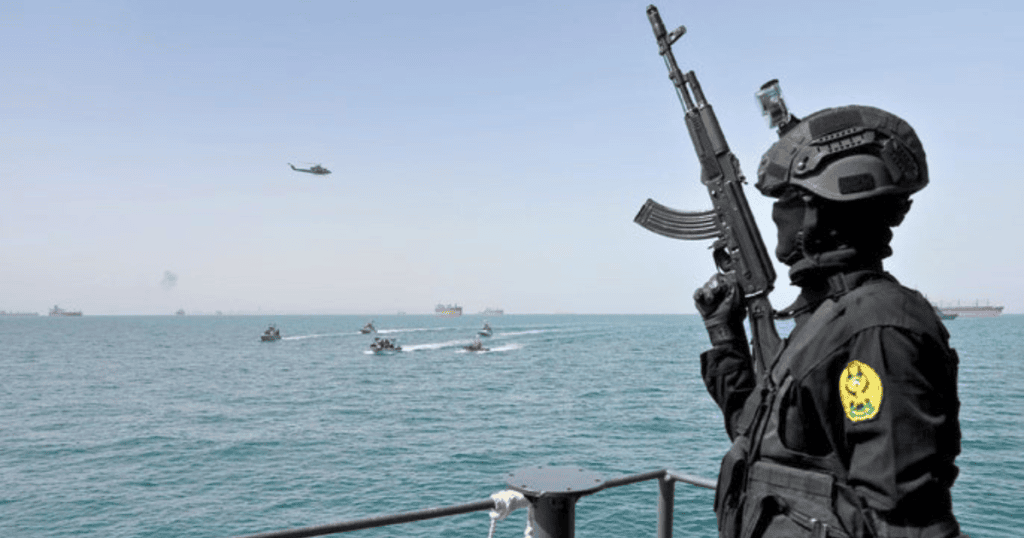
Iran is targeting U.S. drones for intelligence as experts warn even brief access to captured equipment could reveal sensors and tactics.
Iran is increasingly targeting U.S. unmanned systems in the Strait of Hormuz, with drone experts warning that even brief access to American equipment could provide Tehran with valuable insight into U.S. surveillance capabilities and battlefield tactics.
The warning follows a series of incidents involving American unmanned vessels during the ongoing U.S.-Iran conflict. U.S. Central Command said Iranian small boats recently attempted to seize an American unmanned surface vessel but were unsuccessful after U.S. forces intervened.
Drone manufacturer Draganfly CEO Cameron Chell told Fox News Digital that Iran’s efforts appeared deliberate and coordinated, suggesting Tehran could gain useful intelligence even without obtaining classified information.
Experts warn of intelligence risks
Chell said a captured drone could provide an “immediate tactical advantage” by revealing details about the equipment used to conduct surveillance.
Even a short examination could allow Iranian forces to identify the types of sensors installed on a system and gain a better understanding of how U.S. forces monitor the region, according to Chell.
That information could potentially help Tehran determine how American surveillance systems operate and identify ways to avoid or counter them.
The concern extends beyond the data stored on individual drones. Experts say the physical design, sensors and other hardware can provide useful information even when classified material is protected.
Iran captured US underwater drone
The latest concerns come after Iran captured a U.S. Dive-LD autonomous underwater drone near the entrance to the Strait of Hormuz on Sept. 8.
Iran’s Islamic Revolutionary Guard Corps said it had seized the unmanned submarine, while the Pentagon said the vessel had malfunctioned more than a day earlier. Reuters reported that the drone was manufactured by Anduril and was designed to operate underwater for extended periods.
U.S. officials have characterized the captured drone as an older system that malfunctioned and lacked classified payloads. However, the capture still raises concerns about what Tehran could learn by examining the hardware.
Anduril CEO Palmer Luckey has said the system was designed for operations in environments where capture was considered a possibility.
Tehran has history of studying US drones
Iran has previously sought to exploit captured American unmanned systems.
In 2011, Iranian forces captured an American RQ-170 Sentinel stealth drone. Tehran subsequently claimed it had reverse-engineered the aircraft and used the captured technology as a basis for developing domestic systems.
That history has heightened concerns surrounding the latest incidents, particularly as unmanned systems play an increasingly important role in modern warfare.
The Strait of Hormuz has become a particularly important arena during the conflict because of its strategic importance to global shipping and energy supplies.
US forces remain on alert
The recent attempts to obtain American unmanned equipment are prompting increased attention to how U.S. forces deploy and protect drones in the region.
Chell said awareness that unmanned systems could become targets affects how the U.S. military uses and safeguards them. He also argued that Iran could gain useful operational information simply by examining a captured platform, even if sensitive data were inaccessible.
The incidents highlight a broader challenge facing militaries as autonomous aircraft, surface vessels and underwater systems become increasingly common.
For Tehran, access to even limited pieces of U.S. technology could offer information about American surveillance methods and equipment. For Washington, preventing the capture of unmanned systems has therefore become another consideration in operations around the Strait of Hormuz.
Also read: 3 Dead After News Helicopter Crashes in Los Angeles


