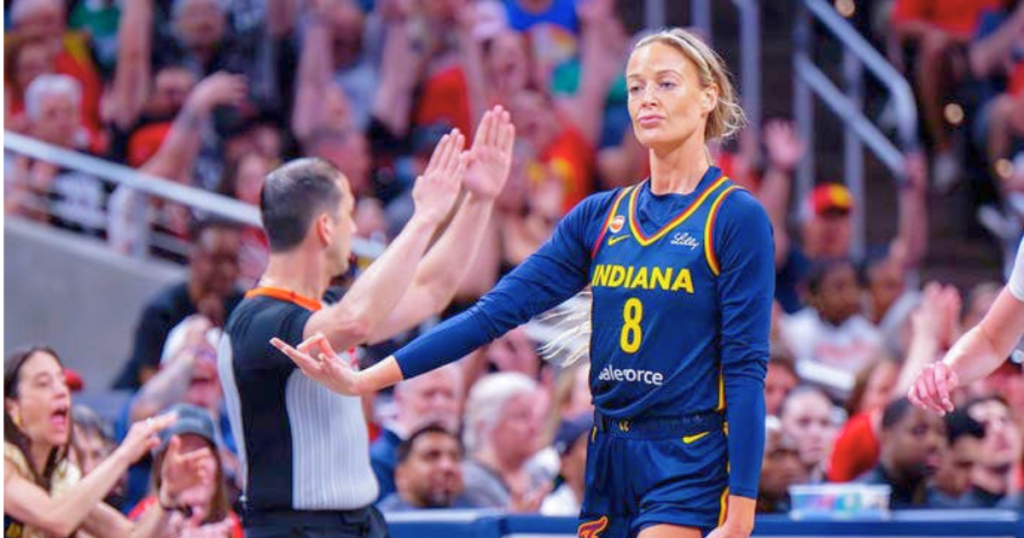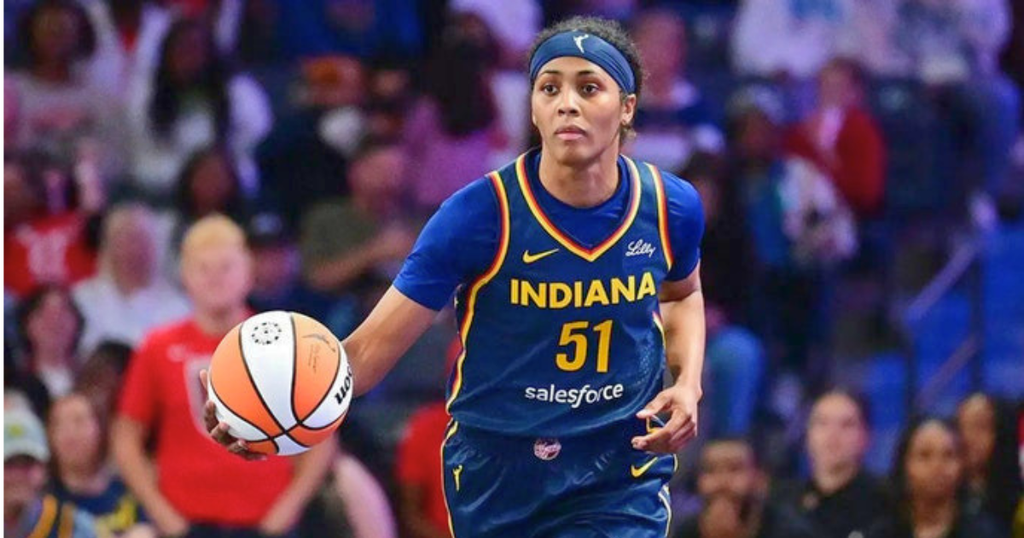
Sydney Colson sparks a WNBA firestorm by criticizing white players over transgender debates and challenging the Indiana Fever’s response to fan behavior.
Sydney Colson Sparks WNBA Firestorm With Bold Remarks as the former Indiana Fever guard criticizes white players for their public comments and challenges the franchise’s response to fan behavior. Her latest podcast remarks have reignited debates about race, transgender athletes, player solidarity and accountability across women’s basketball.
Colson shared her views during an episode of her Unsupervised podcast with former teammate Theresa Plaisance. She questioned whether some white players genuinely support their Black teammates when public controversies arise.
The former WNBA champion also criticized Indiana’s leadership for defending its fan base following a tense playoff incident involving Las Vegas Aces star A’ja Wilson.
Sydney Colson Calls Out White WNBA Players
Colson delivered a blunt message to white players who, in her view, remain silent when Black teammates face discrimination but speak publicly on divisive issues involving transgender athletes.
She argued that players cannot claim sisterhood while ignoring concerns affecting their teammates. Her comments specifically criticized what she described as harmful public statements about transgender participation in women’s sports.
The remarks drew attention because Colson previously played alongside several Indiana Fever stars. However, she did not identify every player she had in mind during the podcast discussion.
Sophie Cunningham Becomes Part of the Debate
Colson’s comments appeared relevant to discussions involving former Fever teammate Sophie Cunningham, who has publicly addressed transgender athletes in women’s sports.
Colson criticized white players who express opinions she considers harmful to their Black teammates. She argued that genuine team solidarity requires people to speak up when discrimination affects others.
The dispute highlights broader disagreements within women’s basketball about identity, inclusion and the responsibilities athletes carry when addressing controversial social issues.
Former Fever Guard Challenges Team’s Fan Response
Beyond her criticism of fellow players, Colson challenged Indiana’s response to concerns about fan behavior. She questioned comments from Fever general manager Amber Cox defending the franchise’s supporters.
Cox said criticism of the fan base had no basis in reality and argued that inappropriate conduct should prompt accountability wherever it occurs. She also acknowledged that every sports organization must address misconduct when spectators cross the line.
Colson disagreed with the broader message, arguing that dismissing players’ experiences could discourage meaningful action. She stressed that her criticism did not mean every Fever fan acted with racist or hateful intentions.
A’ja Wilson’s Playoff Incident Intensified Tensions
The disagreement followed a September 29 playoff game between Indiana and Las Vegas. Wilson confronted a fan near the court after a tense exchange during the game.
Colson and Plaisance became involved in the ensuing confrontation near the baseline. The incident attracted widespread attention and added another layer to an already heated discussion about player safety and spectator behavior.
Wilson later explained that she felt uncomfortable with the fan’s gestures and approach. Arena officials reviewed the incident, while the Fever said security found no violation of the fan code of conduct.
Racism and Online Abuse Remain Major WNBA Concerns
The controversy also unfolded as Fever guard Kelsey Mitchell discussed receiving hateful messages linked to her association with Caitlin Clark. Mitchell described the pressure surrounding her role on a team that attracts intense public attention.
Clark addressed the issue during her end-of-season media availability, condemning racist rhetoric and discrimination. She emphasized that such behavior did not reflect her values and expressed support for Mitchell.
Those comments added context to Colson’s argument about teammate solidarity. Her central concern was whether players consistently challenge discrimination rather than speaking only when an issue directly affects them.
Colson’s Remarks Raise Questions About Player Solidarity
Colson’s criticism has placed the WNBA’s internal disagreements under fresh scrutiny. Players often share locker rooms and public responsibilities, yet they may hold sharply different views on sensitive social questions.
Her comments also highlight the difficult balance between personal expression and team unity. Athletes can disagree about public policy, but debates become more complicated when teammates believe those statements undermine their dignity or safety.
The discussion does not establish that every white player has remained silent or that all Fever fans engage in misconduct. Instead, Colson’s remarks reflect her stated concerns about how players and organizations respond to discrimination.
WNBA Controversy Continues Beyond the Court
Colson’s comments arrive during an unsettled period for the Fever and the wider league. The playoff confrontation, criticism of fan behavior and debate over public statements have kept the organization in the spotlight.
Her remarks may prompt further discussion about how teams handle complaints and encourage players to support one another. The league also faces questions about setting clear expectations for conduct in arenas and online.
For now, Colson has made her position clear: she believes solidarity requires action, not just words. The response from players, team officials and fans will shape how this latest WNBA controversy develops.
Also read: Tony Romo Hit With Shocking Golf Disqualification