
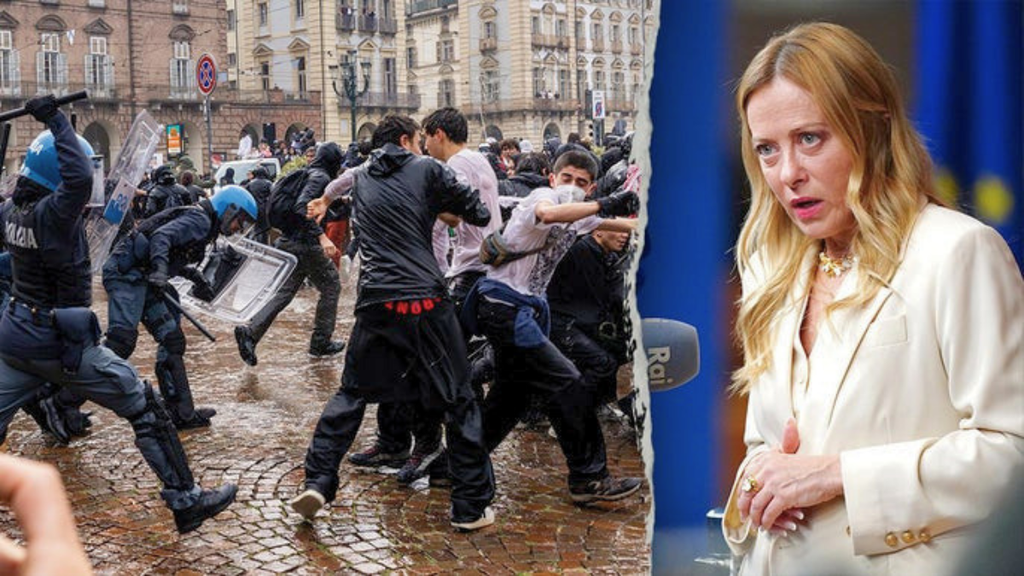
Giorgia Meloni condemns violent Italy protests, calling rioters “gangs of thugs” as clashes spark fresh debate over public safety and political unrest nationwide.
Meloni’s Fiery Warning After Violent Italy Protests
Italian Prime Minister Giorgia Meloni has condemned violent demonstrations across Italy, denouncing those responsible for unrest and raising fresh concerns about public safety.
Her strong response follows protests that escalated into violence, drawing attention to clashes between demonstrators and authorities. The unrest has renewed debate about political dissent, law enforcement, and the limits of peaceful protest in a democratic society.
Meloni described violent participants as “gangs of thugs,” emphasizing the distinction between lawful demonstrations and criminal acts. Her remarks signal a firm stance against disorder while Italy continues to confront tensions surrounding public demonstrations.
Giorgia Meloni Condemns Violence During Italy Protests
Meloni’s statement underscores her government’s opposition to violence during public demonstrations. The prime minister has positioned public order and security as important responsibilities for Italian authorities.
Protests can provide citizens with an essential avenue for expressing grievances and challenging government decisions. However, violence, property damage, and attacks on police can shift public attention away from demonstrators’ original demands.
Why the Italian Protests Sparked Concern
Violent confrontations during demonstrations can create risks for protesters, police officers, journalists, and nearby residents. Such incidents can also disrupt transportation, damage businesses, and increase pressure on emergency services.
Authorities must balance public safety with the right to assemble and express political opinions. That responsibility becomes especially challenging when peaceful gatherings turn into confrontations or isolated participants engage in criminal behavior.
Public Safety and Freedom of Protest in Italy
Italy’s response to violent demonstrations has highlighted the difficult balance between protecting public order and preserving civil liberties. Officials face pressure to prevent further clashes while respecting citizens’ constitutional rights to peaceful assembly.
Public demonstrations remain an important feature of democratic life across Europe. Nevertheless, authorities often face difficult decisions when protests involve violence, confrontations, or threats to public safety.
How Authorities Respond to Violent Demonstrations
Police typically manage demonstrations through crowd control, security measures, and investigations into suspected criminal activity. Their response can influence public confidence in law enforcement and shape discussions about government accountability.
Effective policing also requires clear distinctions between peaceful protesters and individuals who commit violent acts. Such distinctions help protect civil liberties while allowing authorities to address genuine threats and investigate unlawful behavior.
Meloni’s Remarks Intensify Debate Over Political Unrest
Meloni’s condemnation has placed renewed attention on the consequences of violent protest in Italy. Her choice of language reflects a tougher message toward individuals who turn demonstrations into episodes of disorder.
Supporters of a firm response argue that governments must protect communities and hold violent offenders accountable. Others emphasize the importance of safeguarding peaceful dissent and avoiding measures that could restrict legitimate political expression.
These perspectives highlight a broader European debate about demonstrations, public security, and democratic freedoms. The challenge for Italian authorities involves maintaining order without undermining the rights that allow citizens to challenge those in power.
What Happens Next After Italy’s Violent Protests?
The developments have renewed questions about public safety, police responsibilities, and the political consequences of street violence. Authorities will need to assess incidents, investigate suspected offenses, and determine whether additional security measures are necessary.
Meloni’s strong remarks make clear that her government opposes violence during public demonstrations. The wider debate, however, extends beyond political rhetoric to questions about accountability, civil liberties, and peaceful participation in democratic society.
Also read: Savannah James’ Shocking Flight Choice Sparks Debate








