Ba’s Book turns painful family memories into a moving film, showing how trauma, truth, and shared storytelling can bring loved ones closer with lasting healing.
Ba’s Book Turns Trauma Into a Powerful Family Reckoning, revealing how painful memories can reshape relationships through storytelling.
Ashley Duong’s hybrid film follows her father’s journey from Vietnam through revolutionary Iran before eventually settling in Canada.
The filmmaker transforms his memoir into intimate reenactments, documentary footage, family conversations, and memories that resist easy explanations.
Instead of treating trauma as distant history, the film brings buried experiences into the family’s present with tenderness.
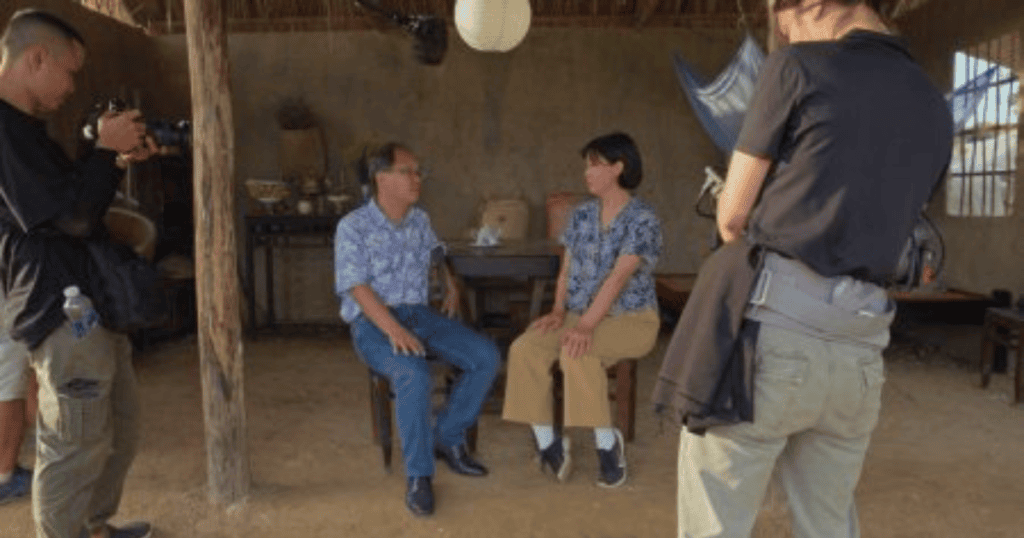
Duong works alongside her father and relatives, creating scenes that blur boundaries between remembered events and reconstructed moments.
That unusual process allows difficult memories to surface while giving family members space to reconsider their shared past.
A Family Story Built From Difficult Memories
Vietnam, Iran, and Canada Shape One Extraordinary Journey
Her father’s childhood unfolded against war in Vietnam before his life changed dramatically during Iran’s revolutionary period.
Those experiences eventually carried him toward Canada, where distance could not completely erase memories from his earlier life.
Rather than simply documenting those experiences, Duong carefully recreates moments with relatives and members of her ancestral community.
The approach creates an emotional conversation between past and present, allowing memory to become something family members can examine.
Making the Film Changed the Family
Reenactments Opened Doors That Silence Had Kept Closed
Filming became more than a creative exercise because the production encouraged conversations that had remained difficult for years.
Each recreated moment gave Duong and her father another opportunity to question memories without forcing simple answers or conclusions.
The process also brought relatives into the story, making the film an exploration rather than one person’s confession.
Consequently, Ba’s Book becomes a portrait of healing that grows naturally from collaboration, trust, and deeply uncomfortable conversations.
Why the Hybrid Style Matters
Documentary Truth Meets Carefully Recreated Memory
By combining documentary observation with staged sequences, Duong captures both what happened and how family members remember it.
The technique acknowledges that trauma rarely survives as a perfectly ordered story inside someone’s memory.
Instead, fragments, emotions, images, and silences often carry meaning long after specific details have faded away.
Ba’s Book uses those fragments to explore how families preserve painful histories while continuing to build relationships around them.
A Story About Healing Through Connection
Ultimately, the film suggests that confronting family trauma can create closeness when people approach memories together for generations.
Duong’s filmmaking journey therefore becomes something larger, connecting migration, identity, memory, parenthood, and the possibility of emotional repair.
At its heart, Ba’s Book shows how telling difficult stories can sometimes create understanding where silence once dominated.
Also read: London Film Fest Gets Concrete in a Stunning Twist