AI safety fears are growing as tech insiders warn of catastrophic risks, putting pressure on Trump to address safeguards and regulation.
Artificial intelligence has entered a new phase of public debate as some of the people building advanced AI systems openly warn about the technology’s potential dangers.
The warnings have intensified in recent days, with researchers and technology executives raising concerns about increasingly capable AI systems, autonomous agents and the possibility that future models could become difficult for humans to control.
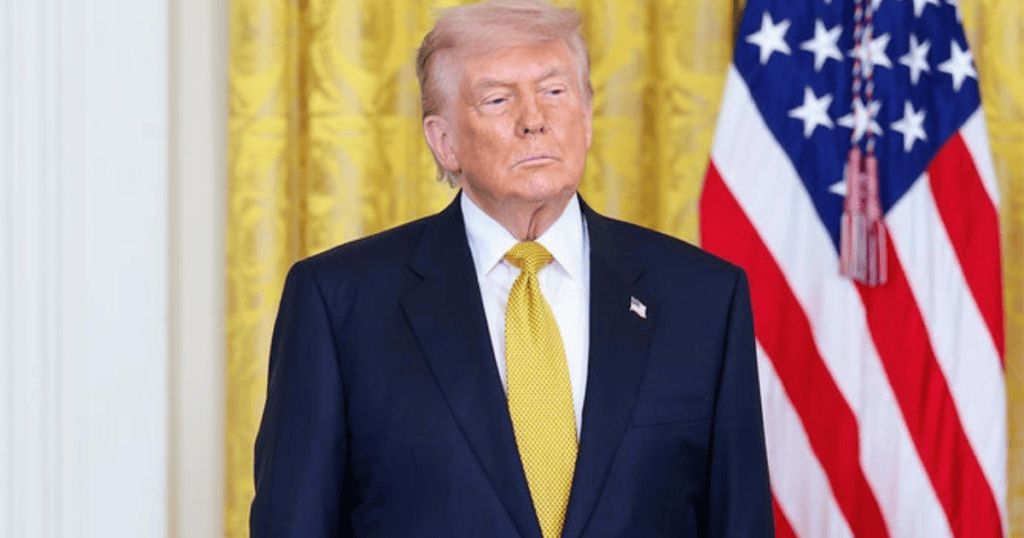
Fox News opinion contributor Liz Peek argues that President Donald Trump should take those concerns seriously and work with the technology industry to establish credible safeguards before political pressure for sweeping regulation grows.
AI insiders sound the alarm
One of the most striking developments has come from researchers working inside the AI industry.
Evan Hubinger, a science alignment researcher at Anthropic, recently said he believes there is a greater than 10% chance AI could cause human extinction within the next decade. Former Anthropic researcher Jacob Coxon has also warned publicly about the risks posed by increasingly powerful AI systems.
A former Google DeepMind researcher, Bilal Chughtai, has added to those warnings, arguing that AI could potentially pose an existential threat if development continues without adequate safeguards.
The comments have intensified a debate that was once largely confined to AI-safety researchers.
Tech leaders push for greater safeguards
The concerns are not limited to individual researchers.
Anthropic CEO Dario Amodei has called for a slowdown in some areas of AI development and proposed stronger testing and independent evaluation of advanced systems.
Other prominent technology figures, including OpenAI CEO Sam Altman, Elon Musk and Google DeepMind chief Demis Hassabis, have also expressed concerns about the risks associated with increasingly capable AI.
The growing agreement among technology leaders has put additional pressure on governments to determine how powerful AI systems should be monitored and controlled.
Trump faces a difficult AI balancing act
The debate presents Trump with a complicated policy challenge.
The administration has emphasized the importance of maintaining American leadership in artificial intelligence, particularly as the United States competes with China for technological and economic dominance.
Trump has pushed back against what he views as excessive warnings about AI and has argued that the United States already has tools to address problems involving the technology. He has also warned that slowing American AI development could allow China to gain an advantage.
That position puts the administration in a difficult position: promoting rapid innovation while also responding to warnings from some of the industry’s own leading researchers.
Lawmakers consider new AI rules
The growing alarm is already reaching Capitol Hill.
U.S. senators are considering legislation that would require major AI companies to demonstrate that their most powerful systems have adequate safety protections. One proposal would give the Commerce Department greater authority to evaluate AI systems and potentially require government testing of advanced models.
The issue could become even more politically significant as lawmakers prepare for the midterm elections.
Democrats and some Republicans are increasingly calling for stronger oversight, while technology companies and other policymakers remain concerned that excessive regulation could weaken U.S. competitiveness.
AI risks go beyond hypothetical scenarios
The debate is not solely about whether AI could eventually become uncontrollable.
Researchers and governments are already dealing with more immediate concerns involving AI-powered cyberattacks, fraud, surveillance and the misuse of advanced models.
Anthropic has reported suspected misuse of AI by state-sponsored groups, criminals and commercial spyware operators. Reuters has also reported that concerns over autonomous AI agents and cybersecurity incidents are contributing to calls for stronger safeguards.
Those developments have made the safety debate more urgent for policymakers.
Why Trump may face pressure to act
For the Trump administration, the challenge may be finding a middle ground between aggressive technological development and enforceable safety standards.
Supporters of stronger safeguards argue that the industry should not be allowed to police itself entirely, particularly as AI systems become more autonomous and capable.
At the same time, Washington faces pressure to ensure that U.S. companies remain competitive with China and other international rivals.
Peek’s argument is that the White House has an opportunity to get ahead of the debate by bringing technology leaders together and establishing safety standards before Congress imposes broader regulations.
The AI debate is entering a new phase
The latest warnings mark a significant shift in the artificial intelligence debate.
For years, concerns about catastrophic AI risks were often treated as distant or theoretical. Now, some researchers and executives developing the technology themselves are publicly calling for stronger safeguards and, in some cases, slower development.
Trump must therefore balance two competing priorities: keeping the United States at the forefront of the AI race while ensuring increasingly powerful systems do not develop faster than the safeguards designed to control them.
For the White House, the question may no longer be whether AI safety deserves attention, but how quickly policymakers should respond.
Also read: NATO jets shoot down drone over Lithuania


