
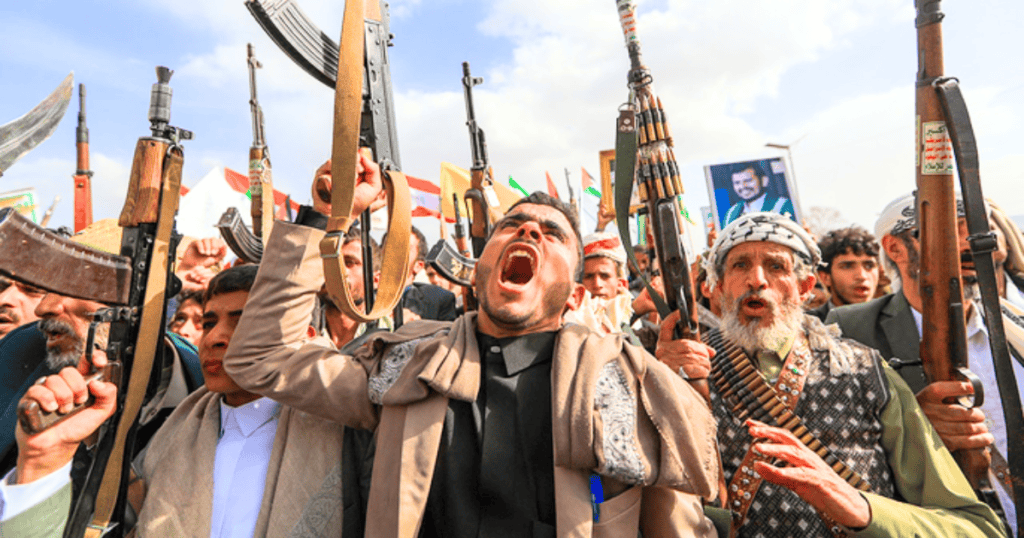
Saudi Arabia vows to respond after Iran-backed Houthis launch missile and drone attacks on three cities, injuring civilians and escalating regional tensions.
Saudi Arabia has vowed to respond after Iran-backed Houthi forces launched missile and drone attacks against three cities in the kingdom, escalating tensions as the wider Middle East conflict continues to spread.
The Saudi-led coalition said Houthi forces targeted Khamis Mushait, Abha and Jazan with ballistic missiles and drones. Coalition spokesman Maj. Gen. Turki al-Maliki said the attacks represented an escalation and pledged that Saudi forces would respond.
Houthis target three Saudi cities
The latest attacks focused on southern Saudi Arabia, including the strategically important Khamis Mushait area.
The Houthis said they launched dozens of missiles and drones at a military airbase in Khamis Mushait, claiming to have targeted aircraft hangars, radar systems, runways and ammunition facilities.
Saudi authorities issued emergency warnings as the attacks unfolded. Reuters reported that 13 civilians were wounded in the latest Houthi assault.
Saudi Civil Defence later reported that the immediate danger had passed in several affected areas, including Abha and Jazan.
Saudi coalition vows retaliation
The Saudi-led coalition has promised to answer the attacks.
Maj. Gen. Turki al-Maliki said the coalition’s Joint Forces Command would respond in a manner intended to protect Saudi sovereignty, military installations, national capabilities and civilians.
The threat of retaliation comes as Saudi Arabia and the Houthis have moved toward renewed fighting after years of relative calm under a ceasefire.
The latest Houthi offensive follows Saudi airstrikes in Yemen, which the Houthis have cited as a reason for their attacks on the kingdom. Reuters reported that the Houthis described the Khamis Mushait strike as retaliation for Saudi military action.
Conflict threatens Saudi oil supplies
The escalation is also raising concerns about global energy markets.
Saudi Arabia’s East-West oil pipeline was recently damaged in an attack blamed by Riyadh on Iranian-backed militants in Iraq. The pipeline is designed to transport crude from the Gulf to the Red Sea, allowing Saudi exports to bypass the Strait of Hormuz.
The disruption could remove as much as 4% of global oil supply from the market if the shutdown continues, according to traders cited by Reuters.
Oil prices have already climbed sharply as traders assess the potential impact of attacks on Saudi infrastructure and restrictions around major shipping routes.
Houthis advance toward key Red Sea route
The Houthi attacks come as the group has expanded its position along Yemen’s Red Sea coastline.
The militants have captured strategic territory, including Perim Island near the Bab el-Mandeb Strait, a critical maritime chokepoint connecting the Red Sea with the Gulf of Aden.
The advance has increased concerns about commercial shipping and Saudi oil exports, particularly as the Strait of Hormuz remains heavily disrupted by the broader Iran conflict.
The developments effectively open another front in the wider regional conflict and put additional pressure on Saudi Arabia to protect its territory and energy infrastructure.
US faces pressure to support Saudi Arabia
The escalation is also creating a difficult position for the United States.
Saudi Crown Prince Mohammed bin Salman met with U.S. Central Command chief Adm. Brad Cooper in Jeddah as tensions with the Houthis intensified.
Reuters previously reported that Riyadh had sought greater U.S. military assistance against the Houthis. Washington has so far resisted direct U.S. strikes but has offered intelligence-sharing and targeting support.
President Donald Trump has also spoken with Saudi leadership as Washington attempts to prevent the conflict from expanding further.
Regional diplomacy faces new setback
The Houthi attacks have come at a particularly sensitive moment for diplomacy.
A planned meeting involving Iran and Gulf states to discuss reopening the Strait of Hormuz was postponed. The delay has raised concerns that the expanding conflict could further complicate efforts to restore commercial shipping through one of the world’s most important oil routes.
For Saudi Arabia, the immediate challenge is now twofold: defending its cities from renewed Houthi attacks while protecting vital oil infrastructure and shipping routes.
With the Houthis continuing their offensive and Riyadh promising a response, the latest strikes could mark another significant escalation in an already volatile Middle East conflict.
Also read: Palantir Exec Warns of AI Power Grab


