
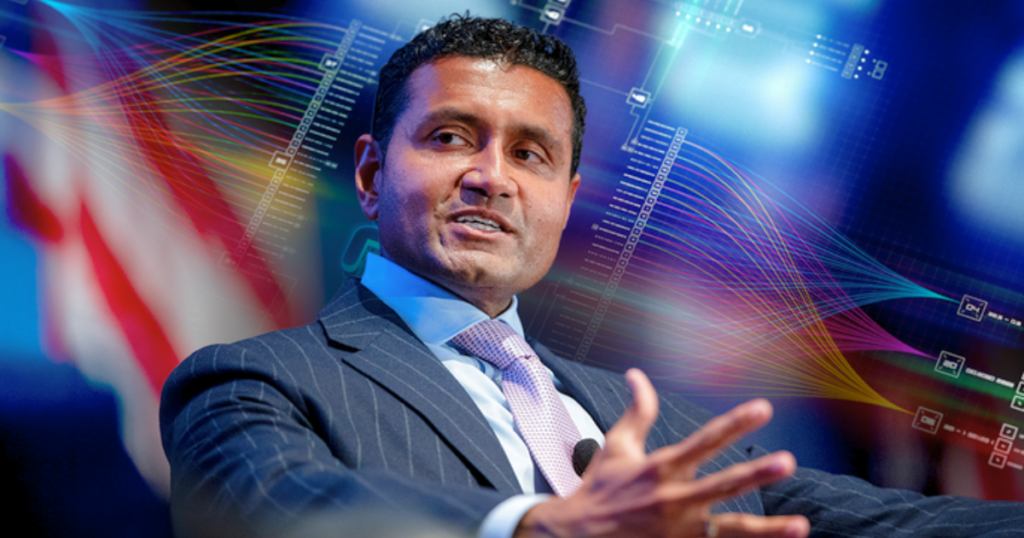
A Palantir executive has accused a group of technology leaders and policymakers of attempting to gain excessive control over artificial intelligence, describing the effort as an “attempted coup” over the future of AI.
The remarks come as Washington and Silicon Valley face growing pressure to decide how advanced artificial intelligence should be regulated. The debate has intensified after executives from major AI companies warned that rapidly developing systems could pose serious risks if their capabilities advance faster than safeguards.
Palantir executive attacks AI control push
The Palantir executive’s comments reflect a broader disagreement inside the technology industry over who should determine the rules governing advanced AI.
Rather than viewing calls for tighter oversight simply as a safety debate, the executive characterized the effort as an attempt by “technocrats” to establish greater influence over the technology and its development.
The criticism comes at a moment when some of the industry’s most prominent figures are calling for stronger safeguards. Anthropic CEO Dario Amodei, OpenAI CEO Sam Altman and Elon Musk have all expressed concerns about the pace of AI development and the potential consequences of increasingly powerful systems.
AI regulation sparks Silicon Valley divide
The dispute highlights a growing divide within the technology sector.
Some executives argue that advanced AI requires independent oversight, safety standards and greater transparency. Others warn that poorly designed regulations could give the largest AI companies an advantage by making it harder for smaller competitors and open-source developers to compete.
That concern has become particularly relevant as governments consider new rules governing frontier AI models.
The Palantir executive’s warning fits into this larger argument: whether regulation would protect the public or instead concentrate control over AI among a small group of companies, experts and government officials.
Trump rejects calls for tighter AI guardrails
The controversy is also unfolding against a backdrop of resistance from President Donald Trump.
Trump has dismissed recent warnings about AI dangers and argued that the United States cannot afford to slow its technological progress while competing with China. He has also rejected calls for additional restrictions, saying the country already has mechanisms to oversee and prosecute AI companies.
Trump’s position has put him at odds with some technology leaders who believe government intervention is becoming increasingly necessary.
The disagreement has now spilled into Congress, where lawmakers from both parties are discussing possible guardrails for powerful AI systems.
Why the “attempted coup” claim matters
The language used by the Palantir executive underscores how politically charged the AI debate has become.
The central question is no longer simply whether AI should be regulated. It is increasingly about who gets to control the technology and who writes the rules governing its development.
Supporters of stronger oversight argue that increasingly capable AI systems could create significant security, economic and social risks. Critics counter that excessive regulation could suppress innovation and hand too much power to established technology companies and government agencies.
That tension is becoming more significant as the United States competes with China for leadership in artificial intelligence. Reuters reported Tuesday that geopolitical competition is making a major slowdown in AI development increasingly difficult, even as concerns about the technology’s risks grow.
Palantir caught in wider AI power struggle
Palantir itself has become an important player in the AI debate because of its work with government and defense customers.
The company has also been involved in recent tensions surrounding the use of commercial AI models. Reuters reported that Palantir has pushed Anthropic for strong guarantees that proprietary data will not be retained, while companies including Nvidia and Booz Allen Hamilton have also taken steps to limit their use of some advanced AI models.
Those developments demonstrate how concerns over AI are extending beyond regulation to questions about data security, corporate control and technological independence.
The battle over AI control is growing
The latest comments add another layer to an increasingly contentious debate.
On one side are technology leaders and policymakers who say advanced AI requires stronger safeguards before capabilities move further ahead. On the other are executives and technology advocates who fear that regulation could become a mechanism for concentrating power among governments and established AI companies.
With the U.S. and China competing for technological leadership, the stakes are becoming increasingly global.
The “attempted coup” characterization is ultimately one executive’s description of the current fight, rather than an established fact. But it captures the intensity of the dispute now unfolding over who should control the next generation of artificial intelligence.
As Congress weighs possible safeguards and companies continue racing to develop more powerful systems, the battle over AI regulation could become one of the defining technology and political fights of the coming years.
Also read: Russia Readies New 500-Mile Missile for Test


