
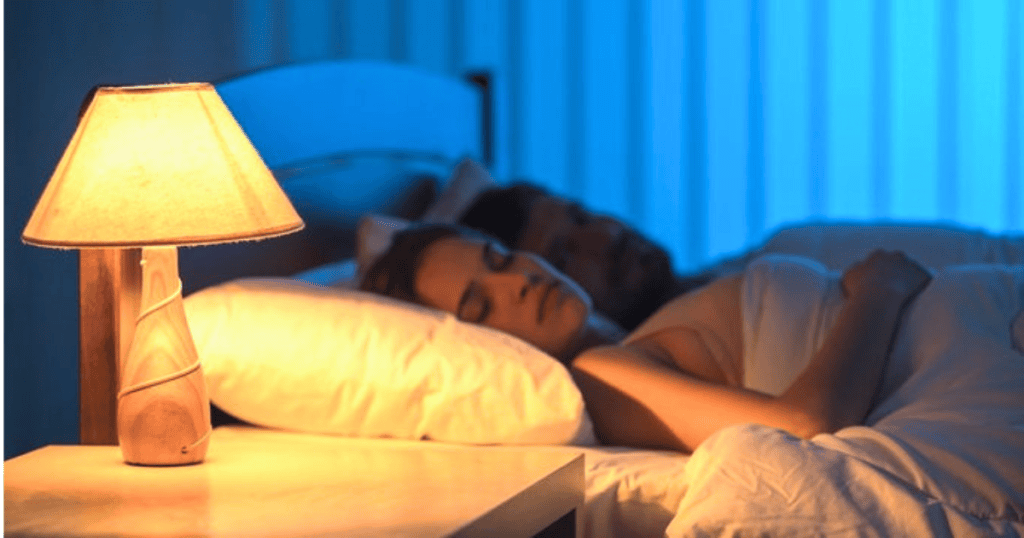
Sleeping with a light on may do more than disrupt sleep. Experts warn nighttime light exposure could raise risks linked to heart health.
A common bedroom habit could be quietly affecting your sleep and long-term health, with experts warning that even relatively low levels of nighttime light may interfere with the body’s natural rhythms.
New research from Tulane University has linked sleeping with nighttime light exposure to increased risks of several cardiovascular problems, including heart failure, atrial fibrillation, heart attack and stroke.
Why nighttime light can affect sleep
The body’s circadian rhythm acts as an internal 24-hour clock, helping regulate when we feel awake and when we become sleepy.
Sleep expert and neuroscientist Chelsie Rohrscheib told Fox News Digital that light entering the eyes can signal the brain to suppress melatonin, a hormone that helps regulate the timing of sleep.
That means light from a bedside lamp, television, phone or other source can potentially interfere with the biological signals that prepare the body for rest.
Even dim light may matter
The Tulane research highlighted concerns about exposure to more than 3 lux of light, roughly comparable to moonlight.
Researchers associated that level of nighttime exposure with higher risks of heart failure, atrial fibrillation, heart attack, stroke and cardiovascular death.
The findings add to earlier research suggesting that artificial light during sleep may affect the body’s cardiovascular and metabolic systems.
A 2022 study from Northwestern Medicine, cited by Rohrscheib, found that sleeping for just one night under moderate light exposure of about 100 lux disrupted glucose regulation and increased heart rate and sympathetic nervous system activity.
Poor sleep can affect more than energy
Experts say the concern extends beyond waking up tired.
Consistently disrupted sleep can interfere with processes involved in immune function, hormone regulation, memory, metabolism and the body’s overnight restoration.
Ashley Curtis, PhD, a sleep researcher and assistant professor at the University of South Florida College of Nursing, told Fox News Digital that emerging evidence also points to effects involving the gut microbiome, which plays a role in digestion and immunity.
Experts caution that the immediate evidence is strongest around sleep disruption, while longer-term health effects are an area of continuing research.
Who may be especially vulnerable?
Some people could be more sensitive to nighttime light than others.
Experts cited by Fox News said shift workers, children, older adults and people with insomnia or mood disorders may be particularly vulnerable to the effects of nighttime light on sleep.
People who already struggle with insomnia may be especially affected because bright light can further interfere with the circadian system and make existing sleep problems worse.
Blue light may be the biggest problem
Not all light appears to affect the body in exactly the same way.
Sleep physician Alex Dimitriu said blue-wavelength light from televisions and smartphones can be particularly disruptive because the retina is highly sensitive to it and the light can strongly suppress melatonin.
By contrast, dimmer, warmer light with orange, amber or red tones appears to have less impact on the body’s sleep signals.
That does not necessarily mean people need to sleep in absolute darkness, experts said. Instead, reducing unnecessary brightness can create a more sleep-friendly environment.
Simple ways to make your bedroom darker
Experts recommend several relatively easy changes for people who want to improve their nighttime environment.
These include turning off harsh overhead lights one to two hours before bed, keeping nightlights close to the floor and choosing dim, warm-colored bulbs.
They also recommend stopping screen use at least an hour before bedtime and using curtains or layered window treatments to reduce bright outdoor light entering the room.
For those who need a light at night, a dim, warm-colored nightlight may be preferable to a bright white or blue light.
A small bedroom change could improve sleep
The latest findings do not mean that every person who sleeps with a light on will develop heart disease. But they add to growing evidence that the bedroom environment can influence sleep quality and potentially broader health.
Reducing unnecessary nighttime light is a simple change that may help support the body’s natural circadian rhythm while creating better conditions for restorative sleep.
For people who regularly struggle with sleep, experts say paying attention to the bedroom environment — including its lighting — could be an important place to start.
Also read: Vanuatu Ferry Sinking Leaves Dozens Missing


