A Virginia school district faces criticism over guidance telling teachers not to link 9/11 to Islam or Muslims, prompting debate over how terror is taught.
A Virginia school district is facing criticism over guidance for teachers on how to discuss the September 11 terrorist attacks, including recommendations not to connect the attacks with Islam or Muslims.
The controversy has sparked a broader debate over how schools should teach the history of 9/11 while avoiding sweeping generalizations about Muslim Americans.
School District’s 9/11 Guidance Draws Fire
The guidance, associated with Fairfax County Public Schools in Northern Virginia, has come under scrutiny for what critics describe as an effort to separate the September 11 attacks from their connection to radical Islamic terrorism.
Fox News reported that the district’s materials advise teachers against linking the attacks to Islam or Muslims and emphasize addressing potential anti-Muslim bias when teaching about 9/11.
Critics argue that educators can distinguish between radical Islamist terrorists and Muslims as a broader religious community without omitting the ideological background of the attacks.
Pentagon Witness Criticizes the Approach
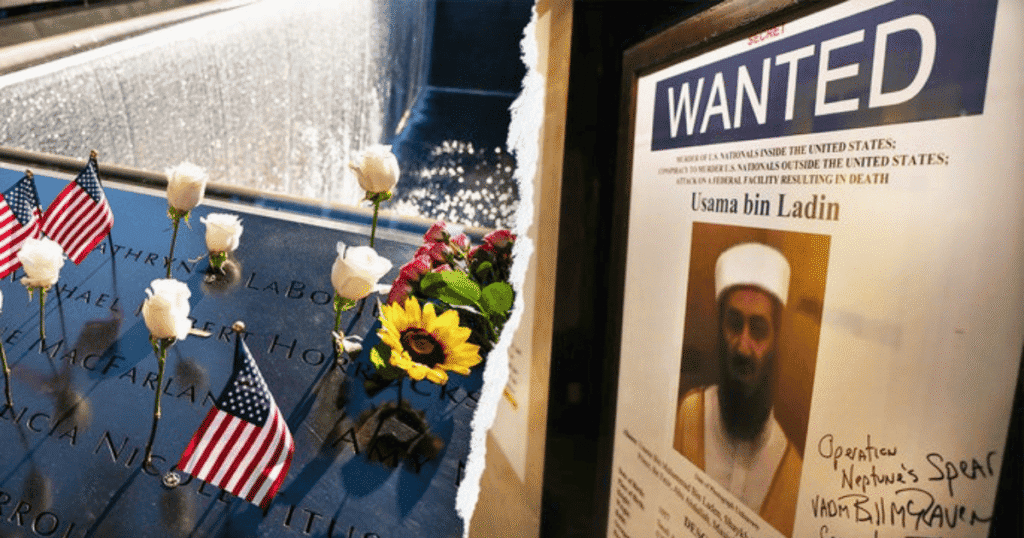
The controversy comes as the 25th anniversary of the September 11 attacks is being observed across the United States.
A former Pentagon official who experienced the attack firsthand has criticized what he views as an overly sanitized approach to teaching the history of 9/11, according to Fox News.
The Pentagon was among the targets on September 11, 2001, when hijackers commandeered American Airlines Flight 77 and crashed it into the building. Nearly 3,000 people were killed in the coordinated attacks on New York, Washington and Pennsylvania.
Debate Over Radical Islam and Muslims
At the center of the dispute is the distinction between Islam as a religion, Muslim Americans and the extremist ideology embraced by the 9/11 attackers.
The 9/11 attacks were carried out by al-Qaida, an extremist terrorist organization that claimed an Islamist ideological basis. At the same time, Muslim Americans were not responsible for the attacks as a group, and U.S. officials warned against retaliating against innocent Muslims in the aftermath.
The challenge for educators is therefore how to accurately explain the ideology behind the attacks without portraying an entire religious population as responsible.
Critics Say History Should Not Be Sanitized
Opponents of the Fairfax County guidance argue that avoiding discussion of radical Islam could leave students with an incomplete understanding of why al-Qaida targeted the United States.
The criticism is especially significant because a growing number of American students have no personal memory of September 11. Education Week reported this week that every student in Fairfax County’s schools was born after the attacks, underscoring the increasing importance of how schools teach the event to younger generations.
For critics, accurately explaining the attackers’ ideology is different from assigning collective blame to Muslims.
Schools Face Challenge of Teaching 9/11
The dispute reflects a larger challenge facing educators 25 years after the attacks.
Teachers must explain the events of September 11, the rise of al-Qaida and the subsequent war on terror while also addressing the discrimination and backlash experienced by Muslim Americans following the attacks.
That balance has become increasingly important as schools attempt to teach 9/11 as both a historical event and a turning point in American foreign and domestic policy.
25 Years Later, 9/11 Remains Controversial
The debate over Fairfax County’s teaching guidance comes as the United States marks 25 years since the attacks.
Nearly 3,000 people were killed when 19 al-Qaida hijackers seized four commercial aircraft. Two planes struck the World Trade Center, one hit the Pentagon and another crashed in Pennsylvania after passengers fought back.
The attacks transformed U.S. national security policy and led to the war in Afghanistan, expanded counterterrorism operations and profound changes in American politics and society.
What the Controversy Means for Teachers
The dispute is ultimately about how educators can provide students with a historically accurate account of terrorism while avoiding religious stereotyping.
Supporters of the district’s approach can argue that students should not be encouraged to equate Islam or Muslims with terrorism. Critics counter that students should also understand the extremist ideology that motivated the perpetrators.
As the generation with firsthand memories of September 11 gets older, schools will increasingly determine how future Americans understand one of the defining events of the 21st century.
The Fairfax County controversy highlights the difficulty of finding that balance — between confronting the facts of terrorism and preventing an entire religious community from being blamed for the actions of extremists.
Also read: DeSantis Warns Trump Over $5,000 Dividend Plan
Satta Matka 16