
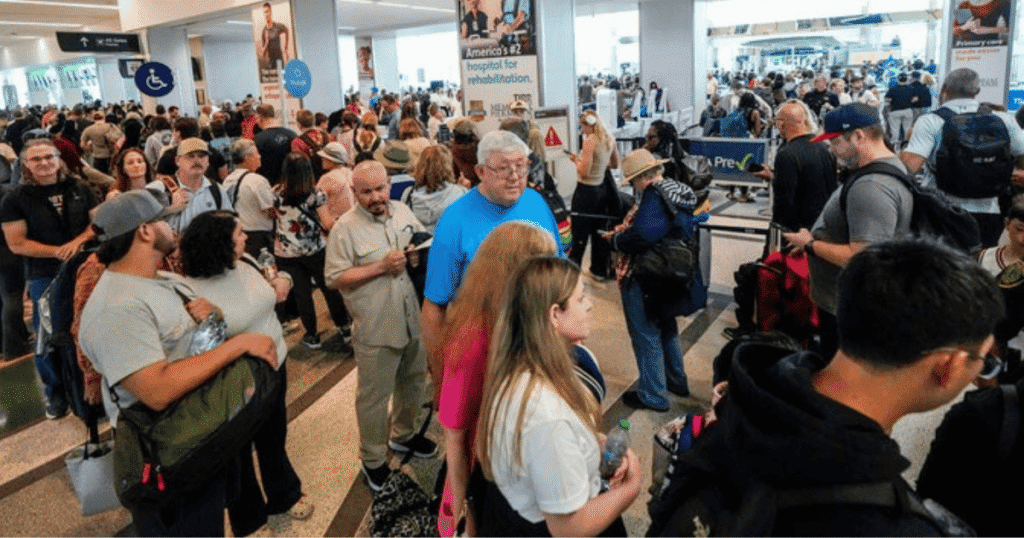
TSA is considering another airport security change that could make flying easier for some travelers as officials rethink a long-frustrating rule.
WASHINGTON — The Transportation Security Administration is weighing another change to airport security procedures that could ease one of the most frustrating parts of flying for some travelers.
The agency has increasingly turned to technology and risk-based screening to streamline airport checkpoints while maintaining aviation security. The latest discussion comes after TSA already eliminated its longstanding shoes-off requirement at U.S. airport checkpoints.
TSA continues to rethink airport security
Airport security procedures have changed significantly in recent years as the TSA has adopted newer screening technology and sought ways to move passengers through checkpoints more efficiently.
The agency’s approach has increasingly focused on using technology to identify potential threats rather than applying identical procedures to every traveler.
That shift has allowed TSA to reconsider rules that once were viewed as necessary for nearly all passengers.
Shoes-off rule already ended
One of the most widely disliked airport security requirements has already been eliminated.
The TSA ended its nationwide requirement for travelers to remove their shoes at security checkpoints in 2025, reversing a policy that had been in place since 2006. The change was made possible by advances in screening technology, officials said.
The shoes-off policy was introduced after the 2001 attempted shoe bombing by Richard Reid, who tried to detonate explosives hidden in his footwear aboard a flight from Paris to Miami.
The incident eventually led to mandatory shoe removal for passengers passing through airport security.
New technology could reshape screening
TSA has continued expanding technologies designed to identify prohibited items and verify travelers while reducing unnecessary delays.
Advanced imaging systems, identity verification tools and trusted-traveler programs have all become increasingly important parts of the agency’s screening strategy.
The evolution reflects a broader effort to make security more targeted while maintaining safeguards against threats.
TSA also expands PreCheck benefits
The agency recently introduced another major change for some trusted travelers through a program allowing eligible TSA PreCheck members without airline tickets to access airport gate areas.
The program, known as Gateside by TSA PreCheck, allows approved members to pass through security and enter secure areas to meet arriving passengers, say goodbye to travelers or use airport amenities.
The program initially launched at 13 airports, with TSA planning to expand it to additional locations.
The move represents another departure from the strict post-9/11 restrictions that largely prevented non-ticketed people from reaching airport gates.
Security remains the priority
Despite efforts to simplify airport screening, TSA officials continue to emphasize that security remains the agency’s primary mission.
Changes to screening procedures depend on whether technology can provide an appropriate level of protection while improving the passenger experience.
The agency has also continued to warn travelers that certain items can still trigger additional screening. For example, foods such as peanut butter remain subject to the TSA’s liquids restrictions because of their consistency.
Travelers could see more changes
The latest discussions underscore how quickly airport security rules can evolve as technology improves.
For travelers, the changes could mean fewer inconvenient steps at checkpoints and a more streamlined experience, particularly for passengers enrolled in trusted-traveler programs.
But TSA’s evolving approach does not mean security requirements are disappearing. Instead, the agency is increasingly looking for ways to distinguish between routine travelers and potential security threats while keeping checkpoints efficient.
As officials evaluate additional changes, travelers can expect airport security procedures to continue evolving — potentially putting more of the industry’s most frustrating rules on the chopping block.
Also read: Fetterman reveals where his loyalty lies
Satta Matka 16