
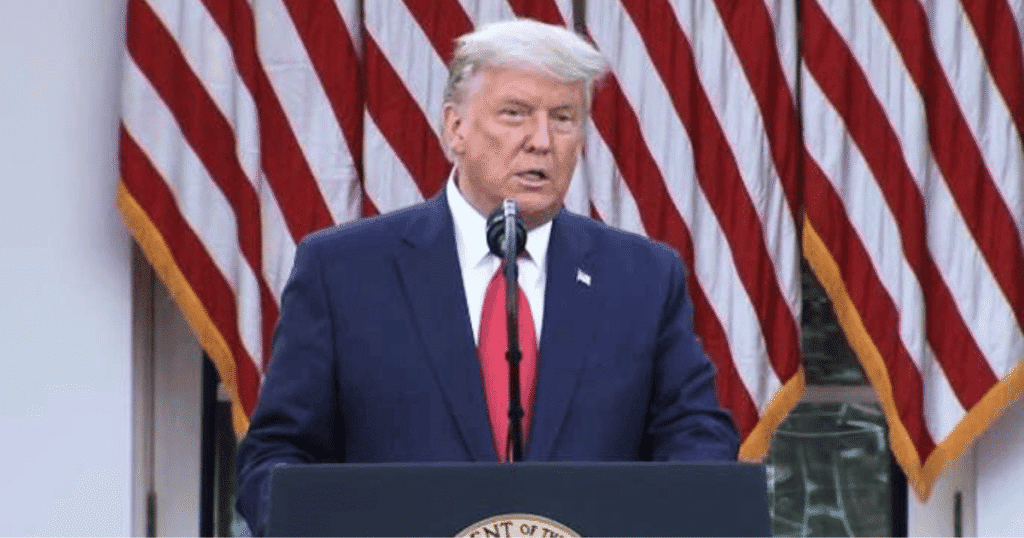
Trump expands the U.S.-Canada trade fight with new import bans on Canadian dairy, alcohol and motorcycles starting September 29.
WASHINGTON — President Donald Trump has dramatically widened the U.S. trade dispute with Canada, moving beyond tariffs to outright import bans on several Canadian products as tensions between the two longtime allies continue to escalate.
The new restrictions target Canadian dairy products, alcoholic beverages and motorcycles and are scheduled to take effect Sept. 29.
The move came after Canada imposed retaliatory tariffs on roughly $20 billion worth of U.S. goods, intensifying a trade confrontation that has already placed significant pressure on the economic relationship between the neighboring countries.
The latest action represents a significant shift in Washington’s strategy. Instead of relying solely on tariffs that raise the cost of imported products, the administration is now blocking selected Canadian goods from entering the U.S. market altogether.
Trump expands Canada trade restrictions
The White House’s latest measures cover a range of Canadian products, including certain dairy goods, alcoholic beverages and large motorcycles.
The administration has also modified the scope of existing 50% tariffs on Canadian imports, removing some products while adding new categories, including certain cheeses, boats and all-terrain vehicles.
The White House has defended its trade policy as a response to what it considers unfair treatment of American businesses and Canadian trade barriers.
Earlier this year, Trump imposed broad tariffs on Canadian imports, while subsequent measures targeted specific sectors. A July White House fact sheet said Section 338 tariffs imposed a 50% rate on various Canadian goods, including products ranging from wine to hockey sticks and cement.
The latest import bans take the dispute into new territory.
Canada retaliates against US products
Canada responded to the escalating U.S. measures with its own tariffs.
Beginning Sept. 8, Ottawa imposed tariffs ranging from 15% to 50% on approximately $27.6 billion worth of U.S. imports.
The targeted products include steel, dairy, appliances, agricultural equipment, pulp and paper and electronics.
The Canadian government has framed its measures as retaliation for U.S. trade restrictions.
The tit-for-tat approach has created growing uncertainty for businesses on both sides of the border, particularly companies that depend on integrated North American supply chains.
Trade fight threatens US-Canada relationship
The United States and Canada have one of the world’s most deeply integrated trading relationships, making the escalation particularly significant.
The latest restrictions come after trade negotiations between Washington and Ottawa stalled, leaving both governments increasingly reliant on tariffs and other trade measures to pressure the other side.
Canadian Prime Minister Mark Carney has responded by emphasizing the need for Canada to reduce its economic dependence on the United States.
That shift could have long-term consequences if businesses begin permanently changing suppliers, markets and investment decisions.
Reuters reported that the escalating dispute has raised questions about the future stability of the United States-Mexico-Canada trade framework.
Why the import bans matter
Tariffs and import bans affect businesses in different ways.
A tariff allows a product to enter the country while imposing an additional cost. An outright import ban prevents the targeted product from entering the U.S. market under the restrictions.
The Trump administration has argued that the affected Canadian products represent a relatively small share of overall U.S. consumption and can be replaced by domestic or alternative foreign suppliers.
That could limit the immediate impact on American consumers.
However, businesses that depend on Canadian suppliers could still face higher costs, supply disruptions or the need to find alternative sources.
Reuters reported that Washington’s latest restrictions cover roughly $1 billion worth of Canadian goods, including dairy products, alcohol, motorcycles and Bombardier aircraft.
Bombardier becomes another flashpoint
The dispute has also expanded into the aerospace industry.
Trump has threatened to prevent Canadian aircraft manufacturer Bombardier from selling jets in the United States, adding another politically sensitive dimension to the trade conflict.
The potential restriction illustrates how far the administration’s trade strategy could extend beyond traditional consumer products.
Aircraft manufacturing relies on highly specialized supply chains, making restrictions more complicated to implement than tariffs on individual consumer goods.
The threat has also highlighted the potential economic costs of using trade restrictions against a close ally rather than a geopolitical adversary.
More tariffs could follow
The latest import bans may not be the final step in the dispute.
Trump has continued to threaten additional trade measures if Canada does not change its policies.
The administration has also directed federal agencies to exclude certain Canadian products from major U.S. government contracts, further increasing pressure on Canadian exporters.
For Canada, the challenge is balancing retaliation with the economic reality that the United States remains its largest trading partner.
For the United States, the dispute carries its own risks because American companies and consumers rely heavily on Canadian energy, raw materials, agricultural products and manufactured goods.
US-Canada trade war enters new phase
The latest measures mark a major escalation in the U.S.-Canada trade dispute.
For decades, the economic relationship between the two countries has been built around relatively open cross-border trade and deeply connected supply chains.
Now, import bans, retaliatory tariffs and threats against major companies are reshaping that relationship.
The immediate focus will be on whether Washington and Ottawa can return to negotiations before the new restrictions take effect Sept. 29.
Until then, businesses on both sides of the border face growing uncertainty.
What began as a dispute over tariffs has now evolved into a broader confrontation involving import bans, government procurement and threats against major industries — raising fresh questions about the future of North America’s integrated economy.