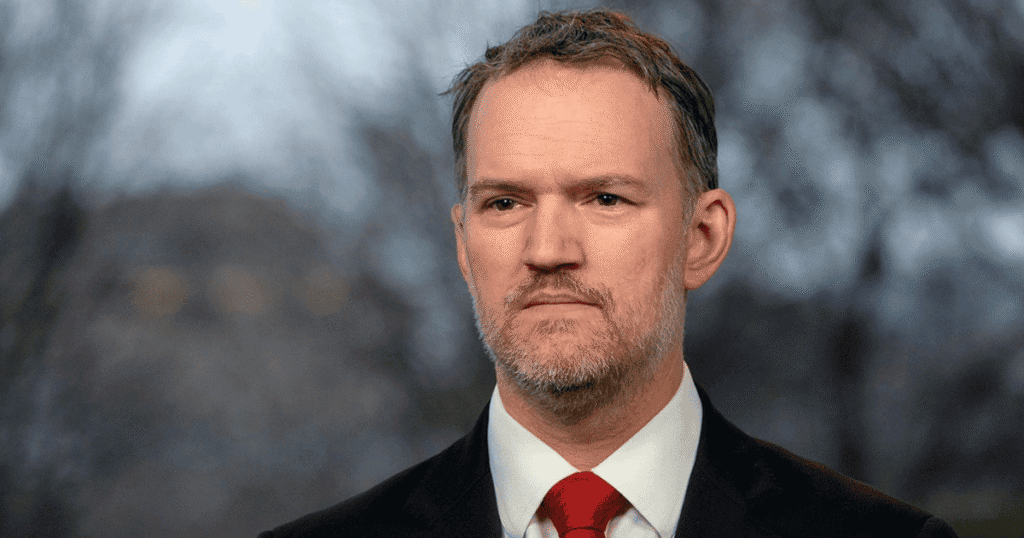
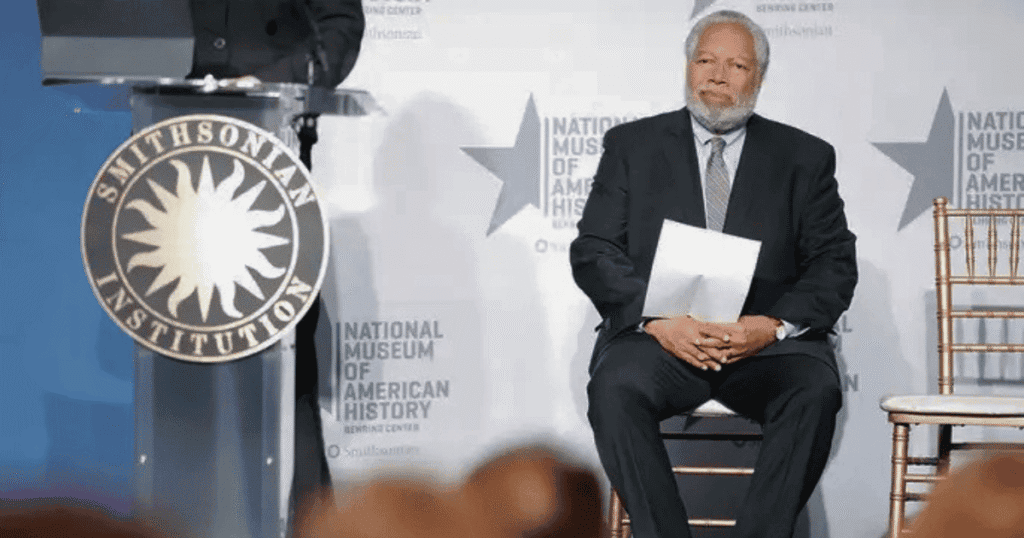
Chief Justice John Roberts praised Smithsonian leader Lonnie Bunch as he announced his retirement amid tensions with the Trump administration.
WASHINGTON — Chief Justice John Roberts praised Smithsonian Secretary Lonnie Bunch for his leadership after Bunch announced he will retire from the institution at the end of 2026, following years of growing political pressure over how the Smithsonian presents American history.
Bunch, 73, announced his retirement Tuesday after serving as the Smithsonian’s secretary since 2019. His departure comes as President Donald Trump’s administration has sharply criticized the institution’s leadership and some of its exhibits.
Roberts, who serves as the Smithsonian’s chancellor, issued a statement recognizing Bunch’s contributions and his work overseeing the institution during a politically turbulent period.
Roberts praises Bunch’s Smithsonian leadership
Roberts said Bunch had pursued excellence in presenting the nation’s history and praised his “wisdom, vision and leadership.”
The chief justice’s comments came as Bunch prepared to leave an institution that has faced increasing scrutiny from the Trump administration.
Bunch became the first Black secretary of the Smithsonian when he assumed the position in 2019. Before becoming secretary, he was founding director of the National Museum of African American History and Culture, one of the Smithsonian’s most prominent recent additions.
During his tenure, the Smithsonian also advanced plans for the National Museum of the American Latino and the Smithsonian American Women’s History Museum.
Bunch retirement follows Trump administration pressure
Bunch’s announcement comes amid an escalating dispute between the Smithsonian and the Trump administration over the way American history is presented in its museums.
The administration has accused parts of the Smithsonian of promoting what it considers a politically biased or “anti-American” interpretation of U.S. history.
A White House report released earlier this year criticized the National Museum of American History and accused Smithsonian leadership of allowing ideological influence to shape its work.
Bunch pushed back against that assessment in an internal message to Smithsonian employees, acknowledging that the institution could improve while arguing that the administration’s characterization did not fairly represent the museum’s scholarship or broader mission.
Smithsonian faced funding and artifact threats
The pressure intensified last week when Interior Secretary Doug Burgum and White House Domestic Policy Council Director Vince Haley warned that federal agencies could limit their support for the Smithsonian.
The officials cited concerns about potential violations of federal antidiscrimination laws and alleged ideological problems within the institution.
The administration’s move raised the stakes because federal support plays a major role in the Smithsonian’s operations. Reuters reported that the White House has threatened to restrict access to federal resources, including artifacts, grants and other forms of assistance.
The Smithsonian operates with a degree of independence from the executive branch, with oversight provided by its Board of Regents.
Roberts plays key role in Smithsonian’s future
Roberts’ role is particularly significant because he serves as the Smithsonian’s chancellor and is a member of the Board of Regents.
The board is responsible for overseeing the institution and will ultimately play a central role in selecting Bunch’s successor.
The Board of Regents includes senior government officials as well as citizen members, giving the leadership transition broader significance as the Smithsonian navigates its dispute with the administration.
Bunch is expected to remain in his position through the end of the year, giving the institution time to begin the process of choosing its next secretary.
Bunch says retirement is the right time
Despite the political backdrop, Bunch has said his decision to retire was not simply the result of pressure from the White House.
He has described the position as increasingly demanding and indicated that he believes the time is right to step aside.
His departure nevertheless comes at a critical moment for the Smithsonian.
The institution is facing questions over its independence, federal funding and the way it presents complicated chapters of American history, including slavery, racism and the country’s broader political development.
Bunch has argued that museums have a responsibility to present an accurate and comprehensive account of the nation’s past rather than avoiding difficult subjects.
Smithsonian leadership battle is not over
Bunch’s retirement may end one chapter of the dispute, but it is unlikely to resolve the larger disagreement over the Smithsonian’s direction.
The Trump administration has made changing the presentation of American history a priority, while critics accuse the White House of attempting to exert political influence over an institution that traditionally operates with significant independence.
Roberts’ praise for Bunch adds another important voice to that debate.
As chancellor, the chief justice has a direct connection to the Smithsonian’s governance, and his comments signal recognition of Bunch’s contributions despite the political controversy surrounding the institution.
The next Smithsonian secretary will therefore inherit an organization at a pivotal moment.
The leadership transition will determine not only who runs the nation’s largest museum and research complex, but also how the institution navigates growing pressure over its mission, independence and interpretation of American history.
Bunch’s retirement is scheduled for the end of 2026.
Also read: US-Israel Alliance Faces Growing Backlash