
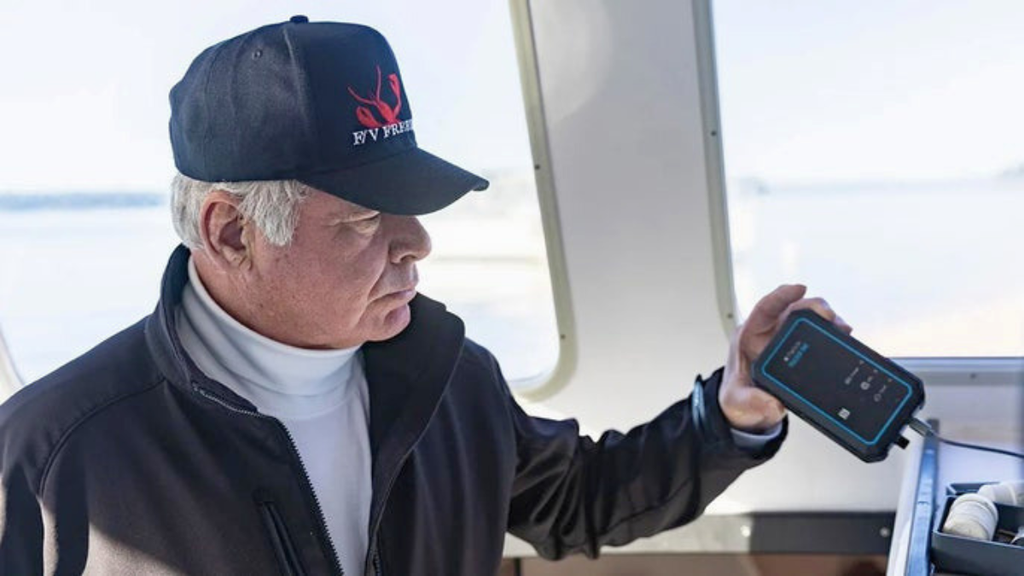
Maine lobsterman Frank Thompson vows to fight mandatory GPS tracking after the Supreme Court rejects his appeal, raising fresh fears over privacy rights and freedom.
A Maine lobsterman’s fight against mandatory GPS tracking has suffered a major setback, but he refuses to surrender. Frank Thompson says the Supreme Court’s decision to reject his appeal threatens privacy rights and raises troubling questions about government surveillance. “Freedom is gone,” Thompson said, expressing frustration over a tracking requirement he believes reaches far beyond commercial fishing.
Supreme Court Decision Deals Blow to Lobsterman’s Privacy Fight
The Supreme Court declined to hear Thompson’s challenge to a federal appeals court ruling that upheld mandatory vessel tracking. The decision leaves the lower court’s judgment in place and prevents his case from advancing through this appeal.
Thompson, a fifth-generation lobsterman from Vinalhaven, Maine, has spent years challenging the requirement. He argues that constant monitoring intrudes on his privacy and violates the Fourth Amendment’s protection against unreasonable searches and seizures.
Despite the setback, Thompson remains determined to continue his legal fight. He believes the issue affects not only his livelihood but also the rights of people working in heavily regulated industries.
Why Thompson Opposes Mandatory GPS Tracking
The tracking requirement directs federally licensed lobster boats in Maine to carry electronic monitoring devices. These devices record vessel locations while boats move and collect location data at longer intervals when vessels remain docked.
Thompson objects to the system because it continues collecting information outside his fishing activities. He worries that the government could monitor personal journeys, family outings and other movements unrelated to commercial work.
He has described the device as a government-issued “ankle bracelet,” arguing that fishermen should not face continuous surveillance simply to earn a living.
For Thompson, the central question concerns consent and constitutional protection. He argues that obtaining a fishing license should not require surrendering fundamental privacy rights.
Why the Government Requires Boat Tracking
State officials and conservation advocates support vessel monitoring as a tool for managing marine resources. They say reliable fishing data helps regulators understand lobster populations and protect endangered North Atlantic right whales.
The tracking program emerged from a broader effort to improve fisheries management and support long-term conservation. Regulators view location information as one way to understand fishing activity and develop appropriate rules.
Thompson disputes the justification for the requirement. He argues that authorities should not treat hardworking fishermen as suspects simply because they operate in a regulated industry.
The disagreement highlights a difficult policy question: how can regulators protect marine ecosystems without imposing unnecessary surveillance on the people who depend on them?
How the Legal Battle Reached the Supreme Court
Thompson and four fellow lobstermen challenged the tracking mandate after the requirement took effect. Their lawsuit argued that compulsory electronic monitoring amounted to a warrantless search under the Fourth Amendment.
A federal district court dismissed the lawsuit, and the First Circuit Court of Appeals upheld that outcome. The appeals court relied on the closely regulated industries doctrine when evaluating the constitutional challenge.
That doctrine recognizes certain circumstances in which government inspections of heavily regulated businesses may proceed without a traditional warrant. The appeals court concluded that the lobster industry fell within the relevant legal framework.
Thompson then asked the Supreme Court to review the dispute. By declining to hear his appeal, the justices left the lower court’s ruling intact without issuing a new opinion resolving the constitutional questions themselves.
Privacy Concerns Could Reach Beyond the Fishing Industry
Thompson’s case has drawn attention from advocates concerned about government monitoring across regulated industries. The American Farm Bureau Federation supported his Supreme Court appeal, warning that the legal reasoning could affect farmers, ranchers and other business owners.
These concerns focus on how far regulators can go when requiring businesses to collect or share operational data. If courts broadly accept certain surveillance requirements, critics argue, other industries could face similar disputes over privacy and government oversight.
However, the ruling does not automatically authorize every form of government tracking. Future cases would depend on their specific facts, the applicable regulations and the constitutional arguments presented.
The case nevertheless illustrates a growing tension between regulatory oversight and individual privacy. Businesses often must comply with detailed government requirements, but those obligations can raise difficult questions when monitoring extends beyond ordinary commercial activities.
What Happens Next for Frank Thompson?
Thompson says he intends to continue working with his attorneys to challenge the tracking requirement. The Supreme Court setback has not ended his opposition, although any further legal strategy will depend on available procedural options and the development of the case.
His attorney, Matthew Gilliam, has argued that workers should not lose Fourth Amendment protections simply because they operate in regulated industries. Their position centers on whether the government can require persistent location monitoring without adequate constitutional safeguards.
For Thompson, the fight also carries a deeply personal meaning. His family has worked in the lobster industry for generations, and he hopes future generations can continue that tradition without what he considers intrusive surveillance.
He has compared hauling lobster traps to opening a Christmas present, describing the satisfaction and connection he feels while working on the water. That attachment helps explain why the dispute means far more to him than a technical disagreement over fishing regulations.
A Wider Debate Over Freedom and Government Surveillance
The case places two public interests in direct tension: protecting marine resources and preserving personal privacy. Regulators emphasize conservation and fisheries management, while Thompson and his supporters question whether constant location tracking crosses a constitutional boundary.
The Supreme Court’s decision leaves the immediate legal setback unresolved for Thompson and his fellow fishermen. It also leaves broader questions about privacy in regulated industries open to future disputes.
For now, Thompson says he will keep fighting. His message reflects a concern shared by many opponents of expansive surveillance: people should not have to abandon legitimate privacy expectations simply to pursue their livelihoods.








