
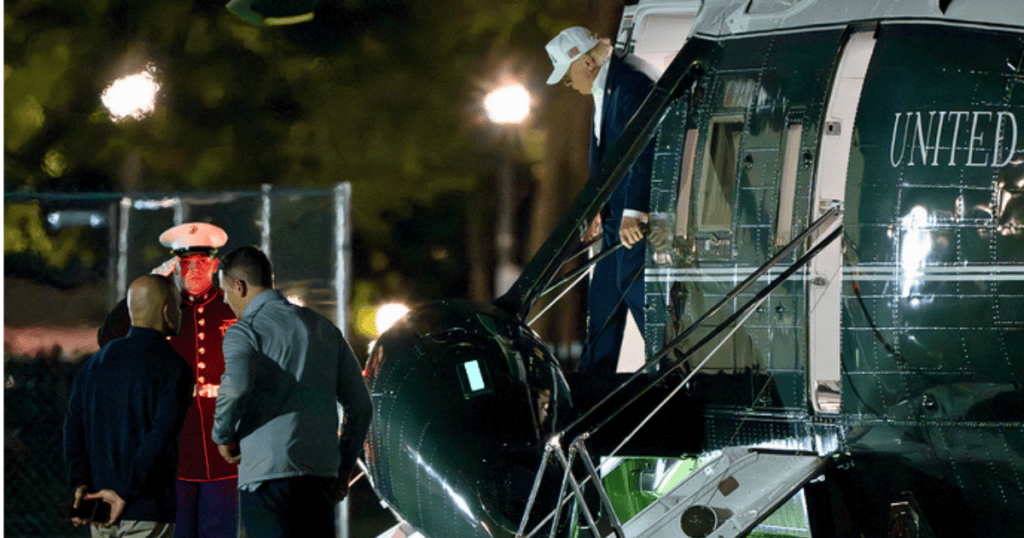
Trump cuts short his Camp David stay as Iran sets seven conditions for peace talks, demands an end to the war and warns of further escalation.
US President Donald Trump returned to the White House earlier than scheduled after cutting short his weekend stay at Camp David, as Iran presented Washington with conditions for negotiations to end the ongoing war.
The September 20 development comes amid escalating tensions across the Middle East, with Tehran seeking diplomatic engagement while warning it is prepared for further military confrontation if its demands are rejected.
Iranian security official Mohsen Rezaei said Tehran had conveyed seven conditions to Washington through Qatari mediators and was awaiting Trump’s response. The announcement has added a new diplomatic dimension to the conflict as the US weighs its next steps.
Trump Returns Early as Iran Pushes for Peace Talks
Trump returned to the White House on Saturday evening, a day earlier than initially expected. The administration had not publicly explained the reason for the change in his schedule.
His early return coincided with heightened regional security concerns and Iran’s renewed push to establish terms for negotiations.
According to reports, Tehran’s conditions were communicated through Qatar, which has been involved in diplomatic efforts between Iran and the United States.
The timing has drawn attention as Washington faces decisions over whether to pursue renewed diplomacy or intensify military pressure.
However, Trump’s early return to Washington does not, by itself, establish that a military decision has been made.
Iran Sets Seven Conditions for Ending the War
Mohsen Rezaei, secretary of Iran’s Supreme National Security Council, said Tehran had submitted seven conditions for restarting negotiations with the United States.
In comments reported by Al Jazeera, Rezaei identified three central demands: an end to the war on all fronts, the release of frozen Iranian funds and the lifting of the US naval blockade.
The remaining conditions were not fully detailed in the publicly reported remarks.
Rezaei said Qatar had conveyed the demands to Washington and that Tehran was waiting for a response from the Trump administration.
Iran has maintained that any diplomatic agreement must address the broader conflict rather than simply pause hostilities.
Tehran Warns of ‘Decisive War’ if Demands Are Rejected
Alongside its diplomatic proposal, Tehran issued a warning that it was prepared for what Rezaei described as a “decisive war” if Washington rejected its conditions.
The warning underscores the uncertainty surrounding the negotiations, with diplomatic channels reportedly remaining active even as military tensions persist.
Iran’s demands also reflect longstanding disagreements over US sanctions, frozen Iranian assets and the naval blockade.
There has been no confirmed agreement to end the war, and Iran’s proposal should not be interpreted as a finalized peace deal.
US Weighs Next Move as Middle East Tensions Escalate
The latest developments come as Trump faces a critical decision over the future course of the conflict.
In a September 17 interview with Axios, Trump said he was approaching a major decision about whether to resume large-scale military operations against Iran.
The president also indicated that he wanted to consult regional leaders before determining the next steps.
Meanwhile, the conflict continues to affect regional security, including concerns over the Strait of Hormuz, a vital global energy shipping route.
The US State Department has also issued security warnings urging Americans in parts of the Middle East to exercise caution amid the potential for further escalation.
Will Trump’s Return Lead to a Breakthrough in Iran Talks?
For now, the diplomatic situation remains uncertain.
Iran has publicly outlined key conditions for renewed negotiations, while the Trump administration has yet to announce acceptance of Tehran’s demands.
The early White House return, Iran’s diplomatic message and Rezaei’s warning have placed renewed focus on Washington’s next move.
Whether the latest diplomatic effort leads to negotiations, a broader agreement or further confrontation will depend on the response from both governments and the willingness of regional mediators to help bridge their differences.
Also read: The Major Mistake Dads Make Raising Daughters