
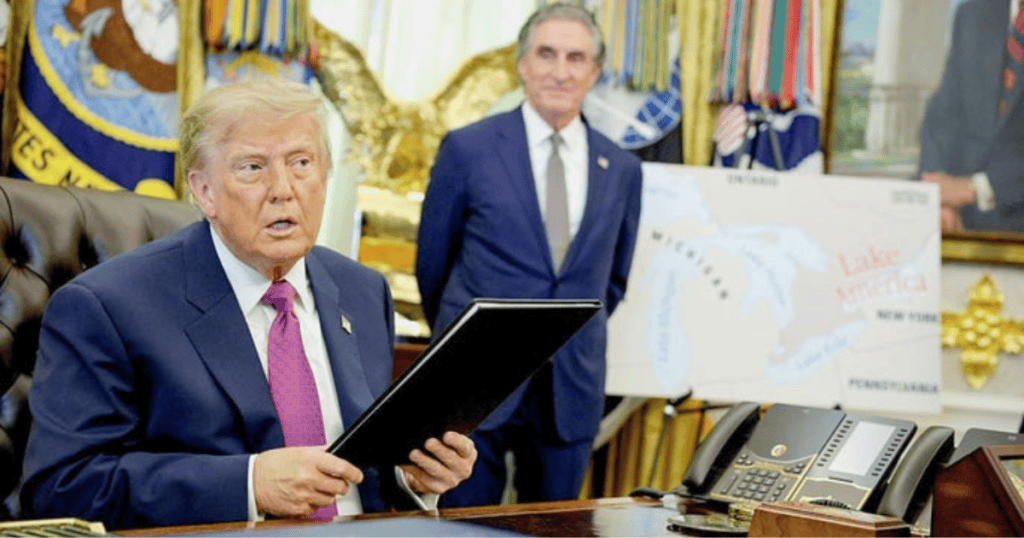
Canada is being offered a path to unprecedented EU associate membership as trade tensions with Trump push Ottawa toward closer ties with Europe.
Canada could be moving toward a major realignment of its economic and strategic relationships as tensions with President Donald Trump’s administration continue to reshape North American trade.
European Commission President Ursula von der Leyen said Wednesday that she wants to open the door for Canada to become the European Union’s first associate member, offering Ottawa a potentially deeper relationship with the bloc without full EU membership.
The proposal comes as Canada and the United States remain locked in a difficult trade dispute, encouraging Canadian Prime Minister Mark Carney’s government to look beyond its traditional dependence on the American market.
EU proposes unprecedented relationship with Canada
Von der Leyen made the proposal during her annual State of the European Union address in Strasbourg, with Carney in attendance.
She described Canada and Europe as sharing democratic values and said Brussels wanted to build a broader partnership with Ottawa.
The proposed arrangement would be unlike traditional EU membership. Canada is not eligible for full membership because the bloc’s treaties limit membership to European states, but an associate relationship could create a new framework for closer cooperation.
Exactly what associate membership would provide has not yet been finalized.
Questions remain over issues including market access, regulatory alignment, participation in EU programs and whether Canada would have any formal role in EU decision-making.
Trade tensions with Trump are driving the shift
The European proposal arrives against the backdrop of worsening economic tensions between Washington and Ottawa.
Trump’s administration has imposed tariffs and other trade measures affecting Canadian goods, while Canada has responded with retaliatory measures.
The dispute has placed pressure on businesses that depend on cross-border commerce and has encouraged Ottawa to diversify its economic relationships.
Canada remains deeply integrated with the U.S. economy, meaning a complete break with Washington is neither immediate nor straightforward. But the current tensions have accelerated discussions about finding alternative markets and strengthening relationships with other major economic powers.
AP reported that Carney has sought to reduce Canada’s heavy dependence on U.S. trade while pursuing closer economic and security cooperation with Europe.
From trade agreement to broader alliance
Canada and the EU already have an important economic framework through the Comprehensive Economic and Trade Agreement, commonly known as CETA.
Von der Leyen has proposed building on that relationship through what she called an “Alliance for the Future.”
The potential partnership could extend beyond conventional trade.
Areas under discussion include technology, artificial intelligence, defense, energy, critical minerals and Arctic cooperation. Canada and European countries also have interests in strengthening supply chains for strategically important resources and technologies.
For Canada, greater access to European markets could provide another outlet for exports and investment.
For the EU, closer relations with Canada could strengthen access to natural resources, energy and technology while adding another partner in defense and Arctic affairs.
Canada would not become an EU member overnight
Despite the attention surrounding the proposal, associate membership would not mean Canada was joining the European Union in the same way as France, Germany or other member states.
The proposed status does not currently exist as a standard EU membership category, meaning Brussels and Ottawa would have to work out its legal and institutional structure.
Other non-EU countries already have extensive relationships with the bloc. Norway, Switzerland and others participate in selected European programs or maintain close economic arrangements, but their relationships do not give them full membership or voting rights inside EU institutions.
That leaves significant details to be negotiated.
October summit could advance the proposal
The next major stage could come during the planned Canada-EU summit in Montreal in October.
Officials are expected to discuss ways to deepen cooperation, potentially moving beyond existing trade arrangements toward broader economic and security coordination.
The discussions could determine whether the associate-member concept develops into a formal arrangement or remains primarily a political proposal.
For Canada, the talks offer an opportunity to expand relationships beyond its overwhelmingly important U.S. market.
For Europe, the proposal represents a potentially new model for building closer ties with a major democratic partner outside the continent.
A changing North American relationship
Canada’s pursuit of stronger European ties does not erase its longstanding relationship with the United States.
The two countries remain closely connected through geography, trade, energy, manufacturing and supply chains.
But the latest EU proposal demonstrates how the trade dispute under Trump is contributing to a broader reassessment of Canada’s international economic strategy.
Whether the proposed associate membership becomes a lasting institutional arrangement remains to be seen. What is already clear is that Canada is exploring a wider network of partnerships as Ottawa navigates an increasingly uncertain relationship with its largest trading partner.
Also read: Costco Limits Motor Oil Purchases Amid Price Hike


