
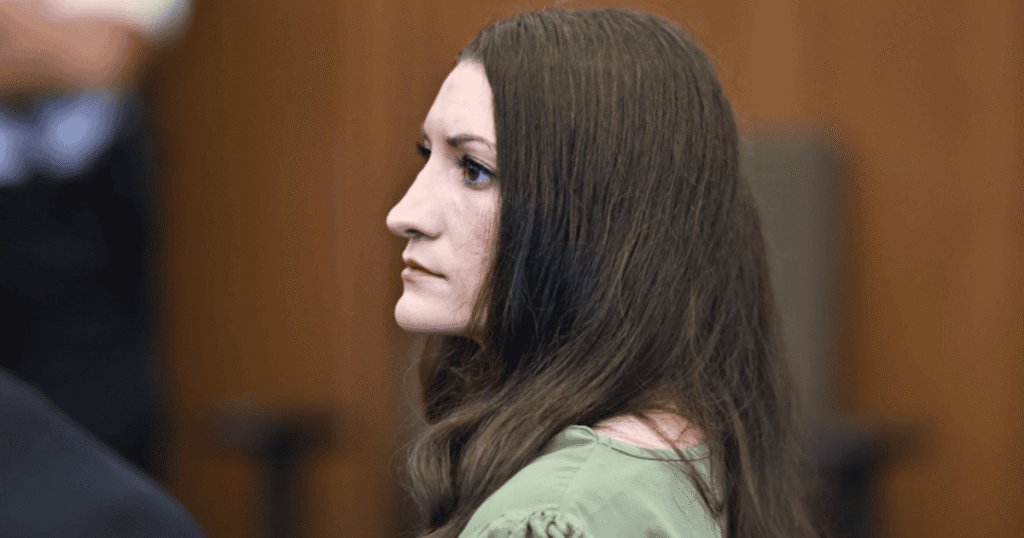
Lindsay Clancy’s attorney is open to a plea deal after her mistrial, but legal experts say a compromise with DA Timothy Cruz could be difficult.
Lindsay Clancy’s defense attorney is signaling a willingness to consider a plea agreement after her high-profile murder trial ended in a mistrial, but legal experts say reaching a deal with Plymouth County District Attorney Timothy Cruz could be an uphill battle.
Clancy was charged with first-degree murder in the January 2023 deaths of her three children, Cora, Dawson and Callan. Her defense argued that she was experiencing postpartum psychosis and was not criminally responsible for the killings.
The first trial ended in a hung jury after jurors reportedly remained divided 11-1, with the majority favoring a finding that Clancy was not criminally responsible. Prosecutors have not yet announced whether they will retry the case.
Clancy attorney open to plea negotiations
Defense attorney Kevin Reddington has indicated that he is willing to hear what Cruz might propose if prosecutors decide against another lengthy trial.
Reddington previously said there was no plea bargaining available while Clancy faced three first-degree murder charges. Massachusetts first-degree murder carries a mandatory life sentence without parole, making a conventional sentence-reduction agreement unavailable unless prosecutors agree to lesser charges.
After the mistrial, however, Reddington’s position shifted toward exploring whether an agreement could prevent a second trial.
In an interview with CNN, Reddington said he would not accept a deal requiring Clancy to serve time in prison. He has argued that his client needs psychiatric treatment rather than incarceration.
DA Timothy Cruz faces a difficult decision
Cruz now has to determine whether to seek a retrial or consider another resolution.
The district attorney has maintained that the first-degree murder charges were appropriate and has emphasized that his office’s responsibility is to seek justice for the three children who died.
Legal experts told CNN that Cruz has significant factors to weigh, including the evidence presented during the seven-week trial, the resources required for another prosecution, the wishes of the victims’ surviving family members and the possibility of securing a conviction at a second trial.
Boston defense attorney Elyse Hershon described Cruz as a “hard-charging prosecutor” and said she did not expect him to easily abandon the first-degree murder charges.
A plea to a lesser offense could therefore represent a major change from the prosecution’s position during the original trial.
Lesser charges could become key
Clancy’s jury was permitted to consider second-degree murder and manslaughter in addition to first-degree murder.
If prosecutors chose to negotiate, those lesser charges could theoretically provide a starting point for discussions. But experts say finding common ground may be especially difficult because Reddington has said he would reject an agreement involving jail time.
That creates a significant gap between the two sides.
Prosecutors have argued that Clancy was criminally responsible for the deaths, while her defense has maintained that severe mental illness prevented her from understanding the wrongfulness of her actions.
Experts also noted that a typical plea agreement would generally involve incarceration or probation, rather than simply guaranteeing placement in a psychiatric facility.
Mistrial gives Clancy defense leverage
The jury’s 11-1 split could nevertheless give Reddington leverage in any potential negotiations.
Although the jury did not reach a verdict, the reported split suggests that most jurors were persuaded by the defense’s argument concerning Clancy’s mental state. One holdout prevented the panel from reaching the unanimous decision required for a verdict.
Reddington has also filed a motion asking the judge to find Clancy not guilty by reason of insanity, arguing that a second trial should not be necessary. A hearing on that request is scheduled for Sept. 29.
If the judge rejects the defense request, prosecutors could still pursue another trial.
Clancy case remains under national scrutiny
The case has drawn intense attention because of its intersection of criminal law and postpartum mental health.
Clancy has admitted killing her three children but has maintained that she was suffering from postpartum psychosis at the time. Prosecutors have challenged the defense’s interpretation of her mental state and argued that she remained capable of understanding her actions.
A second trial could once again require surviving family members to revisit the deaths and force prosecutors and defense attorneys to present the highly emotional evidence before another jury.
For now, no plea agreement has been announced.
Cruz has yet to decide whether to retry Clancy, while Reddington continues to pursue an outcome that would keep his client out of prison and focused on psychiatric treatment. The Sept. 29 hearing could provide the next major indication of where the case is headed.
Also read: Saudi Arabia Pushes Trump to Strike Houthis