Former Roanoke swimmer Lily Mullens criticizes Gov. Abigail Spanberger after Virginia withdraws a proposed rule on female sports and private spaces.
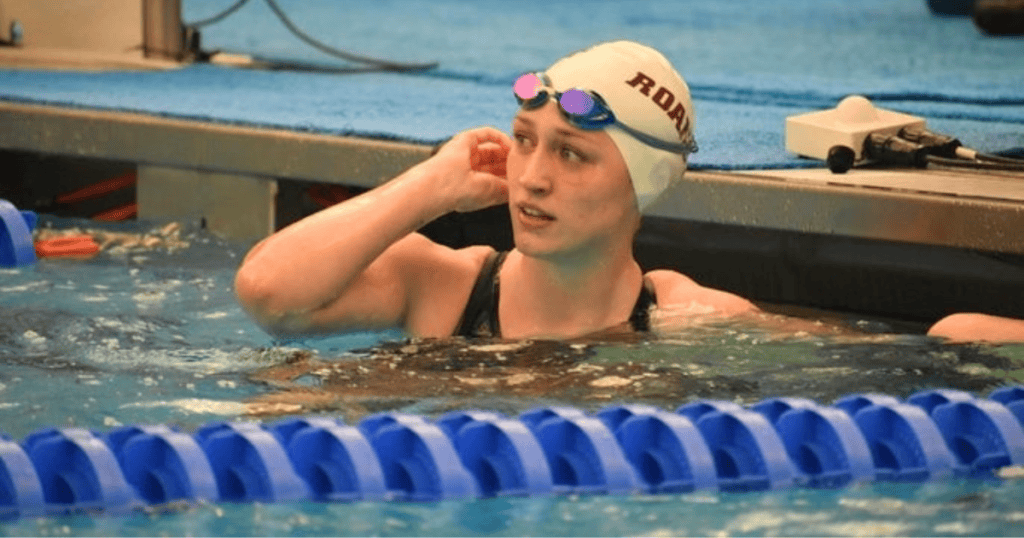
Former Roanoke College swimmer Lily Mullens is speaking out against Virginia Gov. Abigail Spanberger after the state’s Board of Health withdrew a proposed regulation aimed at restricting transgender athletes’ participation in female-only sports and access to certain women’s spaces.
Mullens, who previously helped lead a public protest over a transgender athlete’s potential participation on Roanoke’s women’s swimming team, criticized the Democratic governor following the withdrawal of the proposed protections.
The dispute has reignited debate over transgender participation in women’s sports, athlete privacy and the role of state governments in establishing eligibility rules.
According to OutKick, Mullens was among three female swimmers who petitioned Virginia’s State Board of Health in 2025 to adopt regulations governing female-only athletic teams and designated private spaces.
The proposed regulation advanced under former Republican Gov. Glenn Youngkin but was withdrawn on July 30, 2026, after Spanberger took office.
Lily Mullens Criticizes Spanberger Over Proposed Protections
Mullens expressed disappointment with the administration’s decision, arguing that Virginia had been making progress toward protecting female athletes before the regulatory process was discontinued.
“By failing to be open with the public about her decision months ago, she is signaling to the people of Virginia that she does not care about the female athletes in this state,” Mullens told OutKick.
The former swimmer also questioned why Spanberger’s administration did not publicly announce the withdrawal when it occurred.
Mullens said her experience as a female athlete influenced her opposition to the decision, adding that she believes the issue has consequences for teams, athletic programs and women competing in organized sports.
Her comments follow earlier criticism of Spanberger over the governor’s position on transgender participation in girls’ sports.
Virginia Board of Health Had Unanimously Approved Petition
The regulatory effort began in April 2025, when Mullens, former teammate Carter Satterfield and Hungarian Olympian Réka György filed a petition with Virginia’s State Board of Health.
The petition sought restrictions on participation in female-only athletic teams and access to certain female-designated spaces where women and girls may be undressing.
In August 2025, the board voted 14-0 to begin the regulatory process.
The Youngkin administration subsequently approved a Notice of Intended Regulatory Action, and the proposal underwent public-comment periods.
However, the proposed regulation was never finalized. The State Board of Health withdrew the regulatory action on July 30, 2026.
The official notice stated that the board would not proceed with the proposal following a review of its statutory authority.
The withdrawal ended the rulemaking process rather than reversing an already enacted statewide regulation.
Roanoke Swimming Controversy Fuels Debate
Mullens became nationally known in 2023 after joining teammates who objected to a transgender student’s potential participation on Roanoke College’s women’s swimming team.
The dispute attracted national attention and led to public protests and legal action.
The transgender student ultimately withdrew from consideration before competing for the team.
The controversy became part of a broader national debate over transgender athletes’ participation in women’s sports, including questions about competitive fairness, inclusion and privacy.
For Mullens, the experience helped motivate her subsequent advocacy for sex-separated athletic competition.
Spanberger’s Decision Draws Additional Criticism
Mullens is not the only athlete to criticize the administration’s decision.
György, who represented Hungary at the 2016 Olympics and previously competed against transgender swimmer Lia Thomas at the NCAA championships, also expressed disappointment after learning that the proposed regulation had been withdrawn.
György said she hoped to speak directly with Spanberger about the issue and explain why she believes protections for female athletes and women’s private spaces are necessary.
The controversy has placed renewed attention on Spanberger’s approach to transgender-related policies, particularly as advocates on both sides of the debate continue to push for changes in sports eligibility and access to sex-specific facilities.
As the debate continues in Virginia, the central questions remain how athletic eligibility should be determined, what protections should apply to female athletes and which government bodies have the authority to establish those rules.
Also read: Lane Kiffin’s Oxford Return Ends in Pete Golding’s Glory