
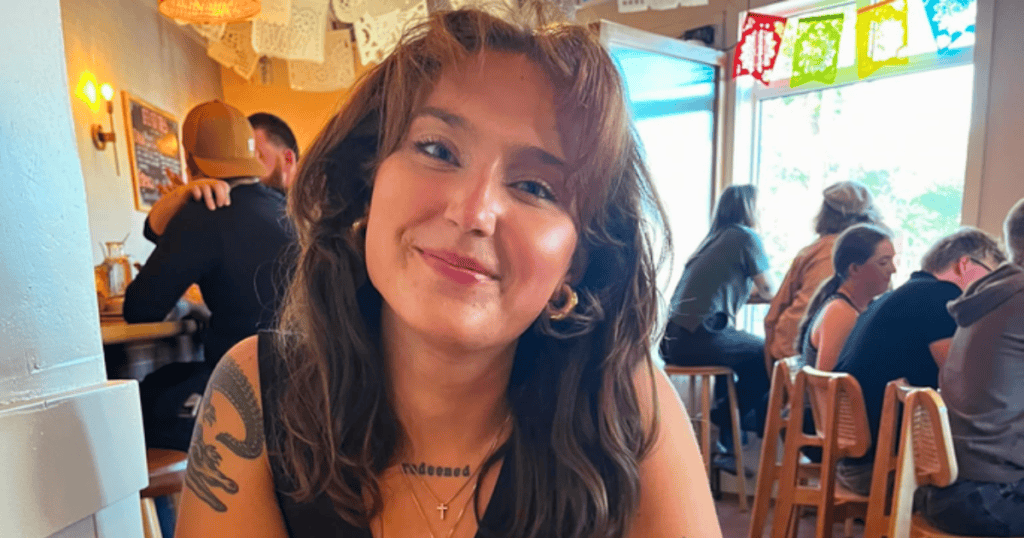
Haley Furst says her journey from transgender atheist to Christian woman changed her views on gender identity and childhood discussions of sexuality.
Haley Furst says a dramatic change in her faith and worldview led her away from the life she once lived as a transgender man and toward Christianity.
Furst, a Canadian social media creator, told Fox News Digital that she spent several years identifying as a transgender man, describing herself at the time as an atheist who embraced far-left political beliefs.
Today, she identifies as a Christian woman and says her renewed faith in Jesus Christ transformed how she understands identity, sexuality and childhood development.
Furst describes dramatic change in worldview
Furst said she grew up in a Christian family and attended a private Christian school before entering Canada’s public-school system during high school.
She described that transition as a major cultural shift, saying discussions about gender and sexual identity became much more prominent in her new environment.
According to Furst, conversations surrounding gender liberation, sexual liberation and Gay-Straight Alliance clubs were common at her public high school.
She said the experience contributed to a broader change in how she viewed herself and society.
Furst ultimately spent approximately five or six years identifying as a transgender man. She said she took male hormones and underwent a surgical procedure involving the removal of her uterus and one ovary.
A return to Christianity changed her outlook
Furst said her perspective began changing after a coworker shared a passage from the Bible, Romans 8:38-39, with her.
The biblical passage focuses on the enduring love of God through Christ.
Furst said the encounter prompted her to reconsider beliefs she had previously held and eventually led her to pray privately about whether Jesus would still accept her.
She described the process as gradual rather than an overnight transformation.
“It was a slow heart work,” Furst told Fox News Digital, describing her eventual return to Christianity as a “slow and steady journey” through her relationship with Jesus.
Furst now warns parents about gender discussions
Furst’s changed perspective has also influenced her views about how children are exposed to discussions involving gender and sexuality.
She said she is now highly critical of adults who discuss sexual identity with minors and argued that some conversations can take place before children are ready to process them.
Furst specifically connected her own experience to what she described as increasingly detailed discussions in school.
She said early exposure to those subjects contributed to what she now believes was a struggle with an identity she had not previously experienced.
Those are Furst’s personal reflections on her own development, rather than an independently established finding about the effects of school-based discussions on gender identity.
She says parents should have greater control
Furst argued that parents should have a central role in determining when and how children are introduced to sensitive subjects involving sexuality.
She questioned whether detailed conversations about sexual behavior belong between teachers and young teenagers, saying families should have greater authority over those discussions.
“I think that should be reserved for families,” Furst said when discussing the appropriate setting for conversations about sexual identity and sexual behavior.
Her comments come amid a broader national debate over parental rights, school curricula and how public schools address gender and sexuality.
From atheist to Christian advocate
Furst’s story also reflects a broader personal shift beyond gender identity.
She told Fox News Digital that she previously identified as an atheist and supported what she described as anarchist communism and extremely progressive political positions.
She now says she embraces biblical values and views Christianity as central to her identity.
Rather than describing her change as simply a political conversion, Furst framed it primarily as a spiritual transformation that began after she reconsidered her beliefs about God and Christianity.
Her testimony has since become part of her social-media work, where she speaks to parents about faith, identity and the influences she believes can shape young people.
A personal story at the center of a larger debate
Furst’s account comes as schools and parents across the United States and Canada continue to debate how gender identity and sexuality should be addressed in educational settings.
Supporters of broader school discussions argue that age-appropriate information can help students understand themselves and others. Critics, including Furst, argue that parents should have greater control over when children are introduced to such subjects.
For Furst, the issue is deeply personal.
She says she experienced the transition from identifying as a transgender man to returning to life as a Christian woman, and now believes her renewed relationship with Jesus fundamentally changed the way she understands herself.
Her story is ultimately a personal testimony, but it has placed her among a growing group of detransitioners and former transgender-identifying individuals speaking publicly about their experiences and beliefs.
Also read: Lindsay Clancy Plea Deal Could Be Possible